

Trading an IPO stock is not the same thing as receiving shares in the initial offering. The offering price is set before public trading begins, and direct allocations are commonly concentrated among institutional and other favored clients of the underwriting firms. Most individual traders encounter the stock later, when it starts changing hands in the public market and the price is being set continuously by buyers and sellers. That distinction matters because the advantages of trading IPO stocks come mainly from the conditions surrounding early public trading, not from any special right to buy at the offering price.
Newly listed shares often enter the market with concentrated attention, limited trading history and a supply of freely tradable shares that may be smaller than the company’s total share count. Those conditions can create sharp repricing, strong intraday movement and clearly watched price levels. None of them guarantees that the stock will rise, and a trader should be skeptical of any claim that IPOs have a dependable upward bias. The practical opportunity is movement and price discovery, which can be useful to an active strategy when execution, liquidity and downside risk are controlled.
The SEC describes IPOs as risky and speculative and notes that the negotiated offering price can have little relationship to where the shares trade after listing. It also explains that retail investors often participate by buying shares after they are resold in the public market rather than through the original allocation process.[1] That is the starting point for understanding why trading IPO stocks is a separate activity from investing in IPOs at or around the offering.
Trading starts with price discovery
An established stock already has a long record of transactions, analyst expectations, institutional positioning and familiar valuation ranges. An IPO reaches the public market without that trading history. The company may be well known and heavily researched before listing, but the stock itself has never had to clear a continuous public market in which any eligible buyer or seller can respond to the latest price. The first sessions therefore compress a large amount of price discovery into a relatively short period.
The offering price should not be confused with the first public trade. On Nasdaq, the exchange and the lead underwriter work through an opening process that gathers buy and sell interest before the stock opens, and the opening may occur later than the normal 9:30 a.m. Eastern market open. Nasdaq says the process is intended to bring together enough interest to establish an opening price and minimize disorderly volatility, while also acknowledging that first-day volatility is not unusual.[2] For a trader, that process creates an important reference point: the opening print reflects a real-time balance of demand and supply rather than simply repeating the IPO price.
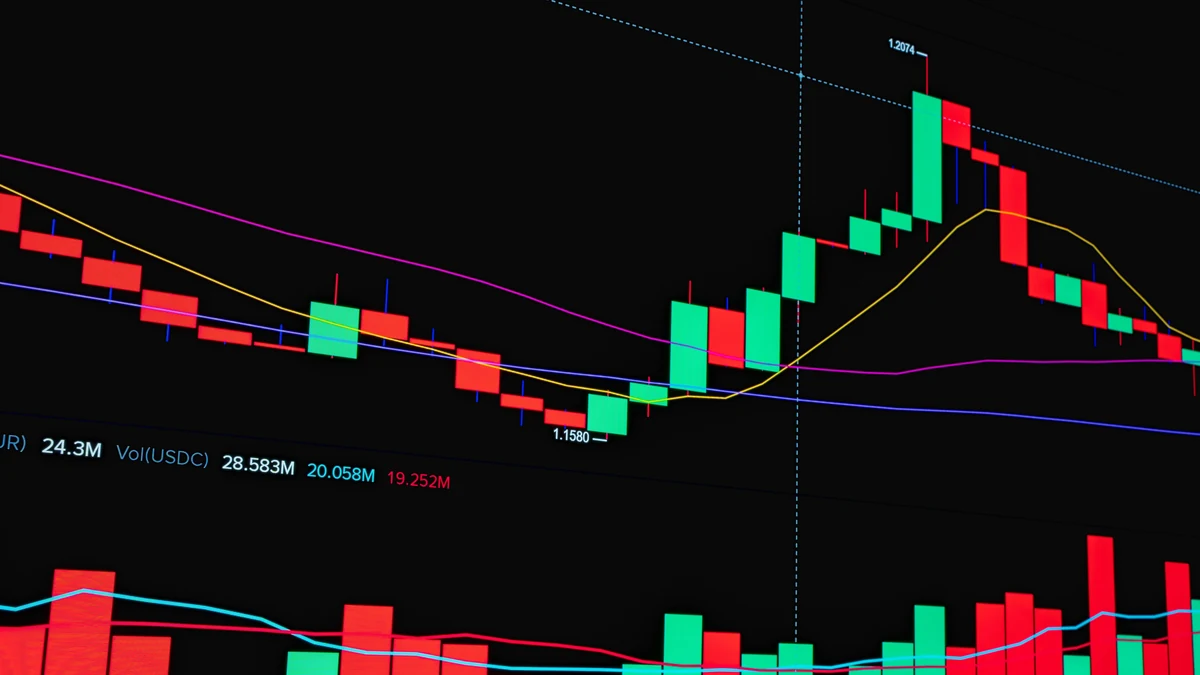
That fresh price discovery is one of the genuine advantages of the setup. When the opening price, first pullback, first intraday high and first closing price are established, traders quickly gain reference levels that many market participants are watching at the same time. A breakout above a widely observed high, a failure back below the opening area or repeated support near a prior low can attract attention precisely because the entire market is building its history together. The value of those levels is not that they predict the future with certainty, but that they make it easier to define what would confirm or contradict a trade idea.
Limited float can magnify supply and demand
A newly public company can have far more shares outstanding than are immediately available for ordinary public trading. Some shares are sold in the IPO, some pre-IPO holdings may be restricted securities, and many founders, employees or early investors may be subject to contractual lock-up agreements. The SEC notes that lock-ups are often around 180 days, although the actual terms vary by deal, and the prospectus explains which shares may become eligible for future sale. These restrictions should not be treated as a single broad “lock up rule”; the more accurate description is a combination of securities-law restrictions, offering structure and contractual lock-up arrangements.
A smaller effective float can make buying or selling pressure more influential at the margin. If demand is intense and relatively few holders are willing or able to sell at current prices, buyers may have to bid progressively higher to find stock. The same structure can work in reverse when demand weakens or a concentrated group of holders decides to sell, especially after restrictions expire or additional shares become eligible for sale. Limited float is therefore not inherently bullish; its trading advantage is that changes in order flow can produce larger price responses than the trader might see in a deeper, more seasoned market.
The prospectus is useful here because it lets a trader look beyond the headline share count. Sections dealing with selling shareholders, shares eligible for future sale, dilution and underwriting can help explain how much stock is coming to market now and what supply may appear later. Once shares enter the IPO secondary market, price is set through trading between investors rather than through the original issuance, so the forces determining price can change after the offering is complete.
Volatility creates room for a trade, not an edge
Active traders need movement because a stock that barely changes price offers little gross opportunity before spreads, slippage and other trading costs are considered. IPOs can provide that movement when uncertainty about value, strong public attention and a changing pool of buyers and sellers cause the price to travel quickly. A stock that moves several percentage points in a session gives a strategy more room to work than a stock trapped in a narrow range, provided the trader can enter and exit without surrendering too much of that movement to poor execution.
Movement by itself is not an advantage unless the strategy has a repeatable way to exploit it. The old article suggested that early IPO trades are more predictable because demand is often strong and insider supply is constrained. That conclusion is too confident. A stock can open well above the offering price and fall, open weakly and recover, trend strongly for hours, or reverse several times as participants reassess the same information. Higher volatility increases the size of possible gains and losses at the same time, so the relevant question is whether the price behavior fits a defined trading method.
Momentum can be more visible
When an IPO develops a clear directional move, momentum can become easier to observe because the stock has a short public history and the current order flow dominates the chart. There are fewer months of old congestion zones, old earnings gaps and long-standing technical levels competing for attention. Traders can focus on the emerging structure of the listing itself, including the opening range, intraday highs and lows, and whether pullbacks are being bought or rallies are being sold.
A clean chart does not make the direction more certain. It simply reduces some of the historical clutter that exists in seasoned stocks and concentrates attention on recent price behavior. That can be useful for momentum or breakout traders, but it offers little help to someone who enters because the stock is “hot” without a rule for determining whether the move is still intact. The most attractive IPO trade can disappear quickly when momentum stalls, spreads widen or the stock loses the level that originally justified the position.
Liquidity matters as much as range
Large price swings are easier to admire on a chart than to trade in real time. A stock may show a wide daily range while also having a wide bid-ask spread, shallow displayed liquidity or rapid jumps between price levels. In that environment, the theoretical opportunity shown by the chart can be much larger than the opportunity a trader can actually capture. Entry price, exit price and order size become part of the strategy rather than administrative details.
Good liquidity changes the quality of volatility because it gives traders more opportunity to transact near the prices they intended. Poor liquidity can turn the same volatility into slippage, partial fills and abrupt losses. A trader evaluating an IPO should therefore care not only about how far the stock is moving, but also about how efficiently it can be traded at the desired size. The advantage belongs to tradable movement, not merely to a large percentage change printed on a quote screen.
IPOs create unusually clear reference points
The IPO process produces several prices that market participants naturally watch. The offering price provides a negotiated valuation reference from before public trading, the opening print shows where the first public clearing process settled, and the first session establishes a high, low and close that did not exist before. As more sessions pass, the stock develops a short but increasingly useful map of where buyers and sellers have been willing to transact.
These reference points help a trader define scenarios before entering. A trader who wants to buy strength can decide that the thesis requires the stock to hold above a particular breakout area, while a trader buying a pullback can define a price below which the setup no longer makes sense. The important discipline is to connect the level to a reason for the trade rather than choosing a stop distance simply because a fixed percentage feels comfortable.
The offering price is especially easy to misuse. It can anchor expectations because it is prominent in headlines and prospectuses, but the public market is not obligated to respect it. The SEC specifically warns that the offering price is a negotiated estimate and may have little relationship to the subsequent trading price. An IPO valuation framework can help assess whether the market price makes sense relative to the company’s fundamentals rather than treating the offer price as an objective measure of fair value.
The information cycle can create catalysts
An IPO enters public trading with a substantial disclosure package. The registration statement and prospectus describe the business, financial condition, risk factors, use of proceeds, dilution, management and ownership structure, among other information. A trader does not need to become a long-term fundamental investor to benefit from reading those disclosures. They can reveal issues that are likely to matter when the market receives new information, such as dependence on a major customer, a history of losses, unusual voting control, large future share issuance or a specific use planned for the IPO proceeds.
The first months after listing also bring a transition from pre-IPO marketing to ordinary public-company reporting. Earnings releases, guidance, regulatory filings and later changes in share availability can all force the market to update its assumptions. A new company has less public-company history to absorb those surprises, so fresh information may change the valuation narrative quickly. For an event-driven trader, that sensitivity can create opportunities around identifiable catalysts rather than relying only on random day-to-day movement.
There is a trade-off in the same feature. Less public history means less evidence about how management communicates, how the stock reacts to results and how different investor groups behave around events. The advantage is not superior information; it is the concentration of new information and the possibility that the market will reprice the stock substantially as that information arrives. Traders who confuse novelty with informational certainty are likely to overestimate the quality of the setup.
You do not need an IPO allocation to trade the stock
Direct participation in an IPO can be difficult for an individual investor because allocations are limited and brokerage firms apply their own eligibility and distribution policies. Once the shares begin public trading, access is much broader. An eligible brokerage customer can generally place an order for the listed stock in the same account used for other exchange-traded shares, subject to the broker’s own controls and the security being open for trading.
That accessibility is a practical advantage that is easy to overlook. A trader does not need to win an allocation, accept the offering price or commit capital before the market has printed a public price. Waiting for the stock to open allows the trader to see the first real-time balance of demand and supply, observe whether early enthusiasm is strengthening or fading, and decide not to participate if the initial conditions are poor. Passing on the trade is a genuine option, and it can be more valuable than receiving an allocation simply because an offering is popular.
There is also no requirement that an IPO trade begin on day one. Some strategies may prefer to wait until the opening volatility settles, until several sessions create a usable range, or until the first post-IPO event provides a new catalyst. The idea that the best opportunity must occur immediately after listing can pressure traders into taking low-quality entries when spreads, uncertainty and emotional excitement are highest.
Order choice matters more in a fast market
IPO volatility makes order mechanics more consequential. A market order prioritizes execution but does not guarantee the price, so a fast-moving stock can fill materially away from the quote a trader saw when the order was submitted. A limit order gives the trader control over the worst acceptable purchase or sale price, but it may not execute at all if the market moves away. FINRA emphasizes these differences and also notes that a stop order becomes a market order once triggered, which means the eventual execution price can differ sharply from the stop price in a volatile market.[3]
That does not make one order type universally correct for IPO trading. A trader trying to enter a liquid breakout may value immediate execution, while someone unwilling to pay above a defined price may prefer the certainty of a limit even if the trade is missed. Stop-limit orders add price control after a trigger but introduce the risk that the position will not be exited if the market moves through the limit. The right choice depends on which risk is least acceptable for the particular strategy.
Order handling also interacts with position size. A small order in a heavily traded IPO may have little practical effect on the market, while a larger order in a thin new issue can be harder to fill without moving through several price levels. Traders should judge liquidity relative to their own intended size rather than assuming a stock is liquid because it is receiving heavy media attention.
Position sizing turns volatility into a manageable risk
The old article was directionally right that greater volatility should usually affect position size, but the adjustment is better expressed through risk rather than through an arbitrary rule that IPO positions must always be smaller. A trader can begin with the amount of capital that can be lost if the setup fails, identify a technically or strategically meaningful exit level, and then calculate a position that keeps the potential loss near that budget. If the stop distance must be wider because the stock moves more, the share count naturally falls.
Suppose a trader is willing to risk $200 on a setup and the trade idea is invalidated $2.50 below the planned entry. Dividing the risk budget by the $2.50 distance produces an initial size of 80 shares before accounting for slippage, gaps and transaction costs. If the same setup required a $5.00 risk distance, the comparable position would fall to 40 shares. The arithmetic does not guarantee that the loss will be capped at $200 because a fast market can gap through an exit price, but it forces the trader to connect volatility with capital at risk.
This approach also prevents a common mistake in high-interest IPOs: sizing the trade from excitement rather than from the point where the thesis is wrong. A stock that appears capable of gaining 20% is not a reason to double the position if its realistic downside before an exit is also much larger. Potential reward matters only after the loss profile is understood, and the risks of trading IPO stocks become more important, not less, when the apparent upside is unusually large.
The advantages can disappear quickly
An IPO can stop being a good trading vehicle even while the underlying company remains interesting. Volatility may collapse after the first wave of attention, liquidity may thin out, or the stock may settle into a range too narrow to justify the spread and execution risk. The opposite problem can occur when volatility becomes so extreme that fills are unpredictable and the trader cannot define a reasonable position size. More movement is useful only up to the point where the strategy can still control its exposure.
Limited float can also become a liability when the trader needs to exit. The same shortage of available shares that helps a stock accelerate upward can produce air pockets when buyers step away, and short sellers may face difficulty obtaining borrow in some newly listed stocks. A trader whose strategy depends on being able to reverse from long to short should confirm that shorting is actually available rather than assuming the stock can be traded symmetrically in both directions.
Future share supply deserves attention as well. Lock-up expirations, registered resales, follow-on offerings and employee selling can change the float and the character of trading. None of those events guarantees a decline because the market may already expect them, but they can alter the supply-demand conditions that made the early setup attractive. A trader should update the thesis as the stock matures instead of assuming the first-week behavior will persist for months.
Trading an IPO is different from investing in one
The strongest advantage of trading IPO stocks is flexibility. A trader can wait for public price discovery, participate only when the setup is favorable, reduce or exit when conditions change, and move capital elsewhere when the expected opportunity no longer justifies the risk. An investor making a multi-year decision cares much more about business quality, valuation, competitive position, capital allocation and the durability of growth than about whether the stock holds its first-day low.
Those objectives can lead to opposite actions in the same stock. A trader might sell after a momentum break even if the company’s long-term prospects remain attractive, while an investor might tolerate substantial short-term volatility because nothing material has changed in the business thesis. Problems arise when the time horizon changes after the position is opened, such as when a failed trade is relabeled a long-term investment to avoid taking a loss.
IPO stocks can be attractive trading vehicles because fresh price discovery, concentrated attention, limited float and a rapid information cycle sometimes create movement that is harder to find in mature stocks. The opportunity is not a built-in tendency to rise and it is not evidence that new issues are easier to predict. Traders gain the most from IPO conditions when they treat them as a market structure to analyze rather than a reason to suspend normal standards for liquidity, position sizing, order choice and exits.
Sources
- U.S. Securities and Exchange Commission: Updated Investor Bulletin: Investing in an IPO
- Nasdaq: Q&A: How Nasdaq Supports the IPO Process
- FINRA: Order Types