

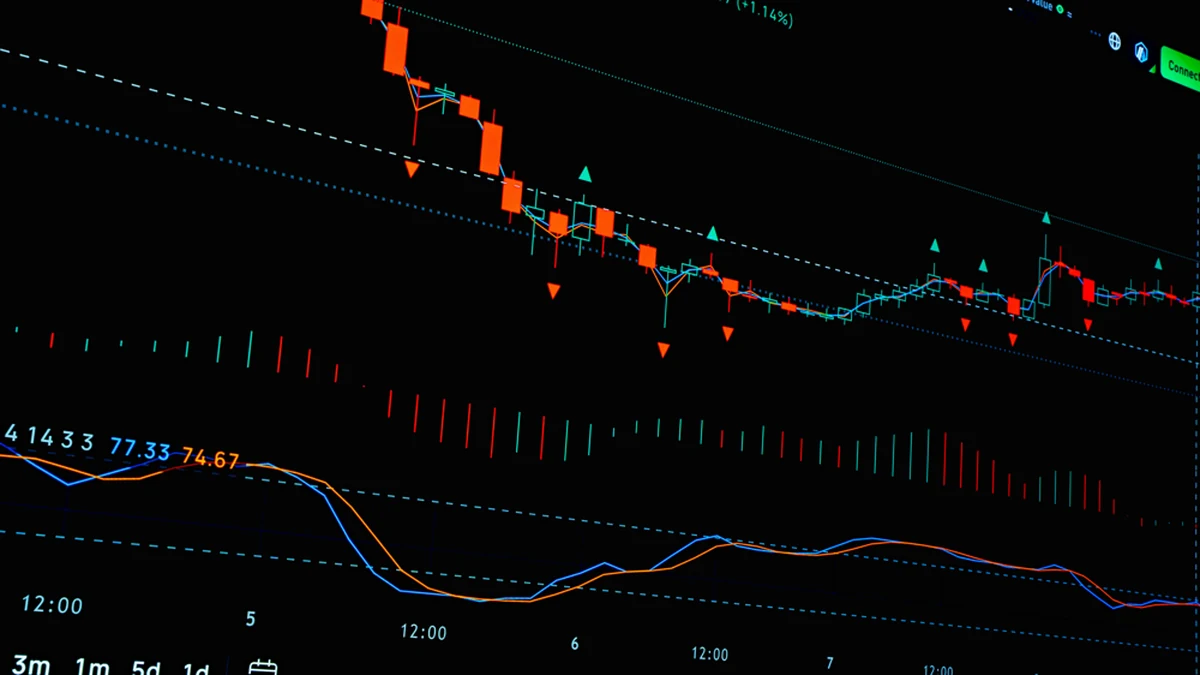
Stock trading is undertaken to make money from changes in share prices, but that statement is too broad to guide an actual trading decision. A trader still has to decide what kind of opportunity is worth taking, how much capital to expose, how long a position is expected to remain open, what would make the original thesis wrong and how much loss is acceptable if the trade fails. Without those decisions, “make a profit” is an aspiration rather than a workable objective.
The distinction matters because trading is a repeated process under uncertainty. A profitable strategy does not need every trade to work, and a losing trade does not automatically mean the decision was poor. What matters is whether the method has a positive expectation after costs, whether the losses remain within limits the account can absorb, and whether the trader can execute the method consistently enough for any statistical advantage to show up. That makes the real goal broader than maximizing the gain on the next position.
Profit is the objective, but it is not a complete trading goal
The immediate financial objective of stock trading is straightforward: buy and later sell at a higher price, or use an appropriate short strategy to benefit from a decline. Yet gross profit is only the starting point. A trader who makes $1,000 before commissions, bid-ask spreads, slippage, financing charges and applicable taxes has not earned the same economic result as a trader who keeps nearly all of that amount. The more often a strategy trades, the more important those frictions become.
Frequency also creates a higher hurdle for the decision to trade at all. An influential study of 66,465 U.S. brokerage households from 1991 through 1996 found that the households that traded most earned an annual return of 11.4%, compared with 17.9% for the market during the sample period. The study is old, brokerage pricing has changed substantially and its findings should not be treated as a forecast for any individual trader today, but it remains useful evidence that more activity does not by itself create better results and that trading costs can materially damage performance.[1]
A sensible objective therefore focuses on net results over time, not activity. It also asks what the trading capital could have earned under a less active alternative. If a trader earns 6% while taking large drawdowns, spending hundreds of hours monitoring positions and paying substantial trading costs during a period when a simple diversified benchmark gains much more, the account may still be profitable in absolute terms but the trading program has not necessarily justified the additional effort and risk.
This is one reason the goals of trading and investing should not be blurred together. Someone who intends to hold a stock long term may accept months of unfavorable price movement because the decision is based on a multi-year view of the company. A shorter-term trader may be using entirely different evidence and may regard the same price movement as a reason to exit. The appropriate decision depends on the strategy that was actually chosen, not on a preference formed after the position has moved against the trader.
Define success before entering a trade
A trading objective becomes useful when it specifies what success means without forcing the market to deliver a particular outcome on demand. A trader can reasonably aim for a positive return over a quarter or year, a maximum tolerable drawdown, disciplined adherence to a defined strategy, or a return that compares favorably with an appropriate benchmark. What is less useful is a rule such as “I must make $200 every day,” because the number of attractive setups available on any day is not under the trader’s control.
Fixed daily profit targets can create a conflict between the goal and the market. A quiet session may offer no trade that meets the strategy’s standards, yet a trader who feels required to hit a monetary target may lower the entry threshold, trade a security outside the normal universe or increase position size to compensate for an earlier loss. The target has then stopped measuring performance and started influencing behavior in a way that can increase risk.
Time horizon is part of the definition of success as well. A trader deciding how long to stay in trades needs a horizon that matches the information being used. A thesis based on an earnings catalyst expected next week should not quietly turn into a six-month holding merely because the price fell after entry. A position trade based on a longer business or market trend should not be abandoned because of routine intraday volatility that was never relevant to the original thesis.
The capital assigned to trading should also have a defined role. Money needed for near-term household expenses, emergency reserves or other essential obligations is poorly suited to a strategy that can experience losses or periods of poor performance. Separating trading capital from money committed to longer-term financial goals makes it easier to judge the strategy on its own terms and reduces the pressure to recover losses quickly.
A trader should also be clear about what is not a goal. Being right about a company, predicting the next market move, maintaining a high win rate or avoiding all losing trades can feel satisfying, but none of those outcomes guarantees profitability. A strategy that wins 70% of the time can still lose money if the average loss is much larger than the average gain, while a strategy with a lower win rate can be profitable if winners are sufficiently larger than losers.
Risk is a constraint on every trading objective
Return cannot be evaluated separately from the amount of risk required to pursue it. Two strategies that each earn 10% do not offer equivalent results if one suffers modest fluctuations and the other repeatedly approaches a loss large enough to threaten the account. The trader’s objective should therefore include limits on exposure, position size and acceptable drawdown rather than treating risk control as a secondary task that begins after a trade is open.
Position size converts a trading idea into account-level risk. A trader can be correct that a stock offers an attractive setup and still take an imprudent trade if the position is so large that an ordinary adverse move would damage the account disproportionately. The amount invested, the distance to the point where the trade would be considered invalid, the stock’s liquidity and volatility, and the presence of other correlated positions all affect the practical risk of the trade.
Portfolio risk becomes especially important when several positions are driven by the same underlying factor. Owning five technology stocks is not the same as having five independent sources of risk if all of them are likely to react similarly to a sector selloff, an interest-rate surprise or a broad shift away from growth stocks. A trader who sets a reasonable loss limit on each position can still end up with excessive total exposure when several trades are effectively variations of the same bet.
Leverage changes the calculation further. FINRA warns that frequent intraday trading carries meaningful risk, particularly when margin is used, and notes that margin trading can produce losses greater than the amount originally deposited. It also points out that frequent trading brings costs, tax considerations and significant demands on the trader’s time.[2] Those are not side issues: a strategy that only appears attractive when leverage is pushed to a level the account cannot comfortably withstand has a different risk profile from the same strategy traded with cash.
Risk limits should be designed around survival through an unfavorable run, not around confidence in the next trade. Even a strategy with a genuine edge can produce clusters of losses. If position sizes are so aggressive that a normal losing streak causes a severe drawdown, the trader may be forced to reduce risk or stop trading precisely when the strategy’s longer-term statistics still remain intact.
A trading plan turns goals into decisions
A plan connects the broad objective of making money with the specific choices that occur before and during a trade. It identifies the kinds of setups the trader is willing to take, the evidence required for entry, the amount of capital that can be committed, the conditions that would invalidate the idea and the circumstances in which profits will be taken. The plan does not remove uncertainty, but it reduces the number of important decisions that have to be improvised after money is at risk.
The entry should have a reason that can later be evaluated. That reason might be a change in the company’s outlook, a valuation discrepancy, a price breakout, a trend-following signal, a reaction to new information or another defined condition. The important point is not that one analytical method is universally superior, but that the trader knows what evidence created the trade and what change in that evidence would make the position less attractive.
This discipline is particularly important because trading invites constant reinterpretation. Once a position moves into a loss, it is easy to replace the original short-term rationale with a longer-term story about why the company is still good. After a fast gain, a trader may abandon the intended exit because the stock suddenly feels capable of much more. A plan written before entry makes those changes visible, which allows the trader to distinguish a legitimate response to new information from a decision driven mainly by discomfort or excitement.
Exit planning deserves as much attention as the entry. A trader should know what type of event, price behavior or change in the underlying thesis would justify closing a losing position, and should also have a framework for handling a trade that works. That does not require a rigid price target in every strategy. Some approaches use predefined profit objectives, others trail exits as a trend develops, and some reduce a position in stages, but each approach needs a rule that fits the original reason for entering.
A useful plan also anticipates situations in which execution may be difficult. Earnings announcements, trading halts, thin liquidity and sharp market gaps can move a stock past an intended exit price before an order can be filled. Stop orders can help automate a response, but they do not guarantee a particular execution price once triggered, and limit orders offer price control at the cost of possible non-execution. The objective should account for these mechanics rather than assuming that a chart level always translates into a realized trade at the same price.
Execution quality affects whether the plan works in practice
A profitable idea on paper can become mediocre after poor execution. The difference between the expected entry and the actual fill, the spread paid to enter and exit, partial fills, market impact in less liquid securities and delays in fast markets all affect realized performance. These costs may look small on a single transaction but become meaningful when a strategy trades frequently or seeks relatively small price moves.
Order choice should therefore match the purpose of the trade. A market order prioritizes execution but does not guarantee the exact price, which matters when a stock is volatile or the spread is wide. A limit order controls the worst acceptable price but may remain unfilled, which can be costly when the strategy depends on entering promptly. Neither order type is inherently better; the right choice depends on whether execution certainty or price control is more important to the setup.
Liquidity also affects position sizing. A trader should not assume that a position which was easy to enter will always be equally easy to exit, particularly in a smaller company, during stressed market conditions or outside the most active trading periods. Larger positions can create their own execution problem if only a limited number of shares are available near the quoted price.
The same principle applies to trading costs that are not labeled as commissions. Many brokers offer commission-free stock trades, but a strategy can still incur spreads, regulatory or platform charges, margin interest and slippage. Taxes may also differ by jurisdiction, account type and holding period. The objective is not to minimize every cost at the expense of the strategy, but to know the total hurdle that gross trading profits must clear before the activity produces a useful net return.
Long and short trades need different risk assumptions
A trader’s objective should specify whether the strategy is limited to buying stocks or also permits short selling. A long position involves owning the security in the expectation that its value will rise. A conventional short sale involves selling borrowed shares with the expectation of buying them back later at a lower price; if the price rises instead, the short position loses money.[3] These structures do not create identical risk, so they should not share identical assumptions about position size or loss tolerance.
For an unleveraged long stock position, the share price cannot fall below zero, so the loss on the stock itself is limited to the amount invested. A short position has no comparable price ceiling: the stock can keep rising, increasing the amount required to repurchase the borrowed shares. Borrowing costs, dividend obligations and margin requirements can add further complexity. A trader who chooses to short therefore needs a risk framework designed for short positions rather than simply reversing the directional view used for long trades.
A long-only trader does not need to treat every falling market as a missed opportunity. Staying in cash when the strategy has no acceptable setup is a legitimate decision, not a failure to participate. The same applies to a trader who has not developed the experience or account structure needed for short selling. The purpose of a trading plan is to define the opportunities the trader is prepared to pursue, not to create an obligation to profit from every type of market move.
Process goals are more useful than daily profit targets
Financial results matter, but they are partly determined by market conditions over short periods. Process goals focus on the decisions the trader can actually control. A useful review asks whether entries met the stated criteria, whether position sizes stayed within risk limits, whether exits followed the plan, whether orders were appropriate for the liquidity available and whether changes to the strategy were made for a documented reason rather than in reaction to a recent win or loss.
This kind of review is more informative than simply counting winning trades. Suppose a trader loses money during a month in which the strategy was followed consistently and the losses remained within the expected range. That may be an unpleasant but statistically ordinary period. By contrast, a profitable month built on oversized positions, repeated rule-breaking or one unusually lucky trade can conceal a process that is becoming more dangerous.
A trading journal can help separate those outcomes. The useful record is not merely the entry and exit price; it should preserve enough context to explain why the trade was taken, what risk was intended, whether the plan changed and what the trader learned after the position closed. Over time, the record can reveal recurring execution errors, setups that do not perform as expected, or market conditions in which the strategy behaves differently.
The benchmark should also match the goal. Traders seeking to improve on a passive equity alternative should know how investors benefit from the stock market without active timing, because the passive alternative is part of the opportunity cost of trading. A strategy that holds large amounts of cash will naturally have lower market exposure than a fully invested portfolio, so a simple headline comparison may still need adjustment for risk and time in the market, but ignoring the alternative entirely makes it harder to know whether the trading effort is adding value.
Measure a strategy over enough trades
Short samples are unreliable. A few profitable trades can occur by chance, and a few losses can occur even when a strategy remains viable. The number of observations needed to judge a method depends on how often it trades, how variable the outcomes are and whether market conditions during the sample are representative of the conditions the strategy is supposed to handle.
Win rate should be interpreted alongside the size of gains and losses. If the average winning trade earns 3% and the average losing trade loses 1%, a strategy does not need to win most of the time to have a positive average outcome before costs. If the relationship is reversed, a high win rate may be necessary just to break even. This is why the goal should be a favorable distribution of net outcomes rather than an emotionally appealing percentage of winning trades.
Drawdown deserves its own measurement because the path to a return affects whether the strategy is usable. A method that eventually earns a strong annual return after a 50% decline may be unacceptable for a trader who cannot financially or psychologically tolerate losing half of the account. Large drawdowns also create a mathematical recovery problem: after a 50% loss, the remaining capital must gain 100% to return to the original account value.
Performance analysis should distinguish strategy changes from random variation. If a trader modifies the rules after every small losing streak, the account may never accumulate enough consistent data to show whether any version of the strategy actually works. Changes are appropriate when evidence reveals a genuine weakness or when market structure, costs or the trader’s circumstances change, but constant tinkering can make the results impossible to interpret.
Backtests and paper trading can be useful for examining a strategy before committing meaningful capital, yet neither perfectly reproduces live execution. Historical tests can be overfit to the past, and simulated trades do not fully capture slippage, liquidity constraints or the emotional pressure of real losses. A trader moving from testing to live trading should therefore treat early real-money results as another stage of evaluation rather than proof that the backtest will translate exactly.
A good trading goal also tells you when not to trade
The option to do nothing is part of trading. A strategy built for strong directional trends may have little to offer in a choppy market, while a mean-reversion approach may struggle when prices keep moving in one direction. If the trader’s rules do not identify a favorable setup, staying out preserves capital for a condition in which the method has a clearer rationale.
Opportunity cost works in both directions. Capital tied up in a weak trade cannot be used for a better one, but cash held without purpose can also reduce returns if the strategy is designed to remain invested most of the time. The goal is not maximum activity or maximum inactivity. It is to deploy capital when the expected reward is sufficient for the risk and costs involved, while accepting that some periods will offer fewer suitable opportunities than others.
The broad financial aim of stock trading remains profit, but a serious trading objective is more precise. It seeks positive net results over a meaningful series of trades, keeps losses within tolerable limits, uses a repeatable decision process and measures performance against realistic alternatives. A trader who can define those conditions before money is at risk has a standard for deciding not only whether a trade made money, but whether it deserved to be taken in the first place.
FAQs
- Is making money the only goal of stock trading?
Profit is the financial purpose of trading, but it is not a sufficient operating goal. A workable objective also defines how much risk is acceptable, what kind of opportunities will be traded, how results will be measured and what rules govern entries and exits. Without those constraints, a trader can increase short-term profit simply by taking more risk, which does not necessarily improve the quality of the strategy.
- Should a trader set a daily profit target?
A daily target can be useful as a reporting reference, but it becomes risky when it creates pressure to trade regardless of available opportunities. Market conditions do not provide a fixed number of high-quality setups each day, so a process target, such as following the strategy and respecting risk limits, is usually more controllable than requiring a specific amount of profit every session.
- Does a profitable trade mean the decision was good?
Not necessarily. A trade can make money despite violating the strategy, using excessive size or benefiting from an unpredictable event, while a properly planned trade can lose because uncertainty is unavoidable. The more useful question is whether the decision fit the strategy and whether similar decisions have a positive net expectation over a sufficiently large sample.
- How should traders judge performance?
Performance should be reviewed over a meaningful series of trades using net return, average gains and losses, drawdown, trading costs, risk taken and consistency with the plan. The comparison should also consider an appropriate alternative, such as a passive benchmark or holding cash, because absolute profit alone does not show whether active trading added enough value for the additional effort and risk.
Sources
- University of California, Berkeley, Haas School of Business: Trading Is Hazardous to Your Wealth: The Common Stock Investment Performance of Individual Investors
- FINRA: Frequent Intraday Trading: Understanding the Basics
- Investor.gov: Stock Purchases and Sales: Long and Short