
Brown-Forman Reaffirms FY2027 Outlook as Q1 Sales Slip 1%
The spirits maker kept its full-year organic sales and operating-income guidance unchanged as ready-to-drink growth and emerging markets offset weaker tequila and developed-market demand.
Our editorial standards
MarketReview publishes clear, independently produced financial information using reliable sources and transparent editorial standards.
Read our Editorial Policy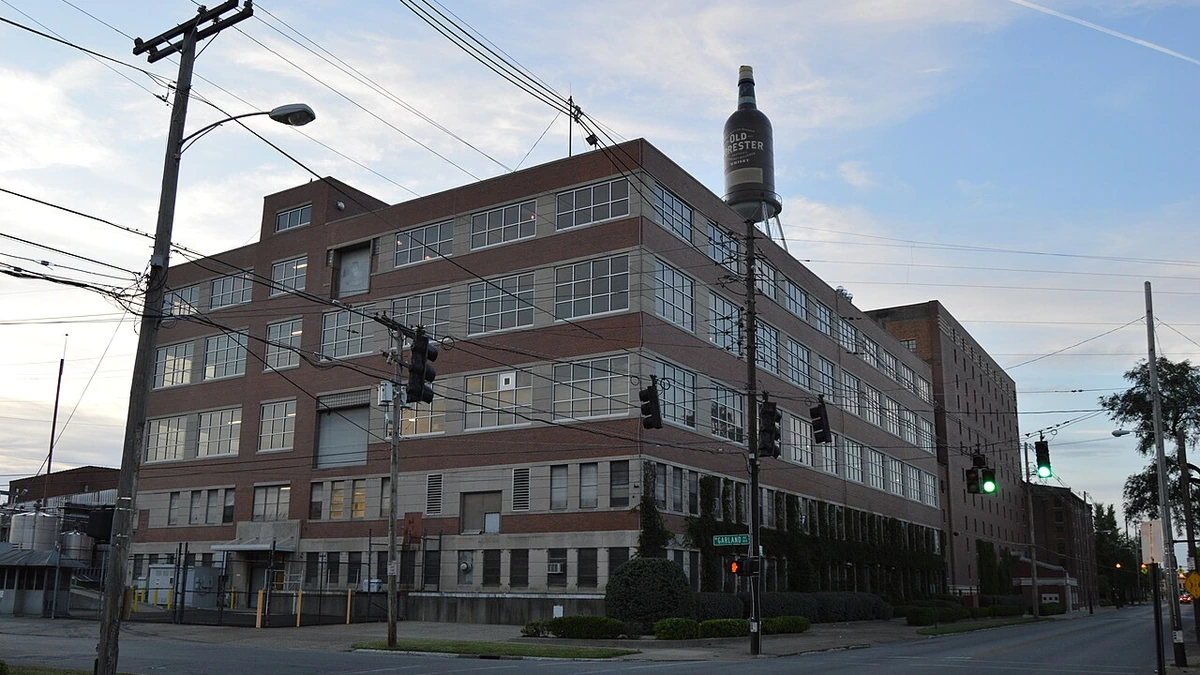
Brown-Forman reaffirmed its fiscal 2027 outlook Wednesday after first-quarter net sales fell 1% to $911 million, as gains in ready-to-drink products and emerging markets only partly offset weakness in tequila, developed international markets and several non-core sales lines. Reported operating income declined 3% to $252 million, although it rose 4% on an organic basis, while diluted earnings per share increased 6% to $0.38.
The unchanged full-year view calls for organic net sales to be approximately flat and organic operating income to decline 3% to 5%. Brown-Forman also continues to expect an effective tax rate of about 20% to 22% and capital spending of $60 million to $70 million. Those are the same ranges the Louisville-based spirits producer issued with its fiscal 2026 results in June.
Management described the quarter as broadly consistent with its expectations, but the mix beneath the headline sales decline was uneven. Brown-Forman’s September 2 earnings release said the end of its Korbel relationship, lower used-barrel sales and declines in tequila weighed on reported revenue, while the ready-to-drink portfolio, led by New Mix, provided the main offset.
Ready-to-drink growth offsets weakness in tequila and developed markets
Brown-Forman’s whiskey portfolio was flat on both a reported and organic basis. Jack Daniel’s Tennessee Whiskey was also flat in net sales, while declines in Jack Daniel’s Tennessee Honey and Gentleman Jack were offset in part by the continuing international rollout of Jack Daniel’s Tennessee Blackberry. Woodford Reserve posted flat reported and organic net sales, while Old Forester increased 1% on both measures.
Ready-to-drink products were the clearest growth area. Net sales for that portfolio increased 20% as reported and 11% organically, with New Mix up 48% reported and 36% organically. Brown-Forman attributed New Mix’s performance to strong demand in Mexico, favorable foreign exchange and its U.S. launch. The broader Jack Daniel’s ready-to-drink and ready-to-pour portfolio rose 6% on a reported basis but declined 4% organically.
Tequila moved in the opposite direction. Portfolio net sales fell 12% reported and 13% organically, with Herradura down 17% reported and 18% organically as U.S. volumes weakened and net pricing declined in Mexico. El Jimador sales decreased 10% reported and 11% organically, reflecting lower net pricing in the United States. Non-branded and bulk sales dropped 61%, primarily because of lower used-barrel sales, while the rest of the portfolio fell 35% reported, largely because the Korbel relationship had ended.
The geographic results showed a similar split. U.S. net sales declined 3% on a reported basis but were flat organically, with Brown-Forman citing the Korbel exit, an estimated net decrease in distributor inventories tied to prior-year distributor transitions and lower volumes of Jack Daniel’s Tennessee Blackberry. Developed international sales fell 6% reported and 8% organically, led by lower Jack Daniel’s Tennessee Whiskey volumes in Germany, France and Spain. Emerging-market sales rose 11% reported and 9% organically, with Mexico and New Mix driving much of the increase.
Gross margin improves as operating margin slips
Profitability also sent mixed signals. Gross profit declined 1% to $549 million, but gross margin increased 40 basis points to 60.2% as lower costs and the end of the Korbel relationship outweighed unfavorable foreign exchange and price and mix effects. Operating margin, however, fell 50 basis points to 27.7% because operating expenses increased enough to more than offset the gross-margin improvement.
Advertising expense decreased 5% to $114 million, with the timing of spending across the Jack Daniel’s family contributing to the decline. Selling, general and administrative expense rose 4% to $185 million, which Brown-Forman linked to the timing of costs associated with targeted organizational realignments. Net income increased 3% to $176 million, while lower non-operating postretirement expense and the accretive effect of prior-year share repurchases helped diluted EPS rise faster than operating profit.
Cash generation improved during the quarter. Cash provided by operating activities increased by $13 million to $173 million, while free cash flow rose by $32 million to $161 million as operating cash flow strengthened and capital expenditures declined. Property, plant and equipment additions were $12 million compared with $31 million in the prior-year quarter.
Brown-Forman also repaid the $343 million principal amount of its 1.20% senior notes when they matured on July 7. The company’s cash and cash equivalents stood at $301 million at July 31, down from $308 million at April 30, while short-term borrowings increased to $358 million from $68 million. The earnings release was furnished to the Securities and Exchange Commission in a Form 8-K filed September 2.
Full-year targets remain unchanged after the first quarter
The decision to leave guidance intact keeps Brown-Forman’s fiscal 2027 expectations at the levels first set out in June. At that time, the company said it expected a difficult operating environment as macroeconomic pressure and geopolitical instability weighed on consumer behavior and beverage-alcohol demand, particularly in developed markets. Wednesday’s update repeated that assessment and pointed to restructuring benefits, changes in U.S. distribution and product innovation as factors that management expects to support the business during the year.
The contrast between approximately flat organic sales guidance and a projected 3% to 5% decline in organic operating income indicates that Brown-Forman still expects pressure below the revenue line even if underlying sales stabilize. First-quarter organic operating income rose 4%, but reported operating income fell because acquisition and divestiture effects, other items and foreign exchange affected the comparison. The company did not raise its annual profit range in response to the quarter.
Capital spending remains planned at $60 million to $70 million for the year, well below the $107 million Brown-Forman reported for fiscal 2026. The board has also declared a quarterly dividend of $0.2310 per share on both Class A and Class B common stock, payable October 1 to shareholders of record on September 3. That payment will be the next scheduled shareholder cash-distribution milestone following the first-quarter results.
More News


Latest News
View all news- Union Pacific Third-Quarter Profit Rises 16% to $2.1 Billion as Freight Volumes Grow
- Nasdaq Q3 Revenue Jumps 13% as Annual Recurring Revenue Reaches $3.4 Billion
- Census Bureau Releases New Business Conditions Data Covering U.S. Employers
- Blackstone Reports Third-Quarter Earnings With Assets Under Management Near $1.4 Trillion
- BEA Expands State-Level R&D Economic Statistics With New 2024 Estimates
