
Comstock Signs $1.65 Billion SOCAR LOI and Launches $450 Million Haynesville Drilling Venture
Comstock outlined a proposed $1.65 billion minority-stake sale to SOCAR and a separate $450 million drilling venture backed by the Jones family, moves aimed at cutting debt and funding Haynesville development.
Our editorial standards
MarketReview publishes clear, independently produced financial information using reliable sources and transparent editorial standards.
Read our Editorial Policy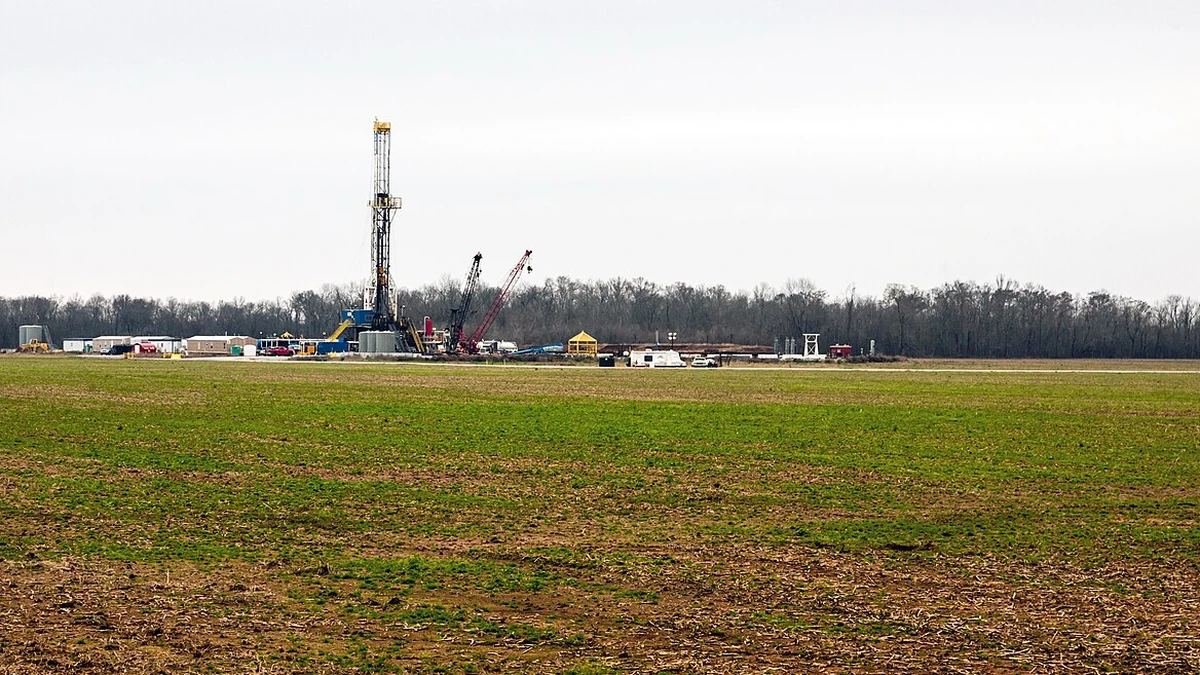
Comstock Resources said Tuesday that it has signed a letter of intent for a $1.65 billion strategic partnership with SOCAR and separately launched a $450 million drilling venture with a partnership owned by the family of Jerry Jones, the company’s majority stockholder. Together, the two moves would bring outside capital into Comstock’s Haynesville business while giving the natural gas producer more room to reduce debt and keep developing its core acreage in Texas and Louisiana.
The larger of the two announcements is still only a proposed deal. Comstock said SOCAR, formally the State Oil Company of the Azerbaijan Republic, would buy minority interests in parts of its upstream and midstream business if the parties sign a definitive purchase and sale agreement. That document is targeted by October 31, with closing by year-end, subject to negotiations and the usual government and third-party approvals.
In its September 1 company announcement, Comstock also disclosed a separate Haynesville shale drilling venture that is already in place. Beginning September 1, a Jones family partnership will fund most of the drilling and completion cost for 27 wells that Comstock plans to drill over the next 12 months. The pairing of a proposed asset-level sale and an immediate drilling-funding arrangement shows management trying to accomplish two goals at once: lower leverage and keep its development program moving.
What the SOCAR letter of intent would cover
The SOCAR proposal spans both upstream and midstream assets. Under the letter of intent, SOCAR or a wholly owned subsidiary would acquire a non-operated working interest representing 20% of Comstock’s interest in its Legacy Haynesville upstream assets. It would also acquire a non-operated working interest equal to 15% of Comstock’s interest in its Western Haynesville upstream assets.
That Western Haynesville interest would not stay at 15% indefinitely. Comstock said SOCAR’s share in those assets would fall to 7.5% after five years and once SOCAR has achieved a 15% return on its investment in the Western Haynesville position. The company presented that feature as a way to give SOCAR a defined return path while allowing Comstock to recapture more long-term upside if the acreage performs as expected.
The proposed sale also includes midstream exposure. SOCAR would buy 15% of Comstock’s 73% ownership interest in Pinnacle Gas Services, the system that provides gathering and treating services to the Western Haynesville. Even after that sale, Comstock said it would remain operator of all upstream assets and would continue to manage, operate and control Pinnacle.
Investors still need to keep the status of the arrangement in perspective. A letter of intent binds the parties to negotiate in good faith, but it is not the same thing as a signed purchase agreement. The release makes clear that closing depends on a definitive agreement, related documentation and customary approvals. Comstock said the proposed sale would carry an effective date of July 1, 2026 if it closes, and that SOCAR would have the opportunity to participate in future opportunities in the Legacy and Western Haynesville at the same percentages it is acquiring. The company also said SOCAR would provide opportunities for Comstock to market natural gas to international customers.
Debt reduction is central to the pitch
Management’s main financial argument is that the SOCAR proceeds would change the balance sheet in a meaningful way. Comstock said the $1.65 billion cash purchase price, before customary adjustments, is expected to be used first to repay the outstanding balance under its revolving credit facility, with the remaining proceeds going toward further debt reduction. Based on June 30 figures, the company said pro forma net debt would fall to about $1.5 billion from roughly $3.1 billion.
That reduction matters because leverage has been a central issue for Comstock as natural gas prices have moved around and as the company continued to drill heavily in the Haynesville. At June 30, according to Comstock’s second-quarter investor presentation, the company had $45 million of cash and cash equivalents, $545 million outstanding under its upstream revolving credit facility, $1.624 billion of 6.75% senior notes due 2029 and $965 million of 5.875% senior notes due 2030, for total debt of $3.134 billion. Liquidity stood at about $1.15 billion.
The new announcement also builds on another financing step completed earlier this summer. In June, Comstock sold a 27% non-controlling common equity interest in Pinnacle Gas Services to funds managed by Sixth Street for $600 million. The company said that earlier investment was used to retire Pinnacle-level preferred equity and all outstanding debt at the midstream subsidiary. Tuesday’s proposed SOCAR sale would not reverse Comstock’s control of Pinnacle, but it would further monetize the value of the midstream business while keeping a majority stake in place.
Comstock’s presentation framed the proposed SOCAR partnership as more than a balance-sheet repair. The company said it sees the stronger capital position supporting continued delineation and development of its 545,000 net acres in the Western Haynesville. Management also tied that acreage to rising demand from LNG export facilities, power generation and data centers along the Gulf Coast. Whether that thesis ultimately produces higher realized value will depend on gas prices, drilling results and the company’s ability to close the proposed sale on the terms outlined.
The Jones-family venture funds near-term drilling
While the SOCAR proposal remains subject to further negotiation, the drilling venture with the Jones family begins immediately. Comstock said a partnership owned by the family will fund the drilling and completion cost of 85% of 18 Western Haynesville wells and 80% of nine Legacy Haynesville wells being drilled and completed over the next 12 months. The planned spending for that program is about $450 million.
The structure gives the outside capital provider an economic interest in the wells for a period of time, but it is not a permanent handover. Comstock said that after a 15% return on investment is achieved, 50% of the interest in the wells will revert to Comstock. That arrangement allows the company to bring in capital for a sizable slice of its near-term drilling program without surrendering operatorship, and it preserves more ownership later if the wells perform.
The company said the venture will support continued development and delineation of its Western Haynesville position, provide volumes to Pinnacle Gas Services and strengthen the balance sheet. Those points fit with Comstock’s broader message that its Western acreage remains the main growth engine. In the second quarter, the company said 11 Western Haynesville wells had been turned to sales so far in 2026 with an average initial production rate of 31 million cubic feet per day, while 22 Legacy Haynesville wells turned to sales had also averaged about 31 million cubic feet per day.
That operating backdrop helps explain why management is willing to use multiple capital structures around the same acreage. The Jones-family venture helps keep drilling on schedule over the next year, while the proposed SOCAR sale would, if completed, lower leverage and broaden Comstock’s strategic relationships. Both steps also sit alongside an asset base that Comstock says totals more than 809,000 net acres across the Haynesville and Bossier, including about 545,000 net acres in the Western Haynesville and about 264,000 net acres in the Legacy Haynesville.
For now, the clearest next milestone is the proposed SOCAR purchase agreement. Comstock said the parties are targeting execution by October 31 and a closing by the end of 2026. The Jones-family drilling venture, by contrast, starts right away, giving the company immediate funding support even before it knows whether the larger SOCAR partnership will reach the finish line.
More from Investing

Latest News
View all news- U.S. Leading Economic Index Was Flat in September as Growth Tilts Toward Business Investment
- U.S. Jobless Claims Fall to 194,000 as Layoffs Remain Historically Low
- Kansas City Fed Releases October Manufacturing Survey as Factories Face Cost Pressures
- Census Bureau Releases New Business Conditions Data Covering U.S. Employers
- BEA Expands State-Level R&D Economic Statistics With New 2024 Estimates
