
Fed’s Waller Says Cooling Inflation Could Justify a September Rate Hold
Christopher Waller said continued disinflation could support keeping the federal funds rate unchanged in September, while a hotter August inflation reading could revive the case for a hike.
Our editorial standards
MarketReview publishes clear, independently produced financial information using reliable sources and transparent editorial standards.
Read our Editorial Policy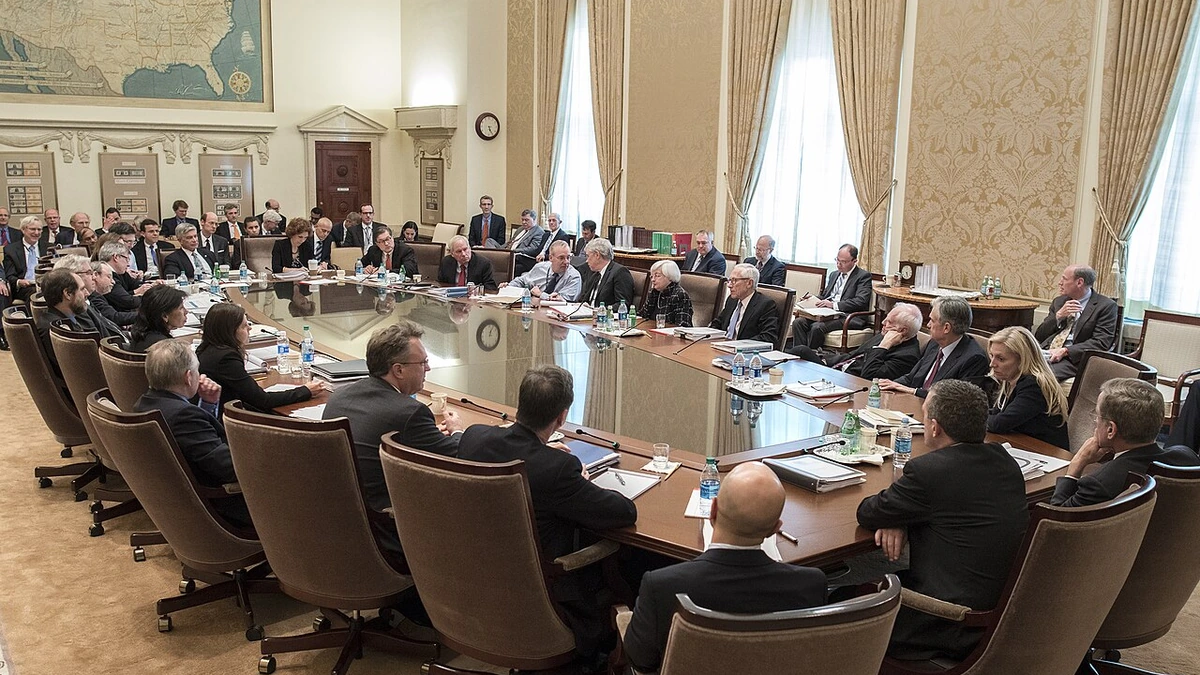
Federal Reserve Governor Christopher Waller said Thursday that cooling inflation could justify leaving interest rates unchanged at the central bank’s September meeting, provided the next round of price data confirms that recent progress is continuing. His position remains conditional rather than a commitment: if August inflation comes in hot, Waller said he would consider supporting a rate increase instead.
The comments sharpen the choice facing the Federal Open Market Committee when it meets Sept. 15 and 16. The Fed’s target range for the federal funds rate is currently 3.50% to 3.75%, after policymakers voted in late July to keep borrowing costs steady. Waller supported that decision and now says the balance of incoming evidence has moved far enough in the right direction that another hold could be appropriate.
Waller’s argument rests on a distinction between still-high year-over-year inflation and the more recent pace of price increases. Annual measures remain well above the Fed’s 2% goal, but shorter-term core inflation has been slowing. That gives policymakers a reason to wait for more evidence before tightening again, without declaring the inflation problem solved.
Waller sees a better inflation trend beneath elevated annual readings
In his Sept. 3 remarks published by the Federal Reserve, Waller said three-month core inflation stood at 3.05% for the three months through July, down steadily from 4.76% in February. He described that decline as encouraging even though the latest three-month pace is still inconsistent with the FOMC’s 2% objective.
The official July PCE data show why Waller is not treating the recent improvement as a victory lap. The Bureau of Economic Analysis reported that the PCE price index rose 0.2% in July and 3.7% from a year earlier. Core PCE, which excludes food and energy, also rose 0.2% for the month and was up 3.3% over 12 months. Those annual readings remain far above the Fed’s goal, even as the recent monthly pattern has softened.
Waller also argued that part of the measured pressure in core inflation comes from nonmarket services prices, which are estimated rather than directly observed. He expects a coming change in the Commerce Department’s treatment of fees paid to stock-market traders and related professionals to reduce 12-month PCE inflation by a few tenths of a percentage point. That measurement issue is not the main reason for his policy view, but it reinforces his belief that underlying inflation may be running somewhat cooler than the headline core figure suggests.
There are still risks on the other side. Waller pointed to higher energy prices, possible further tariff increases and price pressure tied to the buildout of artificial-intelligence infrastructure as potential sources of renewed inflation. He also said longer-term inflation expectations could become a problem if households and businesses begin to doubt the Fed’s commitment to bringing inflation back to target. His case for patience therefore depends on continued disinflation, not on an assumption that the remaining risks have disappeared.
A September hold would extend the Fed’s current 3.50% to 3.75% range
The July meeting showed that the FOMC is already divided over how much restraint the economy needs. Policymakers voted 9 to 3 to maintain the current target range, while Beth Hammack, Neel Kashkari and Lorie Logan dissented in favor of a quarter-point increase. That split gives Waller’s September stance added weight because he is not arguing that policy should become easier. He is saying that the Fed may be able to keep its current setting in place if inflation continues to move down.
Waller described policy as only slightly restrictive on aggregate demand, which means he does not see much room for inflation to reaccelerate without a response. In his formulation, a rate hold is the appropriate choice if August data confirm the recent progress, but a small tightening would be warranted if that progress reverses. The difference between those outcomes could come down to a relatively narrow set of incoming releases before the meeting.
The labor market is not currently pushing him toward either side of the decision. Waller said employment is near its maximum sustainable level and described labor conditions as stable. Job creation had averaged about 60,000 a month through July, the unemployment rate was 4.1%, and layoffs and initial jobless claims remained low. He said he expected the August employment report, due Friday, to look broadly similar to the recent pattern.
That makes inflation the more important variable for his September vote. The August Employment Situation is scheduled for Sept. 4, while the August consumer-price report is due Sept. 11, four days before the FOMC begins its two-day meeting. Those releases will give policymakers a final look at labor conditions and consumer inflation before they set rates.
The September decision remains explicitly conditional
Waller spent part of his speech explaining why his comments should not be read as forward guidance promising a particular vote. He drew a distinction between describing a policy reaction function and committing to a policy action. In practical terms, his message was an if-then framework: continued progress toward 2% would make him willing to support a hold, while a renewed acceleration in inflation could lead him to favor a hike.
That distinction matters because the Fed is operating with unusually mixed signals. Growth has remained solid, and Waller expects real GDP to expand a little more than 2% this year. Private domestic demand has also been firm, helped by consumer spending and strong business investment, including spending related to AI infrastructure. A resilient economy gives the Fed room to keep pressure on inflation without having to respond to an obvious deterioration in activity.
At the same time, the recent direction of inflation is improving enough that another rate increase is not automatic. Waller said tariff effects have largely passed through to prices and that earlier concerns about higher energy costs spreading broadly through goods and services have not materialized so far. He also said wage growth, after accounting for productivity gains, is broadly consistent with inflation continuing to move toward 2%.
The result is a policy stance that is cautious rather than dovish. Waller is not arguing for a rate cut, and he is not dismissing the fact that inflation remains above target. He is arguing that the Fed can afford to wait if the next inflation readings continue to improve because the current rate range is already exerting some restraint and the labor market remains stable.
The next major test comes with the August inflation data. A benign reading on Sept. 11 would strengthen Waller’s case for leaving the federal funds target at 3.50% to 3.75% when the FOMC meets Sept. 15 and 16. A hotter report would reopen the case for another quarter-point increase and test how much of the committee shares his conditional approach.
More News
Latest News
View all news- University of Michigan Research Warns Long-Term Inflation Expectations Could Become Entrenched
- First Citizens Authorizes $1.2 Billion Share Buyback Alongside Third-Quarter Earnings
- American Express Raises 2026 Profit Outlook After Record $20.1 Billion Quarterly Revenue
- U.K. Retail Sales Fall 0.4% in September Despite Third-Quarter Growth
- Japan’s September Consumer Inflation Reaches 2.1%, With Underlying Prices Up 2.4%
