U.S. Jobless Claims Rise to 209,000 but Remain Consistent With Low Layoffs
Initial unemployment claims rose by 9,000 in the week ended Aug. 8, but the four-week average held at 199,000 and continuing claims declined.
Our editorial standards
MarketReview publishes clear, independently produced financial information using reliable sources and transparent editorial standards.
Read our Editorial Policy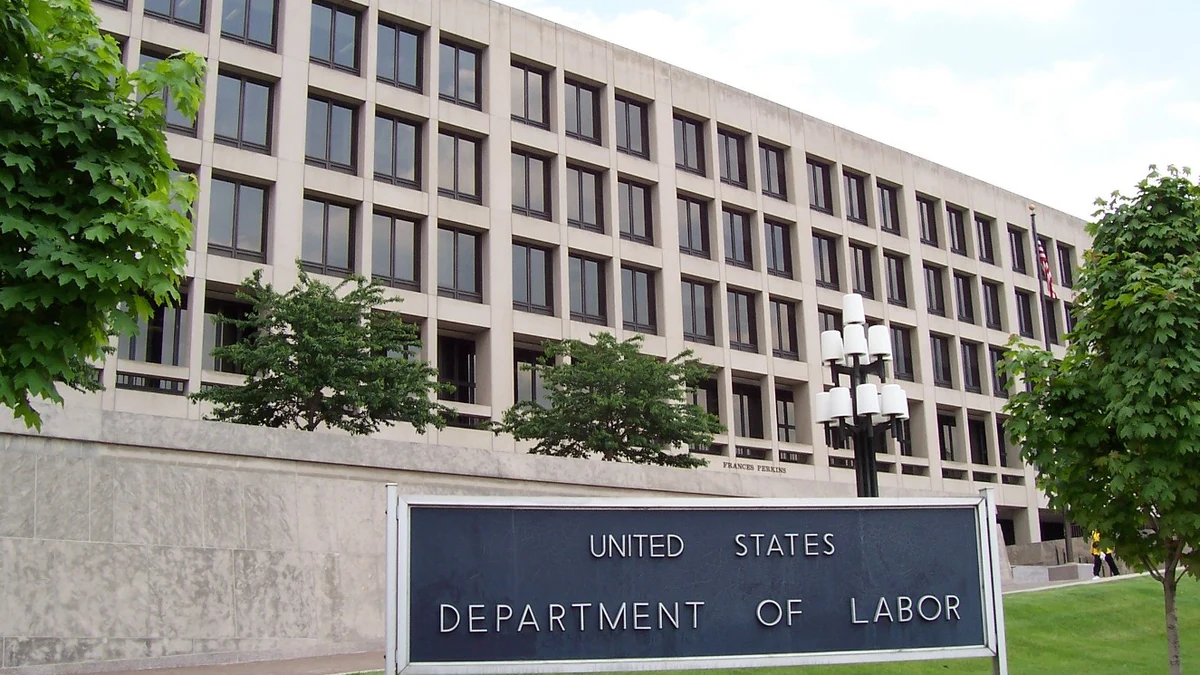
U.S. applications for unemployment benefits increased last week, but the broader claims data still pointed to a labor market with relatively few layoffs. Initial claims rose by 9,000 to a seasonally adjusted 209,000 in the week ended August 8, from a revised 200,000 a week earlier.
The increase was larger than economists polled by Reuters had expected, but it did not push claims outside the low range seen through much of the year. The four-week moving average, which smooths some of the volatility in the weekly series, was unchanged at 199,000. Continuing claims also moved lower, falling by 22,000 to 1.777 million in the week ended August 1.
The Labor Department’s weekly unemployment insurance report showed that the latest initial-claims figure was also below the 224,000 recorded in the comparable week of 2025. The four-week average stood at 221,750 a year earlier, substantially above the latest 199,000 reading.
Claims rose, but the trend measure stayed near 200,000
Initial jobless claims are watched as a high-frequency indicator of layoffs because they capture new applications for unemployment insurance after workers separate from employers. They can move sharply from week to week, especially around holidays, school calendars and seasonal plant shutdowns, so the four-week average is often more useful for judging the underlying direction.
That distinction is important in the latest report. Weekly claims have moved up from 187,000 in the week ended July 18 to 198,000 on July 25, 200,000 on August 1 and 209,000 on August 8. Even after that sequence, the four-week average was unchanged at 199,000 because the very low July reading remained part of the calculation.
The unadjusted data also rose. Actual initial claims under state programs totaled 186,909 in the latest week, up 14,437 from the prior week. The Labor Department said seasonal factors had expected an increase of 6,410. Unadjusted claims were still below the 199,390 filed in the comparable week last year.
The report therefore gives two signals at once. New claims have climbed for three consecutive weeks from the July 18 low, but their level remains modest by recent standards and lower than a year ago. A single weekly rise is not enough to establish a change in the layoff trend, particularly when the smoothed average has not moved higher.
Low layoffs are coexisting with weaker hiring
The relative stability in unemployment claims does not mean the labor market is uniformly strong. The July employment report showed that nonfarm payrolls edged down by 23,000, while the unemployment rate was little changed at 4.1%. The Bureau of Labor Statistics also revised May and June payroll growth down by a combined 103,000, leaving a softer picture of job creation than earlier estimates had suggested.
That creates an important distinction between losing a job and finding a new one. Weekly claims remain consistent with limited firing, while monthly payroll and job-turnover data show employers have become more cautious about adding workers. The result is a labor market that can offer considerable job security to many people who are already employed even as opportunities become less plentiful for job seekers.
June data from the Job Openings and Labor Turnover Survey reinforce that split. Job openings were little changed at 7.4 million and hires were unchanged at 5.3 million. Layoffs and discharges were also essentially unchanged at about 1.8 million, with the layoff and discharge rate holding at 1.1%. Those figures do not show a broad employer pullback through mass dismissals, but they also do not point to rapid hiring.
Continuing claims provide another piece of the picture. The number of people receiving benefits after an initial week of aid fell to 1.777 million in the week ended August 1 from a revised 1.799 million. The insured unemployment rate stayed at 1.2%. Both measures were below year-earlier levels, when continuing claims were 1.942 million and the insured unemployment rate was 1.3%.
Continuing claims are not a direct measure of hiring, because benefit eligibility, exhaustion and other administrative factors also affect the series. Still, persistently elevated continuing claims can signal that unemployed workers are taking longer to find jobs. The latest weekly decline therefore offers some reassurance that there has not been a fresh deterioration in that measure.
Upcoming labor reports will test whether the pattern holds
The claims report arrives less than a week after the July employment data raised concerns about the pace of job creation. July’s 23,000 payroll decline followed only a 20,000 increase in June after revision, and the unemployment rate remained at 4.1%. Average hourly earnings rose 3.2% from a year earlier, while the labor-force participation rate was little changed at 61.4%.
For policymakers and investors, the current mix is less straightforward than a simple strong-or-weak labor-market label. Low initial claims argue against a broad wave of layoffs, but slower payroll growth and subdued hiring show that labor demand has cooled. If claims were to move persistently higher, especially alongside rising continuing claims, that would provide clearer evidence that the weakness in hiring was spreading into job losses.
The next Job Openings and Labor Turnover Survey, covering July, is scheduled for September 1. The August employment report follows on September 4. Those releases will provide a broader test of whether employers are continuing to hold onto workers despite restrained hiring, or whether the recent softness in payrolls is beginning to show up more clearly in layoffs and unemployment.
More News



Latest News
View all news- U.S. Crude Inventories Fall 3.1 Million Barrels in Latest EIA Report
- Thermo Fisher Scientific Reports 9% Revenue Growth to $12.14 Billion
- OCC Issues Final Rule to Implement GENIUS Act Stablecoin Regulations
- Ohio Auto Parts Manufacturer Agrees to Pay $3 Million Over PPP Loan Allegations
- CFTC Announces $9.2 Million Penalty in Louisiana Forex Fraud Case