
Richmond Fed’s Tom Barkin Says Another Rate Hike Is Still an Open Question
Richmond Fed President Tom Barkin said it remains an open question whether the Federal Reserve will need to raise interest rates again to return inflation to its 2% goal.
Our editorial standards
MarketReview publishes clear, independently produced financial information using reliable sources and transparent editorial standards.
Read our Editorial Policy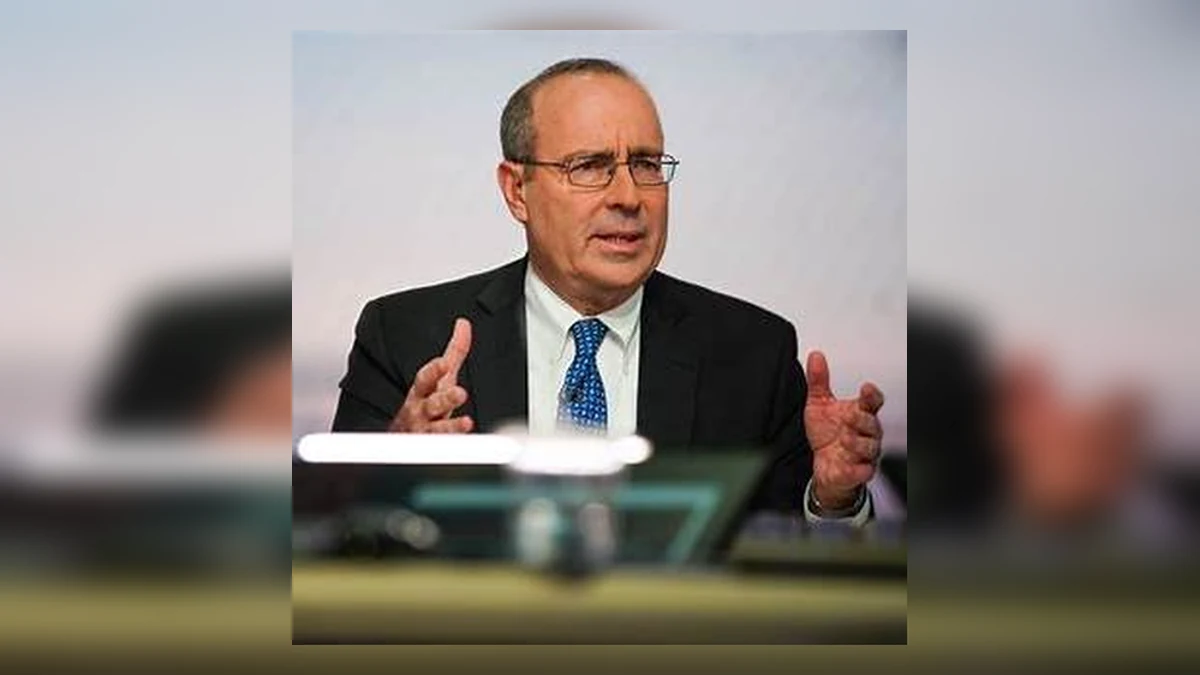
Richmond Federal Reserve President Tom Barkin said Thursday that it remains an open question whether the U.S. central bank will need to raise interest rates again to bring inflation back to its 2% target, a stance that leaves the door open to tighter policy without committing to an immediate move.
In a speech to the Greenville Chamber of Commerce, Barkin said the destination is not in doubt: the Federal Reserve intends to get inflation back to target. The uncertainty, in his telling, is whether inflation will continue easing on its own or whether policymakers will have to apply additional restraint. He framed that as the core policy puzzle now facing the Fed.
“Will the Fed need to raise rates further, or is inflation already on a path down to target?” Barkin asked in prepared remarks. That formulation captures a more conditional posture than the outright hawkish call delivered the same day by Cleveland Fed President Beth Hammack. Barkin did not argue that a hike is necessary now, but he also did not rule one out.
Barkin says inflation may cool on its own, but the risk of stickiness remains
Barkin’s broader speech, titled The Mysterious U.S. Economy, described inflation as one of four major uncertainties confronting policymakers. He noted that headline PCE inflation peaked at 7.2% in June 2022 and has come down sharply since then, but he also stressed that progress has become less straightforward after inflation reaccelerated this year. June headline PCE inflation was 3.7%, while core PCE, which excludes food and energy, was 3.3%.
He laid out two competing interpretations of the current inflation picture. One is that much of today’s elevated inflation is being driven by shocks that should fade over time. In that view, tariff rates will eventually settle, the Middle East oil shock will ease, the data-center construction boom tied to artificial intelligence will cool, and AI-driven productivity gains could lower costs. Barkin also pointed to modest compensation pressure and stable market-based inflation expectations as signs that inflation might still drift lower without further rate increases.
The counterargument, he said, is that inflation may be becoming more embedded. Supply-chain challenges could persist for longer than expected, AI investment could remain large enough to keep demand strong, and above-target inflation could begin to lift the price expectations of firms and households. If that scenario proves right, Barkin suggested, the Fed may have to do more to ensure inflation returns fully to target rather than settling at an uncomfortable level above it.
That tension helps explain why Barkin chose not to signal a clear September policy preference. His remarks were notably balanced. He acknowledged that elevated inflation may still be a temporary byproduct of unusual shocks, but he also warned that inflation has been too high for too long to dismiss the risk of persistence.
Recent data have improved, but they have not settled the inflation debate
The most recent inflation data gave policymakers a mixed picture. The Labor Department said the consumer price index rose 3.4% in July from a year earlier, down from 3.5% in June, while core CPI slowed to 2.5% from 2.6%. Those numbers support the argument that price pressures have moderated at the consumer level. But the Fed’s preferred inflation gauge remains higher. According to the Bureau of Economic Analysis, June’s PCE price index rose 3.7% from a year earlier, with core PCE at 3.3%.
That gap between cooling monthly readings and still-elevated annual inflation is why officials are reaching different conclusions from the same broad set of data. Some may see enough progress to justify patience. Barkin’s point was that patience may be appropriate, but only if policymakers stay open to the possibility that more tightening could still be required.
The institutional backdrop is also important. At its last policy meeting, the Federal Open Market Committee held the federal funds target range at 3.50% to 3.75% by a 9-3 vote. The statement said economic activity was expanding at a solid pace, job gains had kept pace with the workforce and inflation remained elevated relative to the Fed’s goal. Three officials dissented in favor of a quarter-point hike, underscoring that the committee is not unified on how restrictive policy needs to be.
What Barkin’s comments mean for the next Fed meeting
Barkin’s comments do not amount to a signal that a rate increase is coming at the next meeting. They do, however, show that a further hike remains a live possibility inside the Fed’s internal debate, especially if upcoming data fail to confirm that inflation is moving durably back toward 2%.
That matters because the Fed will receive more information before its September 15-16 meeting, including another CPI report, another PCE release and additional labor-market data. Barkin’s formulation effectively preserves optionality. If inflation keeps easing, holding steady will be easier to justify. If price pressures stabilize at levels that are still too high, or if businesses and households begin to treat elevated inflation as normal, the case for another increase becomes stronger.
For now, Barkin’s message is less about forecasting the next move than about defining the policy standard. The Fed’s job, in his view, is not simply to welcome slower inflation prints. It is to decide whether inflation is truly on a self-sustaining path back to target. Until that is clearer, he is leaving open the possibility that rates may need to go higher.
More from Banking

Latest News
View all news- USDA Releases October Crop Supply and Demand Estimates for Global Grain Markets
- U.S. Consumer Sentiment Falls to 46.3 as Inflation Expectations Rise
- Swiss-Ukraine Reconstruction Agreement Takes Effect, Opening Procurement Route for Swiss Firms
- U.S. Commerce Department Finalizes South Korean Hot-Rolled Steel Subsidy Review
- Treasury Names Judy Shelton Counselor on Currency Policy, With China Focus
