
Treasury Names Judy Shelton Counselor on Currency Policy, With China Focus
The economist will advise Treasury Secretary Scott Bessent as his department examines China’s financial conditions and exchange-rate practices.
Our editorial standards
MarketReview publishes clear, independently produced financial information using reliable sources and transparent editorial standards.
Read our Editorial Policy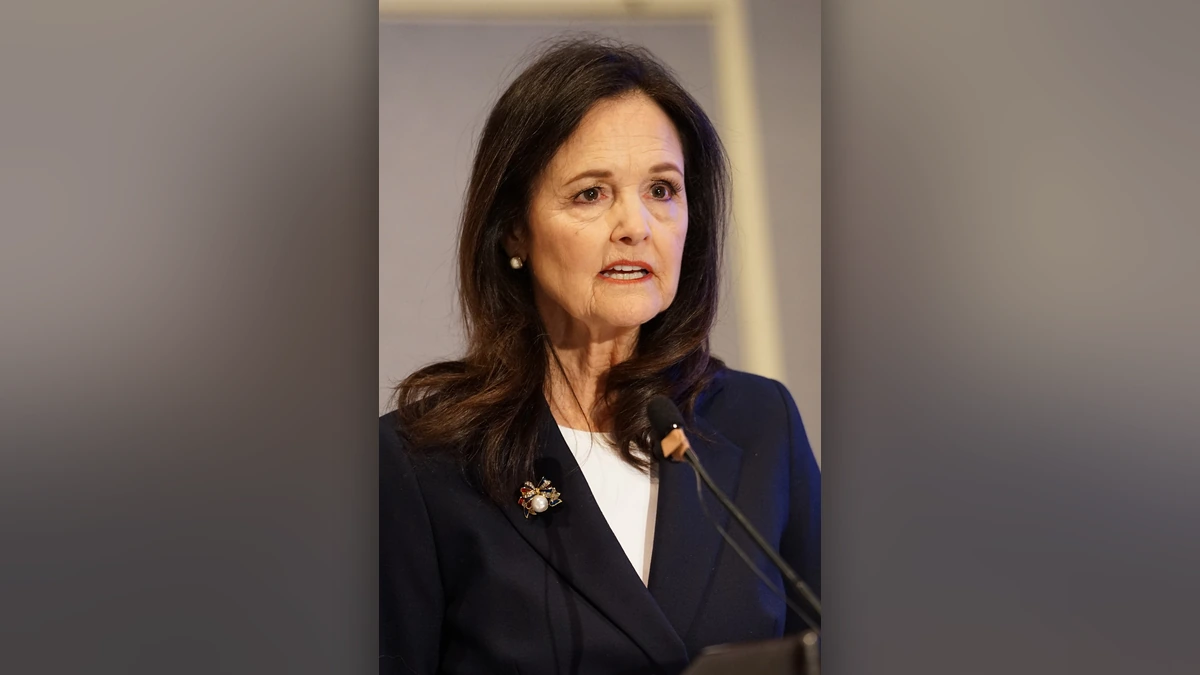
Treasury Secretary Scott Bessent has appointed economist Judy Shelton as a counselor in his office, giving her an advisory role on currency policy with a particular focus on financial conditions in China. The Treasury Department announced the appointment Friday, October 9, putting a specialist in international monetary affairs into a position close to the secretary as the administration intensifies its scrutiny of foreign-exchange practices.
According to the Treasury appointment announcement, Shelton will serve as a Counselor in the Office of the Secretary. The department described her responsibility as advising Bessent on currency policy, especially the evaluation of financial conditions in China. It did not announce a new exchange-rate measure, a change in the status of China under U.S. currency law or any specific negotiating assignment alongside her appointment.
The distinction is important. A senior adviser can help shape the analysis presented to a policymaker, but the appointment itself is not evidence of an imminent decision about the dollar, the Chinese yuan or U.S. trade enforcement. Treasury has an established process for assessing trading partners’ currency practices, and its most recent public findings provide the clearest context for the China-focused role.
China remains under close currency scrutiny
In its July 23 report to Congress, Treasury retained China on a Monitoring List of 10 major trading partners whose currency practices and broader economic policies warrant attention. Japan, Korea, Taiwan, Thailand, Singapore, Vietnam, Germany, Ireland and Switzerland were also listed. Treasury said none of the major trading partners reviewed met all three statutory criteria for enhanced analysis under the 2015 trade law during the period examined.
China was not designated a currency manipulator in that report. Treasury nonetheless singled it out for limited transparency surrounding the methods and objectives of its exchange-rate management. The department said it could consider a future designation if evidence showed China using formal or informal channels to prevent the renminbi from appreciating. That was a conditional statement about what evidence might support a later finding, not a determination that such conduct had been established.
The July review covered the four quarters through December 2025. It reported that China’s current-account surplus had grown to 3.8% of gross domestic product in 2025 from 2.5% a year earlier. Treasury connected that expansion to weak domestic demand and heavy reliance on exports, making the financial backdrop to the yuan relevant to a wider dispute about trade imbalances rather than just the currency’s daily quotation.
Even the direction of a currency move requires careful interpretation. Treasury recorded a 4.4% rise in the yuan against the U.S. dollar during 2025, but said its real effective exchange rate, which takes inflation and a basket of trading partners’ currencies into account, declined 2.4%. A stronger bilateral exchange rate therefore did not necessarily mean that China’s currency had strengthened against trading partners overall.
The policy questions go beyond the daily yuan rate
China manages the yuan through a daily reference rate set by the People’s Bank of China, with onshore trading generally permitted within a 2% band on either side of that fixing. Treasury’s July assessment described the fixing as one of several indicators used to judge Chinese intervention. It also monitors the central bank’s foreign-exchange assets and settlement data, and studies activity by state-owned banks that may influence the currency.
That wider view explains why the Treasury announcement referred to China’s financial conditions, not simply the yuan’s value against the dollar. Changes in bank balance sheets, restrictions on capital flows and the use of foreign-exchange swaps can complicate efforts to assess whether officials are resisting market pressure. Treasury’s earlier January 2026 report had already outlined a broader analytical approach covering intervention symmetry, capital controls and forward positions.
The July report described a shift within 2025: Chinese authorities appeared to have resisted downward pressure on the yuan early in the year, before permitting a gradual and managed appreciation as conditions changed. Those findings are not a statement about an October 2026 intervention or about what Shelton will recommend. They show the difficulty of interpreting a managed exchange-rate system from the spot price alone.
For U.S. manufacturers and exporters, exchange-rate analysis intersects with questions about price competitiveness and persistent trade surpluses. For investors, it can also affect assessments of capital flows and cross-border financial exposure. None of those potential implications establishes that the new counselor has been instructed to pursue a particular outcome; Treasury has described an advisory assignment, not an announced policy program.
Shelton brings a long record in international monetary affairs
Shelton previously served as the U.S. director at the European Bank for Reconstruction and Development and as chairman of the National Endowment for Democracy. Treasury also cited her congressional testimony on international financial relations and past consultation with national-security officials on global economic developments. Her work has included examining how countries’ internal monetary and financial conditions influence exchange rates.
Her academic background includes research appointments at Stanford University’s Hoover Institution and a senior fellowship at the Independent Institute. Shelton wrote The Coming Soviet Crash and Money Meltdown, and holds a doctorate in business administration from the University of Utah. Treasury emphasized that background in describing her qualifications for the new job.
The appointment also brings Shelton back into federal economic policymaking after an unsuccessful attempt to join the Federal Reserve’s Board of Governors. In November 2020, the Senate voted 47-50 against advancing her nomination through a cloture motion. That vote was a procedural decision, not a final confirmation vote. Her new Treasury assignment is a separate advisory position in the executive department, not a seat on the central bank’s governing board.
For now, the confirmed change is personnel: Bessent has added an adviser with experience in monetary history, international institutions and exchange-rate analysis. Treasury has not specified any new currency-policy directive resulting from the appointment. Its next formal assessments of trading partners will offer a clearer public measure of whether the department’s approach to China changes.
More News



Latest News
View all news- U.S. Commerce Department Finalizes South Korean Hot-Rolled Steel Subsidy Review
- U.S. Opens Proposed Gulf Offshore Oil and Gas Lease Sale 4 for Review
- Federal Reserve Reports Rising Household Financial Stress Despite Gains in Income and Wealth
- Canada Employment Falls in September as Unemployment Rises to 6.5%
- Australian Gas Buyers More Than Double 2027 Long-Term Contracting, ACCC Says
