U.S. Commerce Department Finalizes South Korean Hot-Rolled Steel Subsidy Review
Commerce set final countervailing duty subsidy rates of 1.28% for Hyundai Steel and 3.68% for POSCO, updating duties on reviewed steel and deposits on new shipments.
Our editorial standards
MarketReview publishes clear, independently produced financial information using reliable sources and transparent editorial standards.
Read our Editorial Policy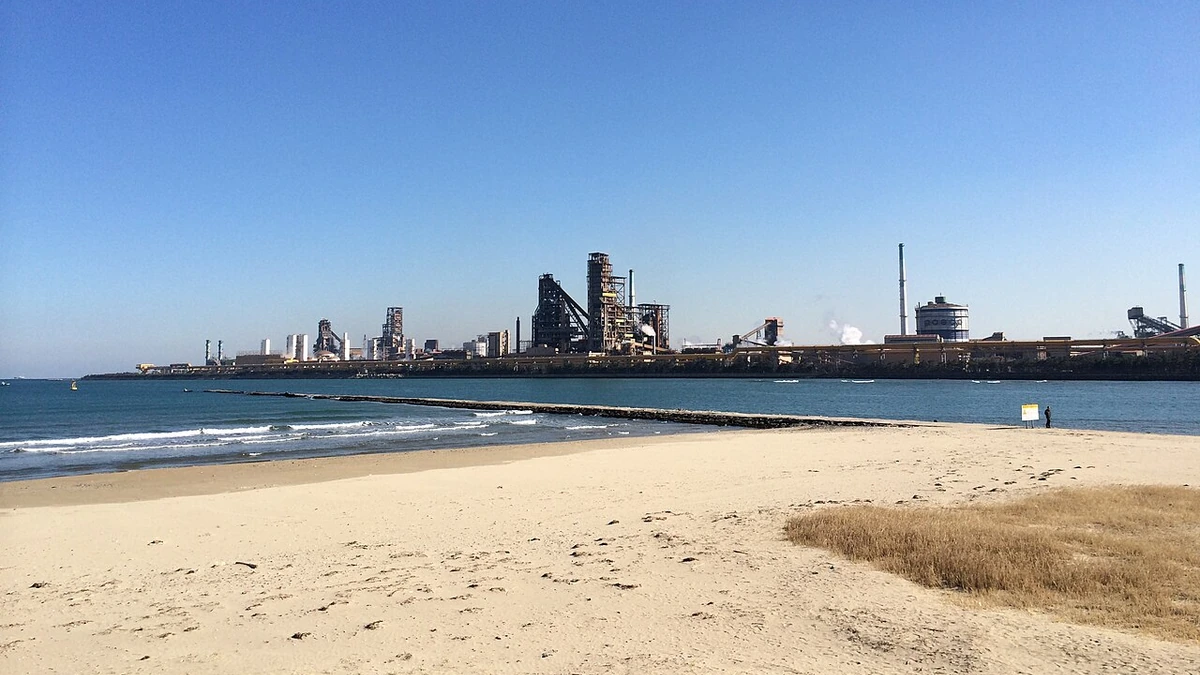
The U.S. Commerce Department has finalized subsidy rates for two South Korean producers of hot-rolled flat steel, setting a 1.28% countervailing duty rate for Hyundai Steel and a 3.68% rate for POSCO. The findings cover government support assessed during 2023, but they also determine the estimated duty deposits required on relevant shipments entering the United States from October 9, 2026.
The decision, published in the Federal Register on Friday, closes a review of an existing U.S. countervailing duty order rather than launching a new trade case. Commerce concluded that both companies received countervailable subsidies during the January 1 through December 31, 2023 review period. The resulting rates are company-specific and apply to merchandise covered by the order, not to every steel product imported from South Korea.
The different rates matter for importers because Commerce uses the review results both to determine duties on entries covered by the examined period and to set cash deposits on future entries. The final determination is part of the department’s longstanding process for updating trade-remedy rates as it reviews individual producers and exporters.
POSCO’s rate edged lower after the preliminary review
POSCO’s final rate of 3.68% is slightly below the 3.71% that Commerce published in its April 10 preliminary results. Hyundai Steel’s 1.28% rate was unchanged. The adjustment for POSCO amounts to 0.03 percentage points, so the more important outcome is confirmation of the two companies’ final rates and how they will be applied by U.S. Customs and Border Protection.
Commerce said it revised aspects of POSCO’s subsidy calculation after considering submissions from interested parties. Its final notice directs readers to a separate issues and decision memorandum for the detailed reasoning. That distinction is important: the final rate is published, but the brief notice alone does not establish how Commerce resolved every disagreement over an individual subsidy program.
The review also accounts for certain affiliated companies. Commerce identified Hyundai Green Power as cross-owned with Hyundai Steel. For POSCO, the department treated subsidies associated with several cross-owned businesses as part of its analysis and included POSCO International Corporation, an affiliated trading company, in POSCO’s overall subsidy calculation. POSCO International was not assigned a separate subsidy rate in the published results.
These company relationships help determine which rate applies when steel is produced by one entity and sold or exported through another. They do not mean that all the affiliates listed in the proceeding received separate final rates, nor that the finding covers unrelated products manufactured by those businesses.
How the ruling affects U.S. customs duties
Countervailing duties are intended to address imports benefiting from subsidies that meet the requirements of U.S. trade law. In an administrative review, Commerce examines a defined past period and calculates a percentage of the merchandise’s value, rather than announcing a single flat fee per shipment. The rates here are stated on an ad valorem basis, meaning they are expressed as a percentage of value.
For entries of covered hot-rolled steel during the 2023 review period, Commerce will instruct U.S. Customs and Border Protection to assess duties using the final company rates. That is distinct from the estimated cash deposits collected on later shipments while final liabilities for those shipments remain subject to the trade-remedy system. Importers should not read the published percentages as a universal total tariff on South Korean steel: they are rates under this particular countervailing duty order.
The October 9 publication also triggers updated deposit requirements for the covered merchandise shipped by Hyundai Steel and POSCO. Commerce said deposits will be collected at the listed rates for merchandise entered, or withdrawn from a warehouse for consumption, on or after the publication date. Companies that were not reviewed will continue to have deposits calculated using their most recent applicable company-specific rate or the existing all-others rate. The notice does not assign those firms the two rates announced for Hyundai Steel and POSCO.
The department plans to issue assessment instructions to customs authorities no earlier than 35 days after publication. It also describes a safeguard if a timely summons is filed at the U.S. Court of International Trade: relevant entries would not be liquidated until the period for seeking a statutory injunction expires. That court-related provision concerns the timing of final customs assessment and does not, by itself, establish that either company has filed a challenge.
The duty order has been in place since 2016. Commerce identifies the products covered as certain hot-rolled flat-rolled steel, including qualifying coils and straight-length products, under a detailed product description. Its official case record sets out the scope and exclusions. Steel that is otherwise similar can fall outside the order if it does not meet the legal product definition, making classification and producer identification central to applying the rates.
The subsidy issues Commerce considered
The review examined whether government measures provided a financial contribution, conferred a benefit and satisfied the specificity requirements of U.S. countervailing duty law. Those tests are different from a determination that an exporter sold steel at less than fair value, which is addressed under a separate antidumping duty process. The two trade remedies can be discussed in the same industry, but their findings and rates should not be confused.
According to the final notice’s list of disputed issues, interested parties contested matters involving electricity supplied in South Korea, permits under the country’s emissions trading system, the attribution of certain benefits to POSCO and the treatment of financing linked to POSCO International. A workplace nursery program was also among the issues raised. The list describes questions Commerce considered; it is not a list of findings that every program mentioned was necessarily ruled countervailable in the manner argued by any party.
The case began as a review of a past year rather than a direct reassessment of the steelmakers’ current operations. Commerce initiated the administrative process in November 2024 and selected Hyundai Steel and POSCO for individual examination. In its April preliminary notice, it also rescinded the review for 13 companies after finding no relevant suspended entries during the review period. The October 9 Federal Register issue records the final action on the two remaining examined producers.
The final notice is dated October 6 and became applicable with publication on October 9. Its most immediate consequence is procedural but financially concrete: customs authorities now have the final figures to use for the reviewed entries, and importers of covered goods from the two named companies have updated deposit rates for new entries. The separate assessment instructions and any court filings will determine when the historical entries can be finally liquidated.
More News


Latest News
View all news- Treasury Names Judy Shelton Counselor on Currency Policy, With China Focus
- U.S. Opens Proposed Gulf Offshore Oil and Gas Lease Sale 4 for Review
- Federal Reserve Reports Rising Household Financial Stress Despite Gains in Income and Wealth
- Canada Employment Falls in September as Unemployment Rises to 6.5%
- Australian Gas Buyers More Than Double 2027 Long-Term Contracting, ACCC Says