Norway Proposes Another NOK 85 Billion in Ukraine Support for 2027
Norway’s government plans to ask Parliament to maintain NOK 85 billion in Ukraine support for 2027, with the majority again expected to go to military purposes and the final split to be set later.
Our editorial standards
MarketReview publishes clear, independently produced financial information using reliable sources and transparent editorial standards.
Read our Editorial Policy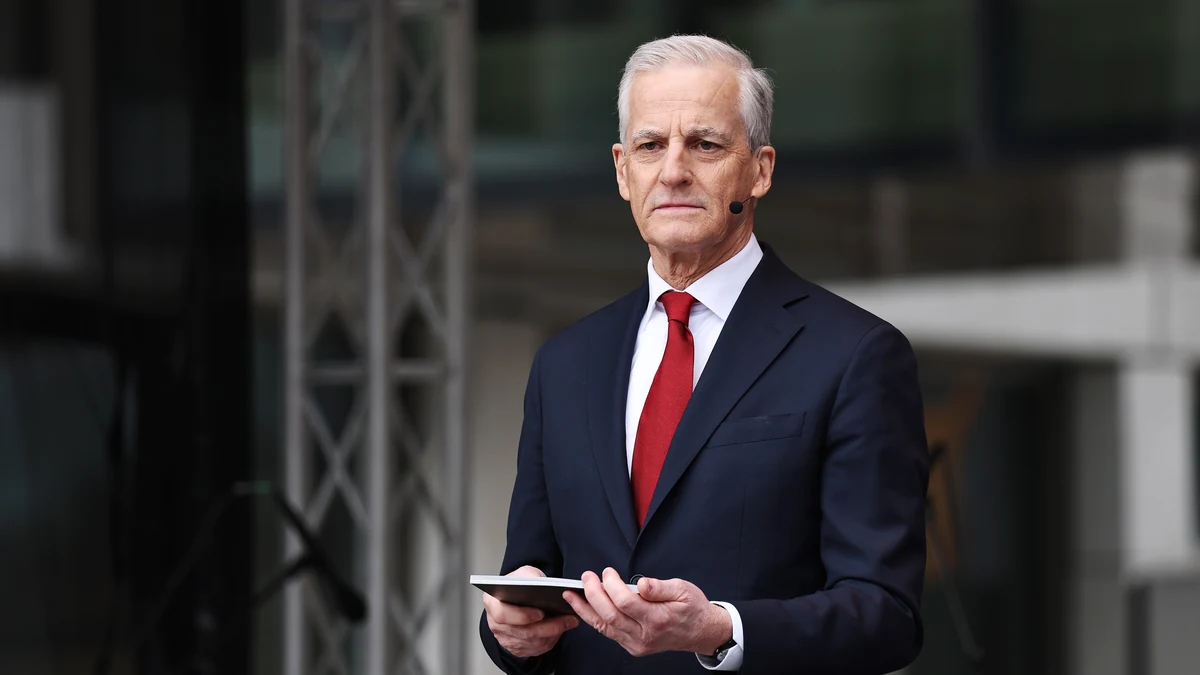
Norway’s government said Sunday it will propose NOK 85 billion in support for Ukraine in 2027, keeping the planned annual amount at the same level as the funding approved for 2026. The package would cover both military and civilian assistance under the country’s Nansen Support Programme for Ukraine.
Prime Minister Jonas Gahr Støre delivered the proposal to Ukrainian President Volodymyr Zelenskyy during a visit to Kyiv on August 23. Støre said Norway intends to continue supporting Ukraine through a difficult winter and described the commitment as part of Norway’s broader security policy, not simply a short-term aid measure.
The Norwegian government announcement makes clear that the NOK 85 billion is still a proposal to the Storting, Norway’s parliament. The government has not yet published the final division between military and civilian support for 2027, although it said the largest share would again go to military assistance, including purchases from Ukraine’s defence industry.
Military support is set to remain the largest component
The decision to signal another NOK 85 billion before the detailed budget split is available gives Ukraine and Norway’s defence partners an early indication that Oslo does not intend to reduce support next year. It also continues the unusually high funding level that Norway adopted in response to the prolonged war and the growing cost of military equipment, energy assistance and reconstruction needs.
The 2026 allocation offers the clearest guide to the current shape of the programme, even though the government has not said that next year’s distribution will be identical. Of the NOK 85 billion approved for 2026, NOK 70 billion was assigned to military support and NOK 15 billion to civilian and humanitarian purposes.
Norway’s military plan for 2026 put more than NOK 12 billion toward drones and autonomous systems, about NOK 9 billion toward air defence systems and F-16 fighter jets, and about NOK 6 billion toward maritime security. The government also set aside roughly NOK 3.5 billion for a Nordic-Baltic and Polish brigade initiative, about NOK 5 billion for training Ukrainian personnel, and more than NOK 8 billion for international cooperation mechanisms and strategic projects. Another NOK 15 billion was reserved to give the government flexibility to respond to changing needs during the year.
Those figures do not establish how the 2027 package will be divided. Sunday’s announcement only commits the government to seeking the same top-line amount and says that military support will remain the majority. The specific mix will matter because direct procurement from Ukrainian producers directs funding to Ukraine’s own defence companies, while international procurement and donations can depend on production capacity and delivery schedules elsewhere in Europe and among allied countries.
Civilian funding has focused on energy, public services and reconstruction
The civilian side of the Nansen programme has also become a major source of budget and infrastructure support. For 2026, Norway allocated NOK 4.8 billion to energy security and energy supply, including gas purchases and nuclear safety measures. Humanitarian assistance received NOK 3.5 billion, while NOK 4 billion was assigned to budget support for Ukrainian authorities and reconstruction.
Smaller allocations included NOK 800 million for business development, NOK 925 million for civil society, governance, accountability and related social measures, and NOK 350 million for Moldova. Norway said the civilian support could be adjusted during the year as needs changed, with additional money held in reserve and for programme administration.
The emphasis on energy and public services reflects the way Norway has structured civilian assistance around keeping essential systems operating during the war. Funding has been channelled through established international partners including the World Bank, the European Bank for Reconstruction and Development, the European Union’s Ukraine Facility, United Nations organisations and humanitarian groups. Those channels have been used for government payrolls, pensions, energy imports, infrastructure repair and emergency relief, alongside direct support delivered through humanitarian organisations.
Støre’s latest announcement also tied continued support to European security. That framing is consistent with earlier Norwegian government statements that assistance to Ukraine is intended both to strengthen Ukraine’s ability to defend itself and to reduce wider security risks for Norway and Europe. The 2027 proposal therefore extends a policy that Oslo has increasingly treated as a multi-year defence and foreign-policy commitment rather than a series of isolated annual grants.
The Nansen programme has expanded far beyond its original size
Norway launched the Nansen Support Programme in February 2023 with an original framework of NOK 75 billion for 2023 through 2027, based on annual support of about NOK 15 billion. Parliament later expanded and extended the programme as the war continued. In late 2024, the political parties in the Storting agreed to extend it through 2030 and establish a minimum annual allocation of NOK 15 billion.
The annual amounts then rose sharply. The 2025 headline allocation rose to NOK 85 billion after Parliament agreed to an additional NOK 50 billion during the year. Parliament subsequently approved another NOK 85 billion for 2026. The government’s latest published programme overview puts the framework at NOK 274.5 billion for 2023 through 2030. Sunday’s announcement did not provide a revised cumulative framework for the programme.
Broad political backing has been one of the programme’s defining features. The Nansen framework has been endorsed across Norway’s parliamentary parties, which has allowed the government to make multi-year commitments even as the size and composition of the annual packages have changed. The 2027 proposal will still need to move through the Storting, and the government has said it will return later with the military-civilian breakdown.
For Ukraine, the immediate financial signal is that Norway is proposing to hold its support at NOK 85 billion rather than step back toward the programme’s NOK 15 billion annual floor. For Norway, the next substantive decision is no longer the headline amount but how Parliament and the government divide that money among weapons procurement, Ukrainian defence-industry purchases, humanitarian needs, energy support and reconstruction during 2027.
More News
Latest News
View all news- Singapore Announces Haze-Related Healthcare Subsidies Starting October 12
- New Zealand’s ACT Party Proposes NZ$12.4 Billion Cut to 2031 Debt Forecast
- French Finance Minister Seeks to Avoid Budget Ordinances Amid Deficit Pressure
- Florida Renters Insurance Rate Cut Takes Effect for American Modern Policies
- Canada’s New Employment Insurance Eligibility Rules Take Effect October 11