New Zealand’s ACT Party Proposes NZ$12.4 Billion Cut to 2031 Debt Forecast
The party plans NZ$9.5 billion in annual spending cuts once fully implemented, alongside changes to pensions, KiwiSaver and the size of government.
Our editorial standards
MarketReview publishes clear, independently produced financial information using reliable sources and transparent editorial standards.
Read our Editorial Policy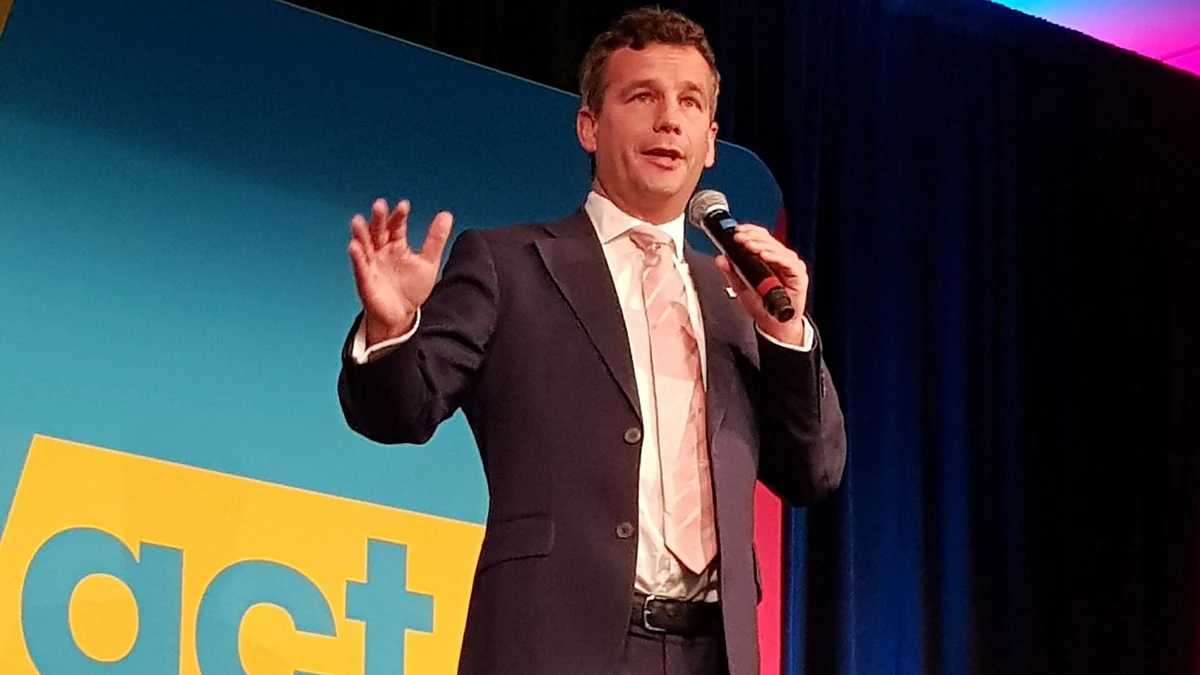
New Zealand’s ACT Party unveiled a fiscal plan on Sunday that it says would leave government debt NZ$12.4 billion below existing forecasts by June 2031. The proposal centres on sustained spending cuts, a smaller public service and a higher retirement age, alongside selected tax changes intended to encourage saving and investment.
Party leader David Seymour is presenting the programme ahead of the November 7 general election as a route to an earlier budget surplus without introducing new taxes. ACT says its plan would eventually cut NZ$9.5 billion a year in spending outside welfare and specified frontline services, although that annual savings figure applies only once its changes are fully implemented.
The distinction matters for assessing the headline debt promise. ACT is projecting a smaller debt burden than New Zealand would otherwise face in 2031, not a NZ$12.4 billion fall from the amount the government owes today. Its figures are election-policy estimates, not Treasury forecasts or measures already approved by Parliament.
Debt would remain above today’s level under the projected path
The Treasury’s September pre-election fiscal update forecasts net core Crown debt of NZ$229.8 billion in the year ending June 2031, equal to 39.5% of gross domestic product. A NZ$12.4 billion reduction against that baseline implies debt of roughly NZ$217.4 billion at the same point, subject to rounding and the assumptions behind ACT’s costings.
For perspective, Treasury reported net core Crown debt of about NZ$186.8 billion at June 2026. Even the lower 2031 figure implied by ACT’s plan would therefore represent more debt in nominal dollar terms than New Zealand had at the end of the latest completed fiscal year. ACT’s proposition is that debt accumulation could be restrained substantially relative to the existing outlook.
The government’s current fiscal projections are already based on spending restraint and an improving economy. Treasury expects the OBEGALx operating-balance measure, which excludes Accident Compensation Corporation revenue and expenses, to move from a NZ$6.8 billion deficit in 2026/27 to a NZ$4.0 billion surplus in 2028/29. The surplus is forecast to rise to NZ$11.7 billion in 2030/31. Those numbers provide the benchmark against which ACT’s promise of a faster and larger surplus must be judged.
The Treasury projections also illustrate why the debt forecast is not a fixed bill waiting to be reduced. Revenue, economic growth, borrowing costs and spending decisions can all change the eventual outcome. A political party’s proposed savings cannot be treated as realised fiscal gains until policies are implemented and their financial effects become clear.
Spending cuts and a smaller government form the core of the plan
ACT’s published fiscal plan calls for NZ$9.5 billion in annual reductions from spending outside welfare and protected frontline services once the proposed changes are fully in place. The party wants expenditure in other areas to return toward 2017 levels on a per-person basis, with adjustments for inflation and population growth. It argues that the state has become more expensive without providing proportionately better services.
Seymour has identified frontline health, education, policing, defence and the Ministry for Children among the areas intended to be protected from that particular spending rollback. But the boundaries of an exemption matter: shielding specified services does not mean every programme administered by the same department would necessarily escape budget scrutiny. Detailed choices over personnel, contracts and service delivery would determine how the savings were felt.
The restructuring proposal would reduce the number of government departments to 19 and the number of ministers to 18. ACT presents that as a way to assign clearer responsibility for budgets and performance. Reaching the savings target would nevertheless require more than changing organisational charts; reductions of this size depend on decisions about what the government buys, funds or delivers, as well as how agencies operate.
The party also proposes gradually lifting the age of eligibility for New Zealand Superannuation from 65 to 67 by 2035. It says there would be an early-access provision for people who have spent substantial parts of their careers in physically demanding work. Raising the eligibility age would reduce future pension spending, but it would also require affected workers to plan for a longer period before receiving the universal payment.
Targeted tax changes sit alongside new spending priorities
Rather than offering a broad income-tax reduction immediately, ACT proposes removing tax on qualifying investment earnings within KiwiSaver retirement accounts. At the same time, it would discontinue the government contribution to KiwiSaver. The two measures pull in different directions for savers: untaxed investment returns could compound for longer, while ending the public contribution would remove an existing source of additions to eligible accounts.
ACT also wants a Carbon Tax Refund that would return net proceeds from New Zealand Emissions Trading Scheme auctions to New Zealanders. The party has signalled other targeted changes affecting cryptocurrency and charitable giving, including removing the existing cap on tax benefits for eligible donations. Its stated approach is to fund selected tax concessions through savings rather than borrowing for a sweeping tax-cut package.
Not all of the proposed reductions would flow directly into lower debt. ACT would use some savings for expanded pharmacist-led care for minor ailments and education initiatives, including a programme to introduce Year 11 students to share investing. Its fiscal-plan summary also sets aside approximately NZ$2 billion as a funding contingency for a National Cancer Centre. A contingency is not the same as a confirmed construction appropriation or a project already under way.
These choices illustrate the allocation question facing the next government. Lower spending in some parts of the public sector is intended to finance a mix of reduced borrowing, tax changes and selected services. The overall debt outcome would depend on both the projected savings materialising and the costs of the new commitments staying within the party’s estimates.
ACT released the plan less than four weeks before the general election on November 7. For its programme to become government policy, the party would need sufficient political support and agreement on the budgets and legislation required to put the measures into effect. Until then, the NZ$12.4 billion figure remains a proposed improvement over Treasury’s 2031 debt forecast, rather than an achieved reduction.
More News



Latest News
View all news- Singapore Announces Haze-Related Healthcare Subsidies Starting October 12
- French Finance Minister Seeks to Avoid Budget Ordinances Amid Deficit Pressure
- Florida Renters Insurance Rate Cut Takes Effect for American Modern Policies
- Canada’s New Employment Insurance Eligibility Rules Take Effect October 11
- Australia Announces A$4.7 Million in Emergency Relief and Debt Counselling Funding