
Enovis Makes Binding Offer for eCential Robotics at €155 Million Enterprise Value
Enovis announced a binding offer to acquire French surgical-robotics developer eCential Robotics, with about €176 million of cash due to shareholders at closing and up to €35 million more tied to milestones.
Our editorial standards
MarketReview publishes clear, independently produced financial information using reliable sources and transparent editorial standards.
Read our Editorial Policy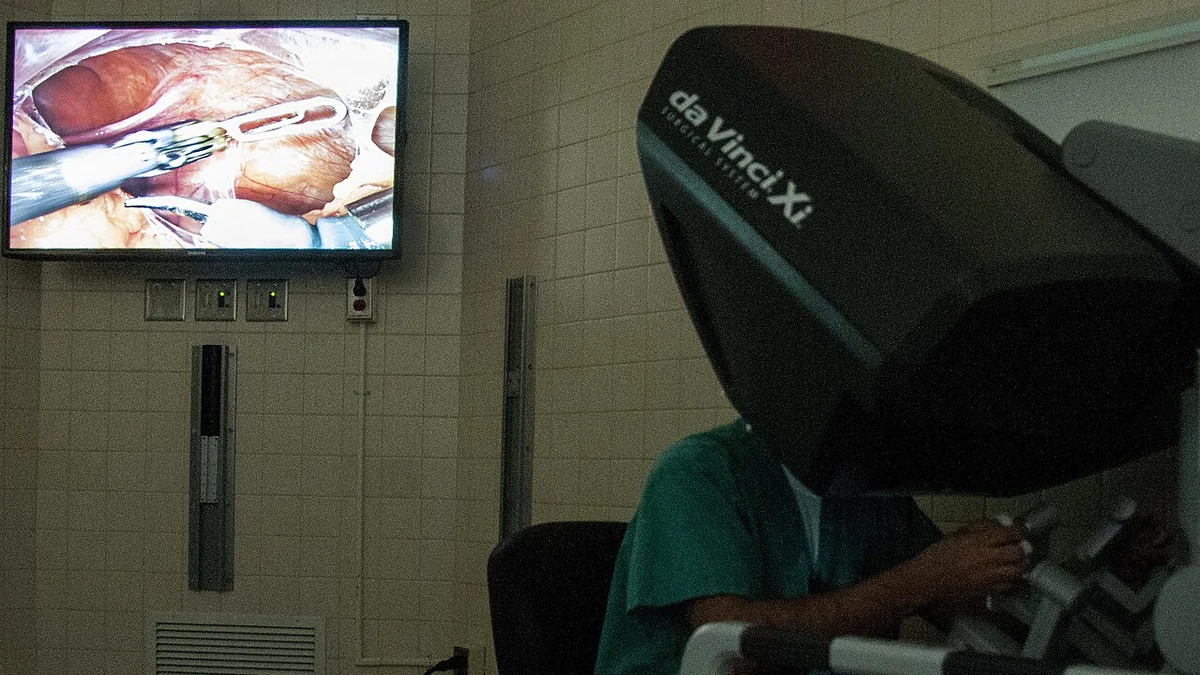
Enovis Corporation announced a binding offer to acquire French surgical-technology company eCential Robotics at an upfront enterprise value of €155 million, a proposed purchase that would add robotic automation to Enovis’s growing orthopedic technology platform. The September 1 announcement puts a defined price on the strategic expansion, but the acquisition has not yet reached the definitive-agreement or closing stage.
Under the proposed terms, Enovis would pay approximately €176 million in cash to eCential shareholders at closing, plus as much as €35 million of additional cash if specified milestones are achieved. The €155 million enterprise value and the roughly €176 million upfront shareholder payment are different valuation measures, so they should not be read as conflicting prices. Enovis said it expects to fund the purchase with cash on hand and availability under its existing revolving credit facility.
The timing also needs a distinction. Enovis’s September 1 announcement said it had entered into a binding offer, while the company’s regulatory filing states that the offer was entered into on August 31 and publicly announced the following day. The parties still expect to complete an information and consultation process with eCential Robotics’ works council in France before signing a definitive acquisition agreement.
The purchase brings a near-term margin cost
Enovis is not presenting eCential as an immediately margin-accretive acquisition. Management expects about 150 basis points of deal-related dilution to adjusted EBITDA margin in 2027. It also forecasts roughly 50 basis points of underlying margin improvement, which would leave an expected net headwind of about 100 basis points next year. The company says year-over-year adjusted EBITDA margin improvement should resume in 2028.
That forecast gives investors a clearer trade-off than the purchase price alone. Enovis is spending now to add a new robotics capability, and management expects the integration and investment burden to weigh on profitability before the anticipated benefits show up more fully. The margin figures are company projections rather than guaranteed outcomes, and Enovis does not provide a forward-looking reconciliation of adjusted EBITDA margin to the closest GAAP measure because it says the necessary reconciling items cannot be estimated without unreasonable effort.
Enovis also expects free cash flow conversion to rise to 50% in 2027, producing more than $100 million of free cash flow, with further improvement in 2028 and 2029. Those forecasts are broader company expectations and should not be treated as cash flows generated specifically by eCential Robotics.
The proposed funding mix is relevant against Enovis’s latest reported balance sheet. At July 3, 2026, the company had $12.6 million of cash and cash equivalents and about $1.25 billion of long-term debt excluding the current portion. It reported second-quarter net sales of $582.8 million and adjusted EBITDA of $104 million. Because Enovis has said it can draw on its revolving credit facility as well as existing cash, the eventual financing mix will depend on how much of each source is used by closing.
eCential adds robotics to Enovis’s ASTRA platform
The strategic case centers on surgical guidance and automation rather than simply adding another implant product. Enovis’s ASTRA platform already includes technologies used for orthopedic planning and surgical navigation. Its ARVIS system uses a surgeon-worn display for spatial navigation in orthopedic procedures. eCential would add a robotic layer that Enovis says is complementary to that existing augmented-reality capability.
eCential Robotics describes its own system as an open, modular platform for bone surgery that combines image-based navigation with robotic guidance. The company’s current product materials describe a core station that can connect to multiple intraoperative 3D imaging systems, navigation instruments and a mobile robotic arm. eCential says its platform is designed to support multiple applications and to remain open to different implant manufacturers rather than forcing surgeons into a single hardware ecosystem.
The technology has already passed important U.S. regulatory milestones. The Food and Drug Administration’s 510(k) database shows that eCential’s Spine Navigation and Robotic-Assistance Device received a substantially equivalent decision in June 2024. The device is classified as an orthopedic stereotaxic instrument and is intended to support navigation and robotic assistance in spinal procedures. That clearance does not mean every future application of the platform is automatically cleared, and Enovis itself lists future development, regulatory clearance, commercialization and market adoption among the risks to the acquisition thesis.
eCential says its technology has been used in more than 3,500 surgeries, that it has more than 100 registered patents and that it works with more than 15 clinical and business partners. Those figures come from the company’s own website and are useful as indicators of operating history, but they are not independently audited measures disclosed by Enovis in the acquisition announcement.
Enovis plans to establish a robotics center of excellence in Grenoble, France, where eCential is based. The company also said it intends to continue supporting eCential’s existing partnerships. That point matters because eCential’s open-platform strategy relies in part on compatibility and cooperation with other technology and implant companies, rather than functioning only as a closed extension of Enovis’s own portfolio.
A binding offer is not the same as a completed acquisition
The deal structure leaves several steps between the announcement and ownership changing hands. According to Enovis’s Form 8-K filed with the Securities and Exchange Commission, the company entered into the binding offer on August 31. The filing says the purchase is expected to close by the end of 2026, subject to regulatory approvals. Enovis separately says the French works-council information and consultation process is expected to be completed before the parties enter into a definitive acquisition agreement.
That sequence makes the wording important. Enovis has committed to a binding offer, but it has not announced that it already owns eCential Robotics. The current proposal can therefore be evaluated on its stated economics and strategic intent, while completion remains dependent on the required consultation process, regulatory approvals and other closing conditions.
Management has also identified integration and commercialization risks that could affect the expected return. These include the possibility that anticipated benefits take longer to materialize, difficulties integrating the businesses, changes in demand for Enovis products, and slower development or adoption of eCential’s robotic surgical solutions. Those are standard acquisition risks, but they are particularly relevant here because Enovis is explicitly accepting a projected margin headwind in 2027 to accelerate its robotics roadmap.
The next concrete milestone is the completion of the French employee-representation process and execution of a definitive acquisition agreement. If those steps and the required regulatory approvals are completed as planned, Enovis is targeting a closing by year-end 2026. Until then, the €155 million enterprise value describes a proposed acquisition whose financial impact will depend on the final closing, the mix of cash and revolver funding, and how quickly the combined surgical-technology platform gains commercial traction.
More from Investing


Latest News
View all news- U.S. Leading Economic Index Was Flat in September as Growth Tilts Toward Business Investment
- U.S. Jobless Claims Fall to 194,000 as Layoffs Remain Historically Low
- Kansas City Fed Releases October Manufacturing Survey as Factories Face Cost Pressures
- Census Bureau Releases New Business Conditions Data Covering U.S. Employers
- BEA Expands State-Level R&D Economic Statistics With New 2024 Estimates
