
India’s Current Account Deficit Widens to $4.2 Billion in Q1 as Trade Gap Grows
The merchandise trade deficit reached $86.1 billion in April-June, while stronger services receipts and remittances cushioned much of the pressure.
Our editorial standards
MarketReview publishes clear, independently produced financial information using reliable sources and transparent editorial standards.
Read our Editorial Policy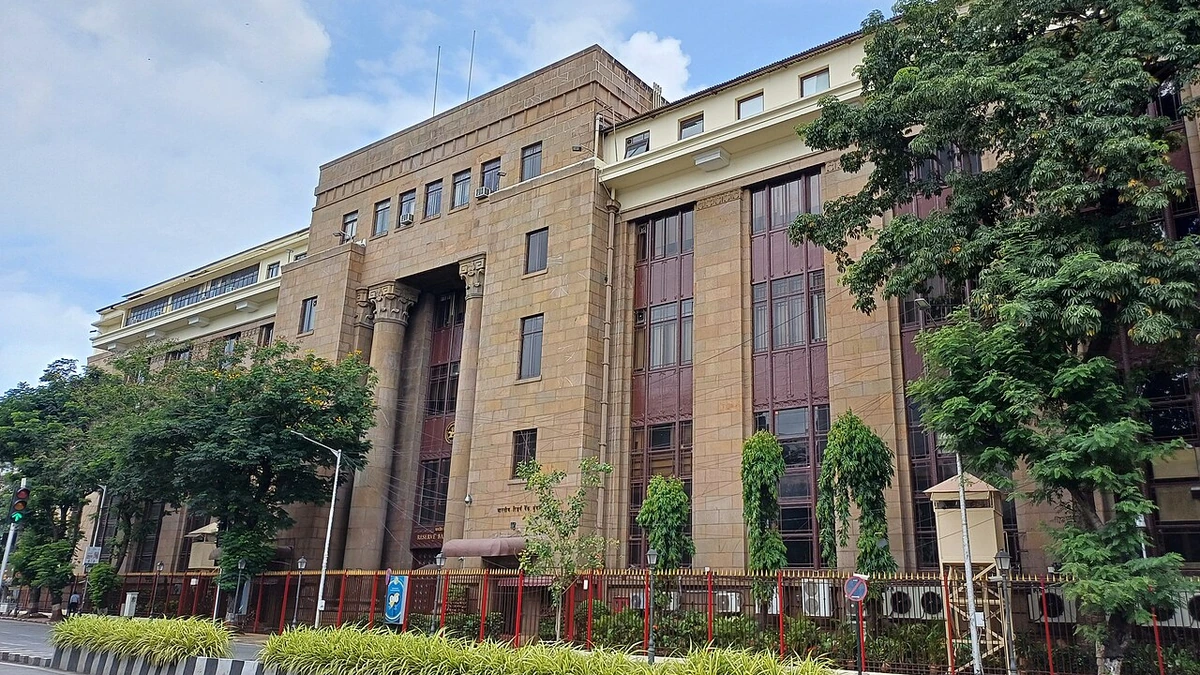
India’s current account deficit widened to $4.2 billion in the first quarter of fiscal 2026-27 as a larger merchandise trade gap outweighed stronger services earnings and remittance flows. The shortfall was equivalent to 0.5% of gross domestic product in April-June, up from $3.4 billion, or 0.4% of GDP, a year earlier, according to preliminary Reserve Bank of India data released September 1.
The goods deficit increased by $17.2 billion from a year earlier, reaching $86.1 billion. Much of that deterioration was absorbed elsewhere in the current account, however, as net services receipts rose, investment-income outflows fell and the secondary-income surplus increased sharply.
A wider goods deficit drives the current-account deterioration
The RBI’s first-quarter balance-of-payments release shows merchandise exports on a BoP basis rising to $132.0 billion from $112.7 billion a year earlier. Merchandise imports increased more sharply, to $218.0 billion from $181.6 billion, leaving the $86.1 billion goods deficit that sits at the center of the wider current-account shortfall.
Petroleum, oil and lubricants accounted for part of the pressure. The net POL deficit widened to $37.6 billion from $32.2 billion, an increase of $5.4 billion. The RBI table does not assign the entire deterioration in the goods balance to petroleum, so the broader rise in imports matters as well.
India’s Department of Commerce had already shown the same direction in its June foreign-trade release. On that agency’s merchandise-trade measure, April-June exports were $129.32 billion and imports were $216.18 billion, producing an $86.86 billion deficit, compared with $68.75 billion a year earlier. Those figures are close to, but not identical with, the RBI’s BoP numbers.
The distinction is important when comparing official releases. RBI statistical guidance notes that its balance-of-payments merchandise data and the trade figures compiled through the government’s merchandise statistics can differ because their scope, timing, definitions, methods and coverage are not identical. For the current-account calculation, the relevant number is the RBI’s $86.1 billion BoP goods deficit rather than the customs-based trade balance.
Services and remittances cushion most of the goods shock
India’s services surplus continued to provide a large offset. Services exports increased to $106.2 billion from $97.4 billion, while services imports rose to $54.6 billion from $49.5 billion. That lifted net services receipts to $51.6 billion from $47.9 billion, with the RBI reporting year-over-year growth in computer services, other business services and transportation services.
Primary income also moved in a favorable direction for the current account. The net outflow, which mainly reflects investment-income payments, fell to $10.5 billion from $13.3 billion. At the same time, the secondary-income surplus rose to $40.8 billion from $30.9 billion.
Personal transfers were a major part of that improvement. Receipts under secondary income, mainly remittances from Indians working overseas, climbed to $42.9 billion from $33.2 billion. The $42.9 billion figure is a gross receipt measure, while the $40.8 billion secondary-income number is the net balance after debits, so the two should not be treated as interchangeable.
Taken together, the services balance, primary-income balance and secondary-income balance improved by roughly $16.4 billion from a year earlier. That nearly offset the $17.2 billion deterioration in the merchandise balance, which is why the current-account deficit itself widened by only about $0.8 billion despite the much larger increase in the goods gap.
The size of the deficit also remained modest relative to the economy. Official national-accounts data released a day earlier showed real GDP growing 7.8% year over year in the June quarter and nominal GDP increasing 10.3%. The RBI’s 0.5%-of-GDP current-account reading therefore points to a larger external deficit than a year ago, but not one approaching the much larger merchandise deficit when viewed against the full economy.
Portfolio outflows put additional pressure on the financial account
The financing side of the balance of payments was less supportive than a year earlier. Net foreign direct investment increased to $6.1 billion from $5.2 billion, but foreign portfolio investment swung to a $9.6 billion net outflow from a $1.6 billion net inflow in the first quarter of 2025-26. That represents an $11.2 billion year-over-year reversal in portfolio flows.
Other external funding channels also softened. Net inflows into non-resident deposits were $2.8 billion, down from $3.6 billion, while net external commercial borrowing inflows declined to $3.3 billion from $4.4 billion. The capital and financial account recorded a $2.6 billion net balance in the RBI table, compared with $4.7 billion a year earlier.
Foreign-exchange reserves were depleted by $8.1 billion on a BoP basis during the quarter, reversing a $4.5 billion accretion in the year-earlier period. The RBI explicitly reports that reserve movement on a balance-of-payments basis, which is the measure used to reconcile the external accounts for the quarter.
The combination of a wider current-account deficit and the reversal in portfolio flows left India’s external accounts with less financing support than in the same quarter last year, even though direct investment improved. RBI labels the April-June 2026 figures preliminary and the year-earlier comparison partially revised, so later balance-of-payments releases can change the exact values.
More News


Latest News
View all news- SEC Sets 2027 Examination Priorities, With Private Credit and AI-Related Risks in Focus
- University of Michigan Research Warns Long-Term Inflation Expectations Could Become Entrenched
- First Citizens Authorizes $1.2 Billion Share Buyback Alongside Third-Quarter Earnings
- American Express Raises 2026 Profit Outlook After Record $20.1 Billion Quarterly Revenue
- U.K. Retail Sales Fall 0.4% in September Despite Third-Quarter Growth
