Solaris Energy Infrastructure Buys Omega to Add Data-Center EPC Capabilities
Solaris is adding Omega’s heavy-civil and EPC capabilities to its power infrastructure platform, with consideration including cash, assumed debt and leases, and 3.6 million shares.
Our editorial standards
MarketReview publishes clear, independently produced financial information using reliable sources and transparent editorial standards.
Read our Editorial Policy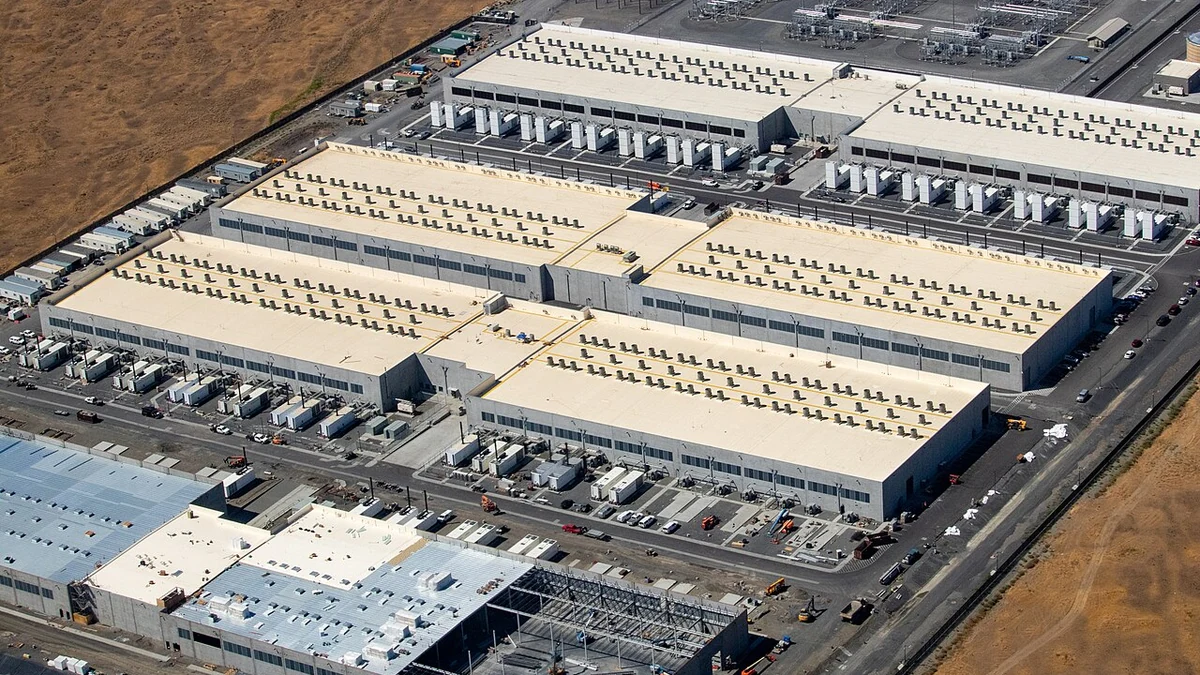
Solaris Energy Infrastructure has acquired Omega Foundation Services, adding heavy-civil and engineering, procurement and construction capabilities that Solaris says will broaden its ability to deliver power infrastructure for large-scale data centers and other complex projects. The Houston-based company is building out a wider set of services around power generation and distribution as customers ask suppliers to take responsibility for more of the infrastructure needed to bring new capacity online.
Omega gives Solaris more control over work that happens before generating equipment is installed and commissioned. Solaris said the acquisition brings site services, construction expertise and electrical-substation development into a platform that has already expanded through power-generation service acquisitions and larger customer contracts.
Omega moves Solaris earlier into the construction cycle
Solaris said in its September 2 acquisition announcement that Omega has significant experience in heavy civil construction across several end markets, including large-scale data centers. Management framed the purchase as a way to extend its turnkey offering into early-stage project work, rather than limiting Solaris to generation equipment, installation and ongoing power services.
For a data-center development, the scope extends well beyond turbines or other generating assets. Sites need grading, foundations, roads, drainage, underground utilities, substations and other civil work before a power system can be brought online. Bringing more of that work under one corporate roof could give Solaris tighter control over scheduling and coordination, although the actual benefits will depend on execution and integration.
Omega’s own company materials describe its core capabilities as deep foundations, heavy civil sitework and hydro excavation. It lists data centers and hyperscale campuses among the markets it serves, alongside power and utility infrastructure, industrial and energy projects, government and transportation work, and other large-scale construction. Its heavy-civil capabilities include concrete and structural foundations, roads and paving, mass excavation, underground utilities, storm drainage and substation-related builds.
Solaris also said it has worked alongside Omega for two years at multiple locations. That prior relationship gives the buyer some operating history with Omega before the acquisition, but the companies did not publish detailed project-level financial results or a stand-alone revenue figure for Omega in the announcement. Solaris instead emphasized the added workforce, customer relationships and ability to take on more of a project’s construction scope.
Consideration mixes cash, assumed obligations and Solaris shares
The consideration consists of approximately $101 million of net cash, the assumption of about $28 million of debt and leases, and roughly 3.6 million newly issued Solaris Class A shares. The announcement did not state a single headline purchase price, so the disclosed components are more useful than assigning the acquisition a total value based on an unverified share-price assumption.
Solaris said it expects the purchase to be immediately accretive to earnings and free cash flow per share. That is a management forecast, not a realized result. The company’s forward-looking statement also identifies risks tied to integrating Omega, retaining key employees and customers, realizing anticipated benefits and dealing with unexpected costs or liabilities.
The cash component comes as Solaris has expanded its financing capacity to support a larger power-infrastructure business. At the end of the second quarter, the company reported about $1.4 billion of available liquidity after completing a $1.3 billion senior unsecured notes offering and securing a new, undrawn $650 million credit facility. Those financing steps were part of a broader push to support additional generation capacity and related services.
Omega also brings potential revenue outside Solaris’ existing contracted power projects. Solaris specifically pointed to opportunities in data centers, liquefied natural gas, industrial and government markets. The acquisition therefore adds a third-party construction business as well as capabilities Solaris can use on projects where it is already supplying power infrastructure.
The acquisition follows a broader power-infrastructure buildout
Omega is the latest addition to a business Solaris has been reshaping around larger, more integrated power projects. In July, Solaris acquired Global Energy Services Alliance, or GESA, a power-generation service provider created from Baseload Power and Pro-Per Energy Services. That purchase added plant installation and commissioning, operations and maintenance, and aftermarket repair capabilities across a range of generation technologies.
GESA strengthened services around generating equipment itself and over the life of a power plant. Omega extends Solaris toward site preparation, foundations and heavy civil construction. Combined with Solaris’ existing generation and distribution offerings, management is trying to cover more stages between preparing a site and operating the finished power system.
Solaris’ operating mix has already moved heavily toward power. Second-quarter 2026 revenue was about $219 million, with roughly $158 million coming from Solaris Power Solutions. That segment averaged about 950 megawatts of capacity earning revenue during the quarter and generated approximately $96 million of segment adjusted EBITDA. Solaris also raised its third-quarter adjusted EBITDA guidance to $90 million to $105 million and set fourth-quarter guidance at $100 million to $120 million.
Data-center demand is central to that expansion. In its second-quarter update, Solaris said it had enlarged the scope of several long-term contracts, including one that now calls for a turnkey power plant of roughly 660 megawatts with balance-of-plant equipment, batteries and energy-management systems designed to handle artificial-intelligence workloads. Another contract was expanded to include additional balance-of-plant, energy-storage and infrastructure-support services.
Buying Omega pushes the model further into the physical construction of sites supporting those power systems, giving Solaris the ability to perform more work before generation equipment arrives. It also increases the amount of execution risk held inside the organization, since the expected schedule control, customer access and financial contribution depend on successfully integrating Omega while Solaris continues to deploy capital into generation capacity and other power-infrastructure services.
More from Investing


Latest News
View all news- U.S. Median Weekly Pay Rises 1.5%, Trailing 3.5% Consumer Inflation
- U.S. Mortgage Applications Drop 5.3% Even as 30-Year Rate Falls to 7.41%
- U.S. Energy Department Offers Up to 315,000 Barrels From Heating Oil Reserve
- U.S. Crude Inventories Fall 3.1 Million Barrels in Latest EIA Report
- OCC Issues Final Rule to Implement GENIUS Act Stablecoin Regulations