FuelCell Energy Lands First 75 MW Data-Center Capacity Reservation as Backlog Expands
The Texas reservation gives an unnamed data-center operator priority access to manufacturing capacity, while FuelCell Energy reported $1.30 billion of committed backlog and $2.35 billion of awarded capacity backlog.
Our editorial standards
MarketReview publishes clear, independently produced financial information using reliable sources and transparent editorial standards.
Read our Editorial Policy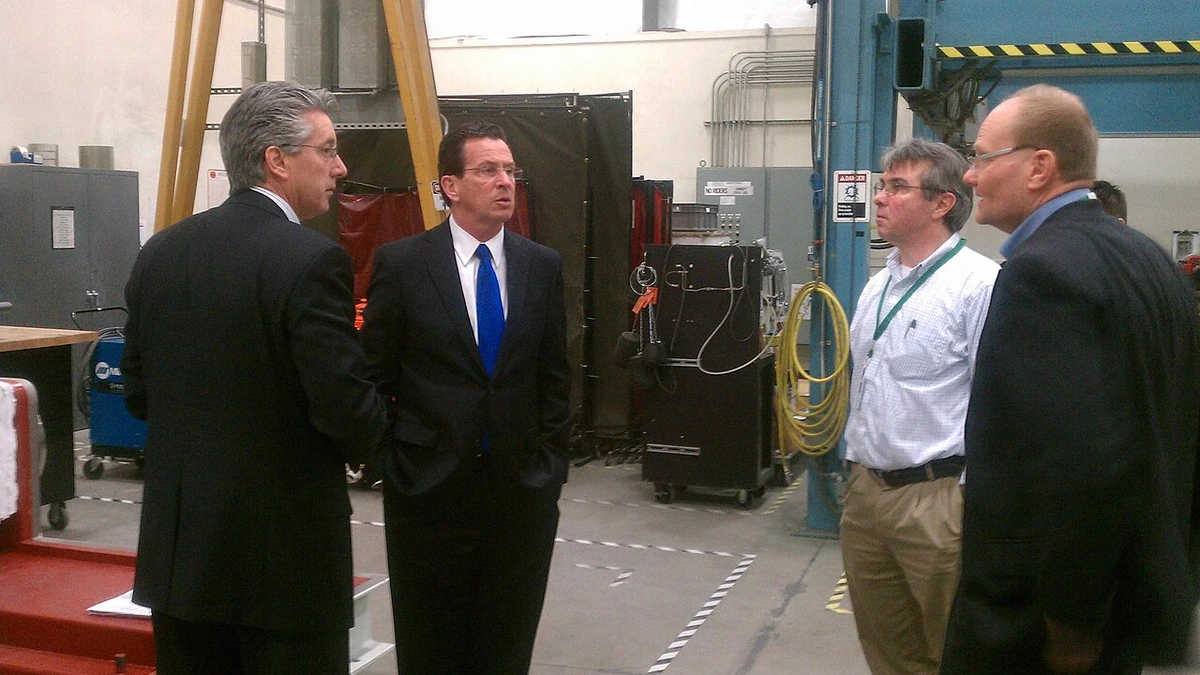
FuelCell Energy signed its first capacity reservation agreement with a major data-center operator for a planned 75 megawatt project in Texas, giving the customer priority access to manufacturing capacity as the companies work toward definitive project agreements. The reservation was signed after the end of FuelCell Energy’s fiscal third quarter and includes an upfront payment, although the company did not disclose the customer or the financial terms.
The planned installation would use six 12.5 MW FuelCell Energy Block systems. Under the reservation, FuelCell Energy will set aside manufacturing capacity and begin procurement of long-lead components. The arrangement therefore moves the project beyond a sales discussion, but it is not yet the same as a definitive, non-cancelable customer contract.
The new data-center reservation arrived alongside a modest increase in committed backlog and a much larger new category of less-certain commercial awards. FuelCell Energy’s September 2 earnings release reported $1.296 billion of committed backlog at July 31, up 4.1% from $1.245 billion a year earlier. It separately reported $2.350 billion of awarded capacity backlog, bringing the combined amount to approximately $3.646 billion.
The reservation adds another path into data-center power
FuelCell Energy has been positioning its carbonate fuel-cell systems as on-site baseload power for data centers that may face long waits for grid connections. The Texas reservation is its first agreement specifically structured to reserve manufacturing capacity for such a project. Because it was signed after July 31, the quarter-end backlog figures predate the 75 MW reservation.
A separate agreement with Fit Energy USA already gives FuelCell Energy a larger potential data-center opportunity. In June, the companies signed a capital equipment purchase agreement covering as much as 380 MW across four phases. The initial 30 MW phase is committed, and FuelCell Energy expects to begin deliveries in the fourth quarter of fiscal 2026. Fit can elect, at its sole option, to proceed with three additional phases totaling another 350 MW.
Those later Fit phases are the reason FuelCell Energy introduced $2.350 billion of awarded capacity backlog at July 31. They have not reached the same contractual status as the first 30 MW phase. Fit has no payment obligation for the optional phases until it elects to proceed, and project sites, financing, permitting and other development work may still need to be completed.
The company also said its fiscal 2026 sales pipeline had grown to roughly 10 gigawatts. That figure is broader still. FuelCell Energy defines the pipeline as ongoing commercial discussions ranging from early solution discussions through contract negotiation, and it explicitly says the pipeline does not represent signed agreements or assured sales.
Backlog growth carries different levels of certainty
The distinction between committed and awarded backlog is central to reading the quarter. Committed backlog consists of definitive, non-cancelable agreements. At July 31, that total included $108.9 million of product backlog, $263.6 million of service backlog, $915.7 million of generation backlog and $7.8 million tied to advanced technologies.
FuelCell Energy’s Form 10-Q says the awarded category was added during the quarter to reflect changing customer procurement practices, including multi-phase agreements and capacity reservations that can secure future manufacturing slots before all project agreements are finalized. The company plans to keep such arrangements in awarded capacity backlog until definitive, non-cancelable commitments are executed.
At the July 31 reporting date, the entire awarded balance related to Fit Energy’s optional 350 MW across phases one through three. FuelCell Energy warns that awarded capacity backlog is not contracted backlog, firm-order backlog or a guarantee of future revenue. Some or all of those amounts may never convert to committed backlog, and the timing can differ from current estimates.
That caution also matters when comparing the current totals with prior periods. Committed backlog increased by about $51 million year over year, while the $2.350 billion awarded category did not exist in the comparable quarter. The combined figure is therefore useful as an indicator of potential demand, but it should not be treated as though all $3.646 billion carries the same contractual weight.
Manufacturing expansion comes as quarterly gross loss widens
The commercial push is occurring while FuelCell Energy is still absorbing substantial manufacturing losses. Third-quarter revenue fell 29% to $33.0 million from $46.7 million a year earlier. Total costs of revenue increased to $57.5 million from $51.9 million, producing a gross loss of $24.5 million compared with $5.1 million in the prior-year quarter.
Product economics were particularly weak. Product revenue was $18.0 million, while product costs reached $37.1 million. FuelCell Energy recorded $17.0 million of charges related to contractual pricing provisions for inventory and firm purchase commitments associated with Fit Energy’s initial 30 MW phase. The company said current product costs and manufacturing overhead exceed the pricing established for that phase, although it expects unit costs to fall as production volumes rise.
Operating loss narrowed to $46.7 million from $95.4 million, largely because the prior-year quarter included impairment and restructuring expenses that did not recur. Adjusted EBITDA moved in the opposite direction, deteriorating to a loss of $36.7 million from a loss of $16.4 million, with inventory valuation charges weighing on the current quarter. Net loss attributable to common shareholders fell to $45.3 million from $92.5 million.
FuelCell Energy finished July with $737.3 million of cash, cash equivalents and restricted cash, compared with $341.8 million at the end of October 2025. Liquidity was bolstered by a July public stock offering that generated about $245.5 million of net proceeds and by roughly $52.9 million of net proceeds from shares sold under its open-market sale agreement during the quarter. Management says the public-offering proceeds are intended for manufacturing expansion, working capital and general corporate purposes.
That capital is supporting a major expansion of the Torrington, Connecticut facility shown in the featured image. The plant’s current configuration can support as much as 100 MW of annualized production when fully utilized, and FuelCell Energy is targeting a 100 MW annualized production rate in October 2026. The broader expansion is designed to raise annualized capacity to 500 MW by June 2028 and is expected to require roughly $200 million to $275 million of investment.
Management is targeting positive adjusted EBITDA in the fourth quarter of fiscal 2027, but it tied that goal to several conditions, including conversion of awarded capacity backlog into committed contracts, customer delivery schedules and cost reductions. Before that longer-term target, the next operational milestone is the planned step-up to a 100 MW annualized production rate at Torrington in October, while negotiations continue on the 75 MW Texas project.
More News


Latest News
View all news- U.S. Crude Inventories Fall 3.1 Million Barrels in Latest EIA Report
- Thermo Fisher Scientific Reports 9% Revenue Growth to $12.14 Billion
- OCC Issues Final Rule to Implement GENIUS Act Stablecoin Regulations
- Ohio Auto Parts Manufacturer Agrees to Pay $3 Million Over PPP Loan Allegations
- CFTC Announces $9.2 Million Penalty in Louisiana Forex Fraud Case