
Banner Completes Pacific Financial Acquisition, Merging Bank of the Pacific Into Banner Bank
Pacific Financial shareholders now own about 7% of Banner after the all-stock merger, while systems integration is planned for November.
Our editorial standards
MarketReview publishes clear, independently produced financial information using reliable sources and transparent editorial standards.
Read our Editorial Policy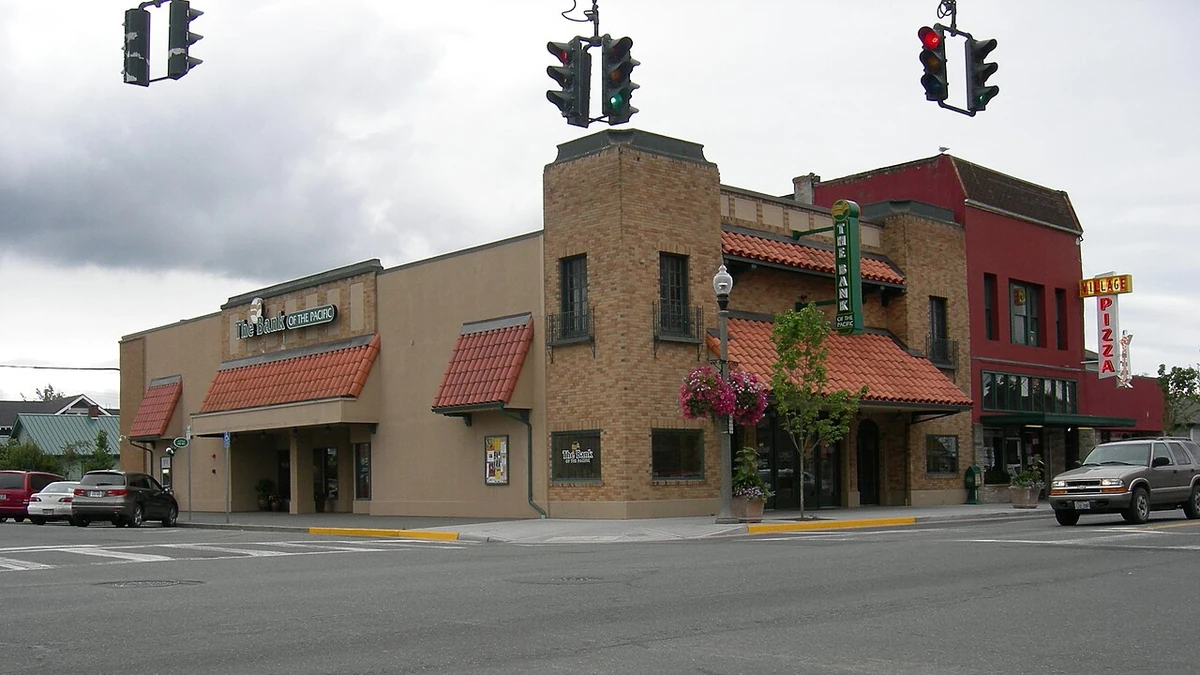
Banner Corporation completed its acquisition of Pacific Financial Corporation on September 1, folding Bank of the Pacific into Banner Bank and ending the target bank’s separate legal existence. The holding-company merger became effective at 6:00 a.m. Pacific Time, followed immediately by the bank-level merger, with Banner and Banner Bank surviving.
The closing gives Banner a larger presence in Western Washington and Western Oregon, the markets management highlighted when the agreement was announced in April. Pacific Financial had $1.26 billion in assets at June 30, while Banner said the combined company had approximately $18 billion in assets at closing.
Banner’s September 1 Form 8-K states that each outstanding Pacific Financial share was converted into the right to receive 0.2633 Banner shares. Banner expects to issue about 2.65 million common shares as merger consideration. Former Pacific Financial shareholders own approximately 7% of the combined company immediately after closing, with existing Banner shareholders owning about 93%.
Pacific Financial holders receive Banner shares
The fixed exchange ratio means the acquisition’s dollar value moves with Banner’s share price rather than being locked at the figure cited when the merger was unveiled. In the April 30 merger announcement, Banner said the 0.2633 exchange ratio implied $17.44 for each Pacific Financial share and roughly $177 million in aggregate consideration, using Banner’s April 29 closing price of $66.25. That $177 million figure was therefore an announcement-date valuation, not a fixed cash purchase price or a closing-date value.
The share issuance also explains the ownership split reported at completion. Banner’s SEC filing specifies approximately 2,654,563 new common shares, while the closing release says Pacific Financial’s former shareholders hold about 7% of the combined company. The fixed ratio leaves the market value of the stock consideration dependent on Banner’s share price.
Pacific Financial’s bank subsidiary had long been concentrated in coastal and western markets in Washington and Oregon. At the time the agreement was announced, Banner reported Bank of the Pacific had $1.29 billion in assets, $762 million in loans and $1.14 billion in deposits as of March 31. Management emphasized the deposit base as one of the attractions of the acquisition, alongside the opportunity to add density in markets where Banner was already operating.
The leadership handoff also took effect at closing. Denise Portmann, who had served as president and chief executive officer of Bank of the Pacific, became an executive vice president of Banner Bank. Banner said she will have a role in integrating the two banks and in the combined organization’s operations.
Bank of the Pacific conversion is planned for November
The legal merger and the customer-facing integration are not happening on the same day. Bank of the Pacific has already merged into Banner Bank, but Banner said systems integration is planned for November. The company expects that step to bring the former Bank of the Pacific operations under the Banner brand.
For legacy Bank of the Pacific clients, Banner says the conversion will provide access to a broader product set, higher lending limits and a wider branch network. Those benefits remain part of management’s integration plan rather than completed September 1 outcomes. Until the systems conversion is carried out, the closing should be understood primarily as the legal and corporate completion of the acquisition.
The September closing followed regulatory clearance in August. Banner and Pacific Financial said on August 17 that Banner had received a Federal Reserve letter stating that the central bank did not object to Banner’s requested waiver of the application requirement. The companies said at that point that all regulatory approvals required for the merger had been received and that they expected to close on September 1, subject to the remaining customary conditions.
Completion removes the risk that the merger itself fails to close, but integration work remains. Banner’s closing materials caution that combining the businesses could take more time or cost more than expected, that client and employee relationships could be disrupted, and that projected benefits may not arrive on the timetable management anticipates. Those are forward-looking risk disclosures rather than indications that such problems have occurred.
The acquisition adds scale in Banner’s core Northwest markets
Banner entered the closing with a much larger balance sheet than Pacific Financial. At June 30, Banner reported $16.59 billion in assets, $11.83 billion in net loans and $13.79 billion in deposits. It also said core deposits represented 89% of total deposits. The addition of Pacific Financial therefore increases Banner’s size without changing the basic geographic focus of the franchise.
Banner Bank operates across Washington, Oregon, California and Idaho, while Bank of the Pacific focused on Western Washington and Northern Oregon. That overlap is central to the strategic rationale management has given for the acquisition: the deal adds local density in existing states rather than establishing a new regional platform far from Banner’s current footprint.
When the merger was announced in April, Banner said it expected the merger to be immediately accretive to 2027 earnings per share, excluding one-time merger expenses. That remains a management forecast, not a result established by the September closing. The company will still have to complete the systems conversion, absorb integration costs and retain the customers and deposits that supported the original financial case.
The next concrete milestone is the planned November systems integration. That is when Banner expects the remaining Bank of the Pacific operations to move under the Banner brand and when customers should begin seeing the broader products, lending capacity and branch access described in the acquisition plan.
More from Banking
Latest News
View all news- U.S. Median Weekly Pay Rises 1.5%, Trailing 3.5% Consumer Inflation
- U.S. Mortgage Applications Drop 5.3% Even as 30-Year Rate Falls to 7.41%
- U.S. Energy Department Offers Up to 315,000 Barrels From Heating Oil Reserve
- U.S. Crude Inventories Fall 3.1 Million Barrels in Latest EIA Report
- Thermo Fisher Scientific Reports 9% Revenue Growth to $12.14 Billion
