
Dollar General Raises 2026 Outlook After Q2 EPS Jumps 33%
The discount retailer raised full-year guidance after second-quarter same-store sales grew 3.5% and diluted EPS climbed 33.3%, though tariff refunds provided a notable one-time lift to margins.
Our editorial standards
MarketReview publishes clear, independently produced financial information using reliable sources and transparent editorial standards.
Read our Editorial Policy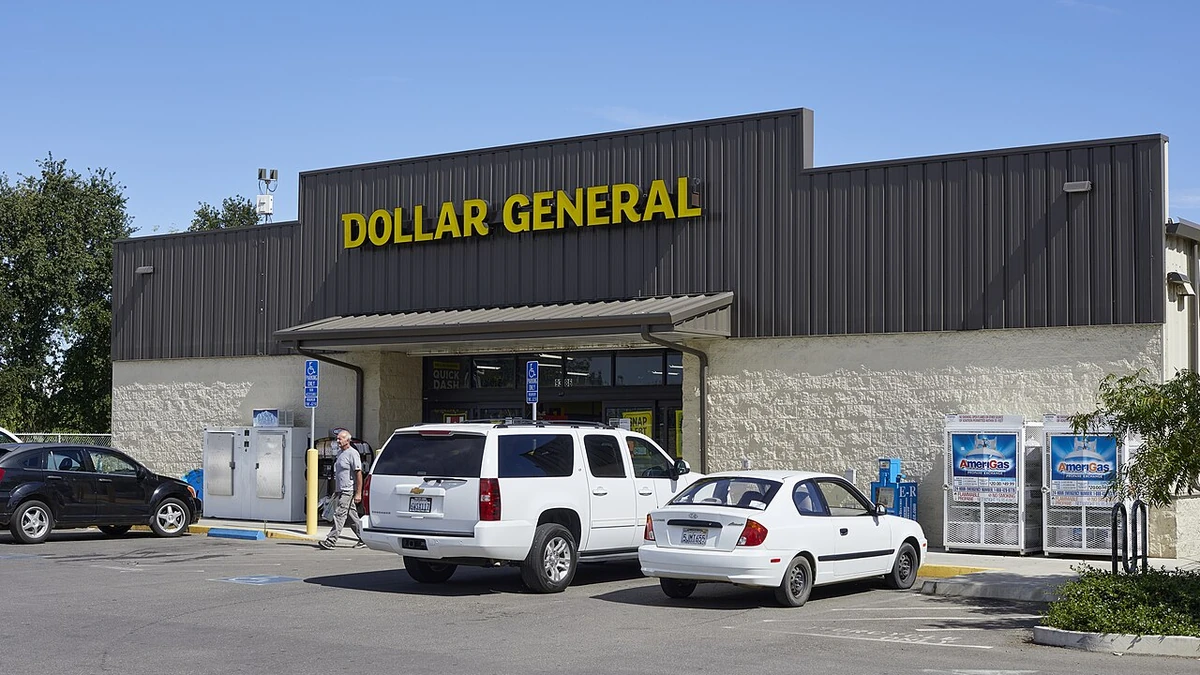
Dollar General raised its fiscal 2026 outlook after reporting a stronger second quarter, with diluted earnings per share rising 33.3% and same-store sales gaining 3.5%. The discount retailer said net sales for the quarter ended July 31 increased 5.2% to $11.3 billion, while operating profit rose 29.2% to $769.2 million and net income climbed 33.8% to $550.3 million. Diluted EPS increased to $2.48 from $1.86 a year earlier.
The stronger performance was broad-based. Dollar General said traffic increased 2.0% and average basket size rose 1.5%, producing same-store sales growth across all four merchandise categories: consumables, seasonal, home products and apparel. That kind of breadth matters for a chain whose customer base is still navigating a pressured household-budget environment.
The results were strong enough for management to lift full-year guidance for net sales growth, same-store sales growth and diluted earnings per share. But there is an important qualification in the quarter: tariff refunds provided a meaningful one-time benefit to margins and earnings even after related reinvestments. That does not negate the improvement, but it does mean the full 33% jump in EPS should not be treated as a clean read-through to underlying operating momentum.
Quarterly growth was broad, but tariff refunds added a clear boost
In the earnings release furnished to the Securities and Exchange Commission, Dollar General said second-quarter net sales increased to $11.3 billion from $10.7 billion in the year-earlier period. The increase was driven by growth in same-store sales and positive contributions from new stores, partly offset by store closures.
Same-store sales rose 3.5%, reflecting a 2.0% increase in customer traffic and a 1.5% increase in average basket size. Importantly, the company said every major merchandise category contributed to that gain. That suggests the quarter was not powered by a single short-lived pocket of demand. Instead, Dollar General saw customers buying more across both everyday necessities and discretionary categories such as seasonal, home and apparel.
Gross margin improved meaningfully. Gross profit as a percentage of net sales increased to 32.6% from 31.3%, a gain of 127 basis points. Dollar General attributed that increase mainly to tariff refunds, a lower LIFO provision and lower distribution costs, partly offset by higher markdowns and higher transportation costs. The company estimated that tariff refunds, after related reinvestments, contributed approximately 81 basis points to gross margin.
The tariff effect also showed up lower down the income statement. Selling, general and administrative expense as a percentage of sales was essentially unchanged year over year at 25.8%, which helped more of the gross-margin improvement flow through to operating income. Operating profit rose 29.2% to $769.2 million, and the company estimated tariff refunds after related reinvestments contributed about 66 basis points to operating margin. Net interest expense declined 25.7% to $42.9 million, adding another support to earnings growth.
The result was a clear jump in profitability. Net income rose to $550.3 million from $411.4 million, and diluted EPS increased to $2.48. Dollar General explicitly said diluted EPS included an estimated benefit of about $0.25 from tariff refunds after related reinvestments. Put differently, a notable slice of the quarterly EPS outperformance came from that refund item rather than from recurring operating changes alone.
That nuance is worth keeping in mind, especially because management also said the quarter exceeded its expectations even before considering the tariff-refund benefit. The company’s comments suggest underlying performance was still solid on its own terms. Customer traffic rose for a fifth consecutive quarter, and comparable sales were positive across all four merchandising categories for a sixth straight quarter. That sort of consistency tends to carry more weight than a one-off accounting or policy benefit.
Raised guidance signals confidence in the second half
Dollar General said it is raising full-year financial guidance to reflect a strong first half and an improved outlook for the rest of the year. It now expects fiscal 2026 net sales growth in a range of about 4.0% to 4.3%, up from previous guidance of 3.7% to 4.2%. Same-store sales growth is now expected in a range of about 2.5% to 2.9%, compared with the prior forecast of 2.2% to 2.7%.
The company also increased its diluted EPS outlook to a range of about $7.80 to $8.00 from a previous range of $7.20 to $7.45. That new earnings forecast includes the estimated $0.25 benefit from tariff refunds recorded in the second quarter. Dollar General said it does not expect a material impact to its financial results from tariff refunds after related reinvestments in the second half of fiscal 2026, which means the guidance increase is not simply assuming another similar windfall later in the year.
Management paired the improved financial outlook with an update on capital allocation. Dollar General said it intends to repurchase shares under its existing authorization in the second half of the fiscal year ending January 29, 2027, and it now expects share repurchases of up to $700 million during fiscal 2026. At the end of the second quarter, the company had $1.4 billion of remaining authorization for future repurchases.
The board also declared a quarterly cash dividend of $0.59 per share, payable on or before October 20, 2026, to shareholders of record on October 6, 2026. While the dividend itself was not the main market-moving item, it reinforces management’s message that the company is comfortable enough with its cash generation to continue returning capital to shareholders while still funding store growth and other strategic priorities.
Store investment remains heavy as Dollar General scales its footprint
Dollar General’s operating plans still rely heavily on expansion and store reinvestment. In the first half of fiscal 2026, the company spent $758 million on property and equipment. That included roughly $414 million for improvements, upgrades, remodels and relocations of existing stores, $168 million for distribution and transportation-related projects, $133 million tied mainly to new-store facilities, and $31 million for information-systems and technology upgrades.
During the second quarter alone, Dollar General opened 125 new stores in the United States and one new store in Mexico. It also remodeled 665 stores through Project Renovate, remodeled 711 stores through Project Elevate, and relocated five stores. For the full year, the company reiterated plans for roughly 4,730 real estate projects, including about 450 new U.S. stores, around 10 new Mexico stores, about 2,000 Project Renovate remodels, approximately 2,250 Project Elevate remodels, and around 20 relocations.
That scale helps explain why capital expenditures are still expected to land between $1.4 billion and $1.5 billion for the year. For a discount chain, physical reach and store condition remain central to the business model. Dollar General’s strategy depends on being close to customers, especially in smaller communities and budget-conscious trade areas where convenience is a major competitive advantage.
The quarter also offered a modest balance-sheet snapshot. Merchandise inventories at cost totaled $6.6 billion at July 31, roughly unchanged from a year earlier but down 2.7% on an average per-store basis. That suggests the company has not been chasing sales growth simply by loading stores with more inventory. Cash flow from operations for the first half reached $1.5 billion, giving the company room to fund remodels, new stores, dividends and repurchases without signaling near-term financial strain.
Looking ahead, the key question is how much of the recent strength can carry through once the tariff-refund benefit is behind it. Dollar General’s guidance implies management believes the underlying business has improved enough to support a better second half even without a repeat of that benefit. The evidence for that case is real: stronger traffic, positive category breadth, stable expense discipline and an outlook that was raised after a solid first half. Still, investors will probably keep separating the operating progress from the one-time margin boost as they judge whether this quarter marks a durable step up or simply a very favorable period in an uneven consumer backdrop.
More from Investing


Latest News
View all news- U.S. Goods Trade Deficit Widens 17% to $118.8 Billion in July
- U.S. Jobless Claims Fall to 203,000 as Continuing Claims Drop to 1.78 Million
- Build-A-Bear Cuts 2026 Outlook as Q2 Revenue Falls 7%
- Malibu Boats Q4 Sales Jump 43% as Adjusted EPS More Than Doubles
- BLS Sees U.S. Adding 5.9 Million Jobs Through 2035 as Employment Growth Slows
