
SLB Agrees to Buy Kelvion for $4.1 Billion in AI Data-Center Cooling Push
SLB agreed to acquire Kelvion for about $4.1 billion, adding thermal-management and heat-exchange technologies as it expands deeper into AI data-center infrastructure.
Our editorial standards
MarketReview publishes clear, independently produced financial information using reliable sources and transparent editorial standards.
Read our Editorial Policy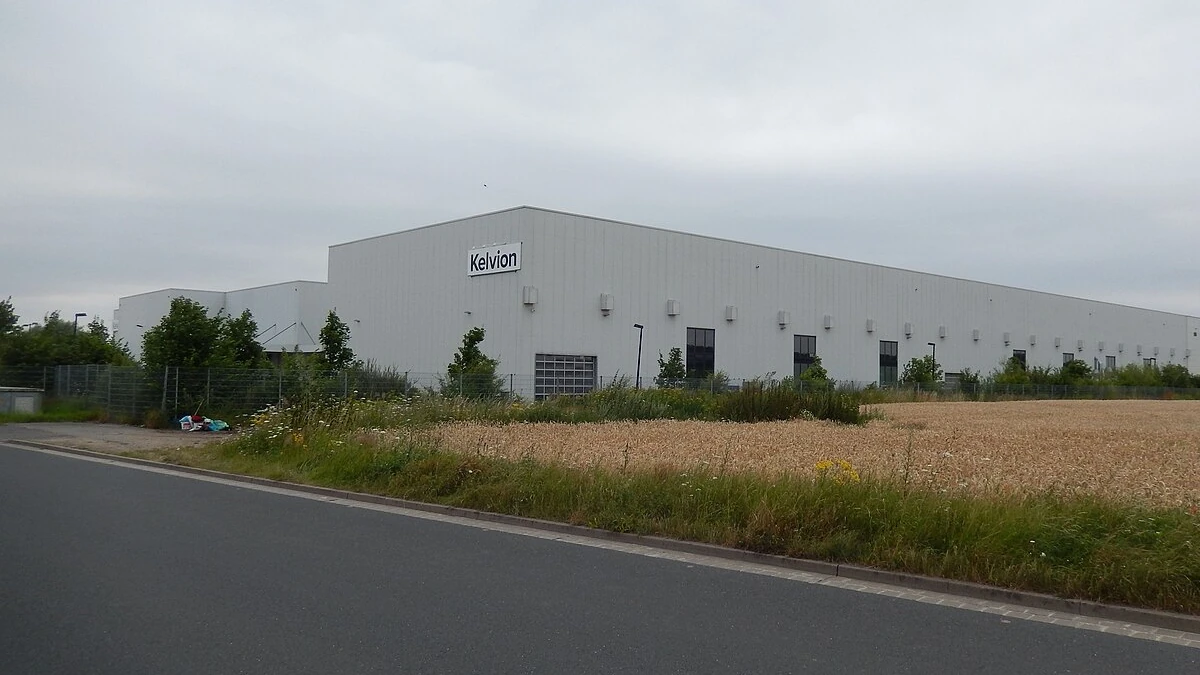
SLB agreed to acquire Kelvion in a deal valued at about $4.1 billion, giving the oilfield-services and industrial-technology group a much larger position in the cooling systems that are becoming essential to AI data centers. The purchase price consists of roughly $3.4 billion in cash plus about $700 million of assumed debt, and SLB expects the acquisition to close in the first half of 2027, subject to regulatory approvals and other customary conditions.
The agreement pushes SLB further into a business that it has been building aggressively over the past two years. Kelvion makes thermal-management and heat-exchange equipment used across data centers, energy and industrial markets, and data centers are now its largest and fastest-growing end market. For SLB, the acquisition is both a scale move and a product-expansion move: it adds critical cooling technology just as AI infrastructure spending is reshaping how new data-center capacity is built.
Kelvion adds cooling systems to SLB’s infrastructure push
In its August 31 announcement, SLB said it had signed an agreement to buy 100% of Kelvion from Apollo-managed funds, which are the majority owner, and funds advised by Triton, which hold a minority interest. Management said the purchase would strengthen SLB’s Data Center Solutions business with thermal-management technologies that can be used across increasingly complex facility designs.
Kelvion, founded more than a century ago, develops and manufactures heat-exchange and thermal-management systems that serve customers in data centers as well as energy and industrial applications. That broader footprint matters because it gives SLB an entry point into more than one growth market at the same time. The company highlighted heat pumps, renewables, carbon capture and process-industry applications alongside data centers, but the immediate strategic emphasis is clearly on cooling infrastructure for high-density computing.
The fit is straightforward. SLB has been trying to position itself as a more comprehensive supplier to data-center developers by combining engineering, modular manufacturing, offsite construction and digital capabilities. Kelvion brings a missing layer of thermal equipment that can be integrated into that existing offer. Rather than only helping customers design and assemble data-center infrastructure, SLB is now seeking a deeper role in how those facilities manage heat, reliability and operating efficiency.
AI demand sits at the center of the rationale
SLB explicitly tied the acquisition to the current AI investment cycle. The company said Kelvion is expected to generate about $2.3 billion to $2.4 billion of revenue in 2026, with adjusted EBITDA of about $350 million to $400 million. Data centers alone are expected to contribute roughly $1.2 billion to $1.3 billion of that revenue, making them Kelvion’s biggest and fastest-growing end market. Those figures help explain why SLB framed the purchase as a way to expand its addressable market rather than just add another industrial product line.
Cooling has become one of the most important bottlenecks in AI infrastructure. As compute clusters get denser and more power-hungry, data-center operators need more sophisticated ways to remove heat, protect uptime and deploy capacity quickly. SLB’s announcement argued that customers increasingly want fewer suppliers and more integrated systems across the facility. Buying Kelvion gives SLB a direct thermal-management capability that can be combined with its modular infrastructure business instead of sourcing more of that technology from third parties.
The acquisition also lands at a time when SLB’s own data-center business is already growing fast. The company said Data Center Solutions revenue is expected to grow at a compound annual rate of more than 90% between 2024 and 2026, while delivered capacity is expected to exceed 2 gigawatts cumulatively by the end of this year. In other words, SLB is not entering the market from scratch. It is using Kelvion to enlarge a platform that already exists and that management believes can scale more quickly with a broader technology stack.
SLB went further by outlining what the combined business could look like after integration. On a pro forma basis, SLB and Kelvion are expected to generate more than $2 billion of data-center revenue and about $300 million of adjusted EBITDA in 2026. Looking ahead to 2028, SLB said it is targeting $4.5 billion to $5 billion of revenue and $700 million to $800 million of adjusted EBITDA for the combined data-center solutions business. Those longer-range targets remain company projections, but they show how central the business has become to SLB’s industrial-growth strategy.
Price, synergies and balance-sheet impact
Beyond the strategic pitch, the valuation suggests SLB is paying a full price for scale and positioning. The company said the purchase reflects a total value of about 11 times Kelvion’s estimated 2026 EBITDA before synergies, or about 8.5 times EBITDA including expected annual run-rate synergies. The same terms were also disclosed in an SEC filing submitted on August 31.
Management said the acquisition is expected to be accretive to both earnings per share and free cash flow per share within the first 12 months after closing. SLB also expects about $120 million of annual EBITDA synergies within three years, coming from cost efficiencies and incremental revenue opportunities. Those are meaningful integration targets, but they are still forecasts and will depend on execution after the deal closes.
SLB also used the announcement to address the balance-sheet question that often follows a multibillion-dollar acquisition. The company said it expects to retain a strong investment-grade balance sheet, with net debt to EBITDA remaining within its previously stated through-cycle target of up to 1.5 times. It also reaffirmed its plan to return more than $4 billion to shareholders in 2026 through dividends and share repurchases, signaling that management does not view the Kelvion purchase as a retreat from its existing capital-allocation framework.
Closing still depends on approvals and execution
The confirmed development on Monday is that the parties have signed an agreement, not that the acquisition has closed. The purchase remains subject to customary closing conditions and regulatory approvals, and SLB said it expects completion in the first half of 2027. Until those approvals are obtained and ownership changes hands, the strategic and financial benefits described by management remain prospective rather than realized.
Even so, the direction of travel is clear. SLB has spent years broadening its identity beyond its traditional oilfield-services roots, pushing into industrial technology, digital systems, carbon-management applications and now large-scale data-center infrastructure. Kelvion gives it a much bigger role in one of the most technically difficult pieces of that market, especially as AI-related computing loads force operators to rethink power, heat and facility design together instead of as separate procurement decisions.
That is why this acquisition matters beyond its headline price. It is not simply an adjacent industrial purchase. It is a statement that SLB sees data-center infrastructure, and particularly thermal management, as a business large enough to justify multibillion-dollar capital deployment. The next concrete milestone is the expected closing window in the first half of 2027, when investors should get a clearer view of how quickly SLB can turn this agreement into operating results.
More from Investing
Latest News
View all news- India GDP Growth Accelerates to 7.8% in Q1 FY2026-27
- Aon Announces $17 Billion Acquisition of USI to Expand U.S. Middle-Market Insurance Business
- SAIC Raises Fiscal 2027 Revenue and Earnings Guidance After 6% Quarterly Growth
- Summit Midstream Makes Final Investment Decision on Double E Pipeline Expansion, Plans $100 Million Investment
- Karyopharm Submits XPOVIO Combination Application to FDA for Myelofibrosis, Seeks Priority Review
