

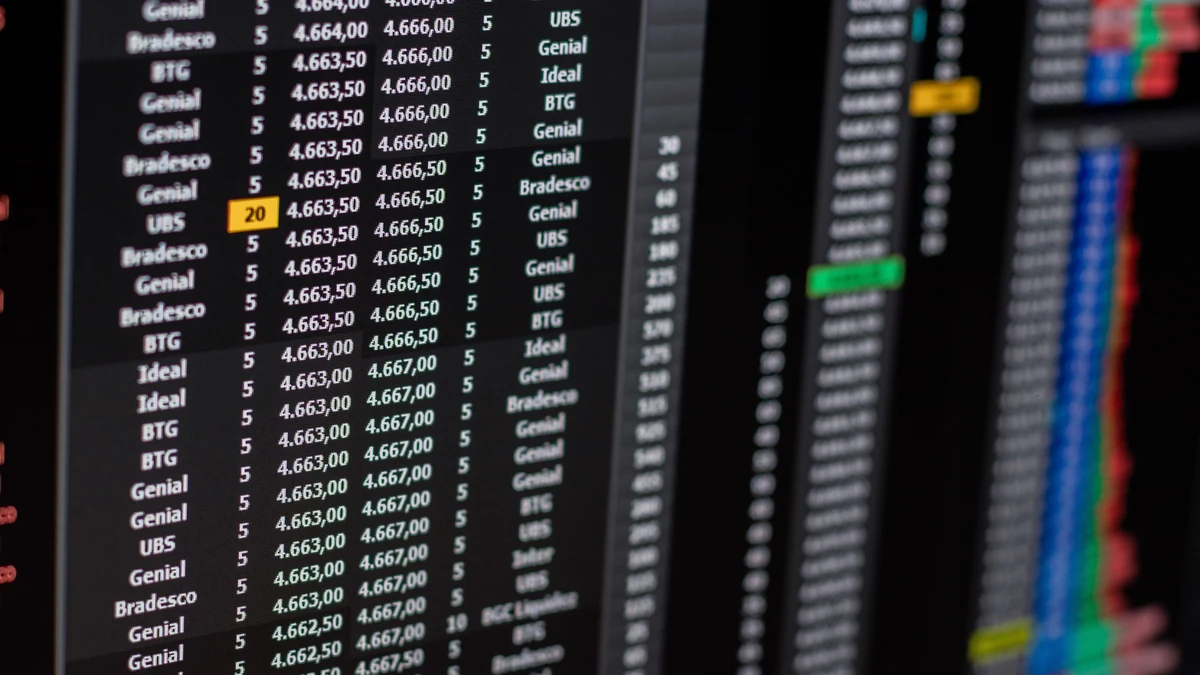
A stock market does more than provide a place where investors buy and sell shares. Its broader economic role is to connect companies that need equity capital with investors willing to provide it, then give those investors an organized secondary market in which ownership can change hands. That combination matters because raising money is much easier when investors know they will not necessarily have to hold an investment indefinitely.
The market also performs several functions after a company has raised capital. Trading brings competing views about a company’s prospects into a visible market price, creates liquidity for shareholders, supports valuation, and gives companies and investors a regulated infrastructure for disclosure, execution, clearing and settlement. None of these functions guarantees that prices are always correct or that every security is easy to sell, but together they explain why public stock markets are central to modern finance.
Stock markets connect the primary and secondary markets
The first distinction to understand is between issuing stock and trading stock that already exists. In the primary market, newly issued securities are sold to investors and the issuer receives the proceeds. Once those shares are in investors’ hands, later transactions usually take place in the secondary market, where existing securities are bought and sold among investors. Investor.gov uses these same distinctions and also defines liquidity in terms of how readily a security can be bought or sold in a secondary market.[1]
A company may enter the public market through an initial public offering or IPO, but an IPO is not the only occasion on which it can raise equity capital. Public companies may later issue additional shares, subject to securities laws and market conditions, and they may also repurchase shares. The critical point is that a normal trade between two investors does not send the purchase price to the company. The seller receives the proceeds, while the company benefits only indirectly from having an active market for its stock.
This separation corrects a common misunderstanding about what the stock market does for businesses. A rising share price does not deposit cash into the corporate bank account, and daily trading volume is not company revenue. A healthy public market can nevertheless affect a company’s future financing options, the value of stock-based compensation, acquisition currency and the terms on which new equity might later be issued.
Stock markets therefore join two related but different economic processes. The primary market allows ownership claims to be created and sold to raise capital, while the secondary market makes those claims transferable. The second process is one reason the first can function at scale, because investors are generally more willing to commit capital when an established mechanism exists for selling their holdings later.
Liquidity makes corporate ownership transferable
Ownership in a private company can be valuable without being easy to sell. A potential seller may need to find a buyer privately, negotiate a price, satisfy transfer restrictions and accept that there is no continuous public quotation. Public stock markets reduce much of that friction by bringing many potential buyers and sellers into organized trading systems where orders can meet.
Liquidity is not the same as guaranteed saleability at a desired price. A heavily traded large-company stock may absorb a modest order with little price impact, while a thinly traded stock can have a wider bid-ask spread and less depth. Market conditions can also change quickly, so a security that normally trades easily can become more difficult to transact in during periods of stress.
The economic importance of liquidity is easy to overlook because it is most visible when it disappears. Investors value the ability to rebalance portfolios, raise cash, change their view of a company or transfer risk without having to locate a buyer from scratch. Companies benefit indirectly because investors are more likely to value publicly traded ownership when they expect a functioning resale market to remain available.
The same principle extends beyond equities. The bond market also depends on secondary trading, although the structure and liquidity of bond markets differ from those of listed equities. What matters in both cases is that a security becomes more useful as an investment when ownership can be transferred at a reasonably observable price without excessive delay or transaction cost.
Trading creates a continuing process of price discovery
A stock has no single objectively observable value that the market merely looks up. Investors form estimates based on expected cash flows, interest rates, competitive conditions, risk, management quality and many other pieces of information, then express those views through orders. Transactions occur where buyers and sellers are willing to meet, and the resulting prices become reference points for the next set of decisions.
This process is known as price discovery. Federal Reserve research describes an important function of financial markets as aggregating private information about financial assets and facilitating price discovery, while also noting that the process can become impaired during financial stress.[2] Market prices should therefore be understood as continuously updated outcomes of trading rather than permanent statements of intrinsic value.
New information can alter those outcomes rapidly. An earnings release, a change in interest-rate expectations, a regulatory decision or a shift in industry conditions can cause investors to revise what they are willing to pay. Prices adjust as orders respond, and the adjustment can occur before every investor has processed the information in the same way.
Price discovery is useful even to people who are not currently trading. Companies use market prices when evaluating financing and acquisition decisions, portfolio managers use them to value holdings, and lenders or counterparties may consider them when assessing financial strength. A market price is not a guarantee of fair value, but it is a widely observed result produced by many participants putting capital behind competing assessments.
Market capitalization is a valuation measure, not stored cash
One practical output of continuous market pricing is market capitalization. For a public company, market capitalization is generally calculated by multiplying the current share price by the number of shares outstanding. If a company has 100 million shares outstanding and the shares trade at $40, its market capitalization is about $4 billion.
That $4 billion is not money sitting inside the company, nor does it mean all shareholders could collectively sell their holdings for exactly $4 billion. The quoted market price is formed at the margin from actual and potential transactions involving only part of the outstanding share base. Trying to sell an enormous block quickly could move the price, especially when available buying interest at current prices is limited.
Valuation on the secondary market is nevertheless economically useful because it creates a common reference for what the market currently assigns to the company’s equity. The measure can be compared across firms, used in index construction, incorporated into valuation ratios and considered when companies issue shares or use stock in acquisitions.
This is also why comparing aggregate stock-market capitalization directly with a country’s annual gross domestic product can be misleading if the comparison is described as one pool of wealth versus one pool of output. Market capitalization is the current price-based value of equity claims at a point in time, while GDP measures the value of goods and services produced during a period. Both figures can be informative, but they measure different economic concepts.
Stock markets organize trading and reduce transaction friction
Without organized markets, an investor wanting to sell shares would need some other way to identify a willing buyer, establish a price, verify ownership and complete the transfer. Modern market infrastructure compresses those tasks into a standardized process involving brokers, exchanges and other trading venues, market makers where applicable, clearing organizations and custodial systems. The investor usually sees only the front end, but the trade depends on several institutions performing distinct roles.
A broker receives or handles the customer’s order and seeks execution under the rules that apply to the account and market. An exchange or other trading venue provides mechanisms through which orders can interact, while market makers and other liquidity providers may stand ready to buy or sell under specified conditions. Clearing and settlement systems then complete the post-trade transfer of securities and cash.
This organization does not eliminate trading costs. Investors still encounter bid-ask spreads, price impact, commissions or fees where applicable, and the possibility that an order will execute differently from the last displayed trade. What the market structure provides is a repeatable framework in which these transactions can occur at enormous scale without each buyer and seller negotiating the entire process privately.
The framework is especially important for active stock trading, where participants may enter and exit positions frequently and execution quality becomes part of the investment result. Long-term investors may trade less often, but they still rely on the same infrastructure whenever they buy, sell, rebalance or withdraw capital from a portfolio.
Public markets create disclosure, listing and market-integrity obligations
Public trading requires more than matching buyers and sellers. Investors are being asked to commit money to enterprises they do not control, often alongside thousands or millions of other shareholders. Securities regulation and exchange rules therefore impose disclosure, conduct and operational requirements designed to support markets in which participants can make decisions using a common body of public information.
The SEC states its mission as protecting investors, maintaining fair, orderly and efficient markets, and facilitating capital formation.[3] Those goals reflect the tension built into public markets: companies need workable access to capital, investors need meaningful protection and information, and the trading system needs rules that support confidence in execution and market integrity.
Exchange listing standards add another layer for companies that choose to list on a particular exchange. Requirements vary by venue and market tier, but listing normally involves financial and non-financial criteria as well as continuing obligations after admission. Listing is not a government guarantee that a company is financially sound, and it does not remove investment risk.
Disclosure also serves price discovery. When companies publish financial statements, material developments and other required information, investors can revise their assumptions and trade accordingly. Better information does not ensure agreement, because two investors can interpret the same facts differently, but a functioning disclosure framework reduces the extent to which public-market pricing must rely on private access to basic corporate information.
Stock markets help allocate capital across companies and industries
Capital formation is not only about raising a large amount of money once. Public markets create an ongoing connection between businesses seeking capital and investors deciding which risks they are willing to fund. Companies viewed as having attractive prospects may find strong demand for new shares, while businesses perceived as risky or poorly managed may have to offer more favorable terms or may decide that issuing equity is unattractive.
This creates a market-based allocation mechanism. Investors direct savings toward ownership claims they believe offer acceptable prospective returns for the risks involved, and companies compete for that capital. The process is imperfect because expectations can be wrong, enthusiasm can become excessive and weak businesses can sometimes raise money at generous valuations, but prices and financing conditions still influence where new equity capital flows.
Secondary-market prices also feed back into primary-market decisions. A company whose shares trade at a high valuation relative to the amount of capital it needs may be able to raise a given sum by issuing fewer new shares than it would at a much lower valuation. Existing shareholders may prefer that outcome because issuing fewer shares produces less dilution for the same gross proceeds, although the actual decision must account for financing needs, market conditions and corporate strategy.
The mechanism works in the other direction as well. A depressed share price can make an equity issue expensive in ownership terms, encouraging a company to delay financing, reduce the amount raised or consider debt and other alternatives. Stock-market valuation therefore influences corporate finance even though ordinary secondary-market trades do not themselves supply cash to the issuer.
Markets also support ownership, governance and corporate actions
A common share is an ownership claim, so a public stock market is also a system for transferring voting and economic rights. Shareholders may have rights to vote on directors and certain major corporate matters, receive dividends when declared, and participate economically in the residual value of the business. The exact rights depend on the security and the company’s governing documents.
Public ownership can affect management incentives because executives and boards operate under continuing scrutiny from shareholders, analysts, lenders and the market price itself. Stock-based compensation can align part of management’s wealth with shareholder outcomes, although it can also create incentives that need careful governance. The stock market does not govern a company directly, but it supplies the ownership structure and valuation signals within which public-company governance operates.
Companies can also use publicly traded shares as a corporate-finance tool. Stock may be issued as employee compensation, used as consideration in an acquisition or sold in a later offering to raise capital. A liquid, observable market price makes these uses easier to structure than they would be for shares of a private company whose value is negotiated only occasionally.
Repurchases illustrate another connection between market trading and corporate policy. When a company buys back its own shares, it becomes a buyer in the secondary market and reduces shares outstanding if the acquired stock is retired or held as treasury stock under applicable rules. A buyback does not automatically increase the value of every remaining share, because the result depends on the price paid, the alternative uses of cash and the company’s future performance.
What stock markets do not guarantee
The usefulness of stock markets can be overstated if their functions are confused with promises. A market provides mechanisms for trading, pricing and capital formation, but it does not guarantee that an investor will earn a return. Prices can fall sharply, companies can fail, liquidity can deteriorate and a quoted market price can later prove to have reflected expectations that were too optimistic or too pessimistic.
Liquidity also varies rather than existing as a simple yes-or-no condition. A stock may be listed on a major exchange and still trade with limited volume, particularly if it is small or has a narrow public float. Large orders can move prices even in securities that appear liquid under normal conditions, and stressed markets can produce wider spreads and thinner depth across many securities at once.
Price discovery should not be confused with perfect valuation. Markets aggregate information and opinions, but participants have different information, time horizons, constraints and objectives. Short-term flows can move prices away from estimates based on long-term fundamentals, just as fundamental information can cause a rapid repricing that appears excessive before later proving justified.
Regulation does not remove investment risk either. Disclosure rules, exchange standards and enforcement mechanisms are intended to improve market integrity and investor protection, but they cannot prevent every fraud, operational failure or bad business outcome. Investors still need to evaluate what they own, how much they are paying and whether the risk fits their objectives.
Why these functions matter to companies and investors
The stock market’s most visible activity is daily trading, but its economic importance comes from how several functions reinforce one another. Companies can raise equity because investors are willing to purchase ownership claims, and investors are more willing to hold those claims because secondary markets provide liquidity, observable prices and standardized trading infrastructure. Disclosure and market rules support that system by making public ownership workable among participants who often have no direct relationship with one another.
For companies, the market can provide access to a broad investor base and an ongoing public valuation that influences later financing and strategic decisions. For investors, it provides a way to acquire, value and transfer ownership without negotiating privately with the company or another shareholder each time. The market is therefore both a capital-raising institution and a resale mechanism, even though those two activities occur in different parts of the market.
The distinction also helps explain why secondary trading matters even when the company receives none of the money from an ordinary share purchase. A liquid and credible resale market can make newly issued shares more attractive in the first place, while market prices provide information that affects future capital allocation. The value of the stock market lies not in any one trade but in the infrastructure that allows millions of separate financing and investment decisions to interact.
Seen this way, the function of stock markets is broader than simply “buying and selling stocks.” They transform corporate ownership into a widely transferable financial asset, create a mechanism for discovering prices, and connect household and institutional savings with companies seeking equity capital. The system is imperfect and sometimes volatile, but without those functions public equity finance would be slower, less liquid and far more dependent on private negotiation.
Sources
- Investor.gov: Glossary: All
- Board of Governors of the Federal Reserve System: Information Externalities, Funding Liquidity, and Fire Sales
- U.S. Securities and Exchange Commission: About the SEC