




Choose the rewards system before you choose the card
Travel cards can look similar in a comparison table because they all talk about points, miles and trips, but the rewards systems underneath them are not interchangeable. Some cards earn flexible bank points that can be used through an issuer travel portal or transferred to airline and hotel partners. Others behave more like a straightforward travel rebate. Before comparing earning rates, decide how much control you want over the way the rewards are redeemed.
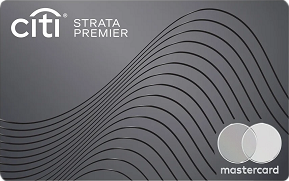
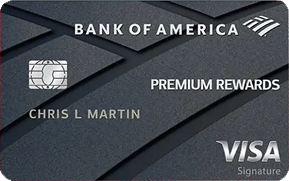
Chase Sapphire Preferred and Citi Strata Premier are strongest when you value transferable points and are willing to compare airline or hotel programs before redeeming. Capital One Venture X also offers transfers, while giving every ordinary purchase a simple 2-mile-per-dollar base rate. Bank of America Premium Rewards takes a more direct approach, with points that can be redeemed through Bank of America options rather than asking the cardholder to build a strategy around airline and hotel transfer partners.
Neither model is automatically better. Transferable points can create more opportunities, but they also require more attention and the value of an award can change from trip to trip. A simpler rewards system can be easier to use consistently. The important question is whether the card's redemption options fit how you already book travel, not whether the program offers the longest possible list of choices.
Most travel points are earned when you are not traveling
A travel card should be judged partly by what happens between trips. For many households, restaurant, grocery, gas, transit and ordinary purchases add up to much more spending over a year than flights and hotels. A card that earns well only when a vacation is being booked can look impressive during one month and relatively weak during the other eleven.
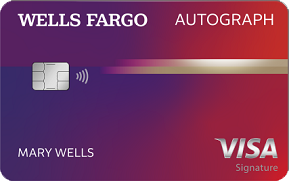
Citi Strata Premier is a good example of why everyday categories matter. Its 3-point categories extend beyond air travel and hotels to restaurants, supermarkets, gas and EV charging. Wells Fargo Autograph also spreads 3-point earning across travel, transit, restaurants, gas and EV charging, popular streaming services and phone plans without charging an annual fee. Venture X goes in another direction by paying a flat 2 miles per dollar on ordinary purchases outside its higher Capital One Travel categories.
Use your own spending rather than a hypothetical travel budget when comparing those structures. Someone who flies a few times a year but spends heavily on groceries and dining may earn more from broad everyday categories than from a card with a higher airport-specific rate. Someone who books hotels and rental cars frequently through an issuer portal may reasonably give more weight to the elevated portal rates.
Portal bonuses are valuable only when the portal works for the trip
Several travel cards reserve their highest earning rates or statement credits for bookings made through the issuer's travel portal. That can be a real advantage, but a portal rate should not be treated as if it applies to every trip. Compare the portal's price, cancellation rules and available itinerary with the option of booking directly before deciding where to buy.
Chase Sapphire Preferred earns 5 points per dollar on eligible Chase Travel purchases, while Venture X earns 10 miles per dollar on hotels and rental cars and 5 miles per dollar on flights and vacation rentals booked through Capital One Travel. Citi Strata Premier reaches 10 points per dollar on eligible hotels, car rentals and attractions booked through Citi Travel. Those rates are useful when the portal already has the booking you want at a competitive price.
Direct booking can still make more sense when the price is lower, the itinerary is easier to change with the airline or hotel, or a loyalty-program benefit depends on booking through a particular channel. Do not pay more for a reservation simply to earn more points. Rewards should improve the economics of a trip that already makes sense, not become the reason to accept a worse booking.
Count an annual credit only if you would use it anyway
Annual fees are easiest to evaluate when every credit is treated as a reimbursement for a real expense rather than as free money. Venture X charges $395 a year and provides a $300 annual credit for purchases through Capital One Travel, along with 10,000 anniversary miles after the first anniversary. That combination can substantially offset the fee for someone who naturally books enough travel through the portal, but the $300 is worth less to a person who would otherwise book elsewhere.
The same principle applies at lower fee levels. Chase Sapphire Preferred charges $95 and currently offers up to a $100 annual statement credit for eligible hotel stays booked through Chase Travel. Citi Strata Premier also charges $95 and offers a $100 annual hotel benefit on one qualifying stay of $500 or more through Citi Travel. Bank of America Premium Rewards charges $95 and includes up to $100 in qualifying airline-incidental statement credits each year, plus an airport-security application-fee credit on its own schedule.
Do not add every advertised benefit to a spreadsheet at full face value. Start with the credits you are highly likely to use without changing your travel habits, then ask whether the remaining fee is justified by rewards, protections or convenience. A benefit that expires unused has a value of zero, no matter how prominently it appears on the product page.
Transfer partners add flexibility, but they also add decisions
Moving bank points to an airline or hotel program can open redemption options that are unavailable through a simple statement credit or travel portal. Chase Sapphire Preferred, Capital One Venture X and Citi Strata Premier all support transfers to participating travel loyalty programs. That flexibility is one reason these cards can remain useful even when a particular issuer portal does not have the best itinerary.
A transfer should usually come after you have found the award you want, not before. Airline and hotel programs set their own redemption requirements, availability can change and transfer ratios are not identical across every program. Chase, for example, currently transfers Ultimate Rewards points to most partners at 1:1 but uses a different ratio for World of Hyatt for newer Sapphire Preferred accounts. That is a reminder to check the current terms instead of assuming yesterday's transfer value still applies.
Treat a transfer as a one-way decision unless the specific program says otherwise. Chase states that completed partner transfers are final, and other rewards ecosystems can impose similar restrictions. Compare the number of points required, taxes or fees and the cash price of the trip before moving a large rewards balance out of the bank program.
Premium perks should solve a travel problem you actually have
Airport lounge access, security-program credits, hotel benefits and travel protections can make a card more pleasant to carry, but their usefulness depends heavily on how you travel. Venture X is the premium card in our list because its benefits include Capital One Lounge access and participating Priority Pass lounges in addition to the annual travel credit. Those perks can be valuable for a frequent flyer who regularly uses eligible airports, while an occasional traveler may receive little practical value from them.
Lower-fee cards can still provide meaningful travel benefits without trying to be a premium lifestyle product. Chase Sapphire Preferred includes travel and purchase protections and an airport-security application-fee credit, while Bank of America Premium Rewards combines its airline-incidental credit with a security-program credit. Citi Strata Premier includes travel protections and a hotel benefit without charging a premium-card annual fee.
Read the benefit terms before relying on a protection for an expensive trip. Coverage can depend on how the travel was paid for, the type of loss, time limits, exclusions and other conditions. A credit-card benefit can be useful, but the existence of a coverage label is not the same thing as knowing that a particular trip or claim will qualify.
A travel card should not punish you for spending abroad
Foreign transaction fees are easy to overlook when rewards and welcome offers dominate the marketing, but they directly reduce the value of a card used outside the United States. A card charging a 3% foreign transaction fee can give back much of the value earned from a typical rewards rate. For a card positioned as a primary travel card, avoiding that fee is an important baseline feature.
All five cards in our current list charge no foreign transaction fee, which means the decision can move to more meaningful differences such as rewards, annual fees and benefits. That does not make international spending free. Currency conversion still determines the U.S. dollar amount of a purchase, and merchants or ATMs can impose their own charges in situations that are separate from the card issuer's foreign transaction fee.
If you travel internationally, also think about backup payment options rather than relying on one card. Fraud controls, a damaged card or a merchant that does not accept the network can interrupt even a well-planned trip. A second card stored separately can be more useful in that moment than another small rewards advantage on the primary card.
A large welcome offer is not a reason to manufacture spending
Travel cards often put their largest first-year value into a welcome offer. Chase Sapphire Preferred currently requires $5,000 in purchases within three months for its 75,000-point offer, while Venture X requires $4,000 in three months for 75,000 miles. Citi Strata Premier and Bank of America Premium Rewards also use substantial spending requirements for their current bonuses, so the size of the offer should always be considered together with the amount and timing of the required purchases.
The best time to open a card is often when ordinary planned expenses can satisfy the requirement without changing the budget. A scheduled trip, insurance payment, home expense or other predictable purchase can help, provided the merchant accepts credit cards without an offsetting fee and the expense was going to happen anyway. Buying additional items simply to reach a threshold turns a reward into a spending incentive.
Interest can erase welcome-offer value even faster. Travel rewards cards generally carry high variable APRs after any applicable introductory terms, so a bonus is most useful when the required spending can be paid according to your normal repayment plan. If the application would create a balance that needs months of interest-bearing payments, the headline number of points should carry much less weight.
Frequent travel is not required to justify a travel card
A no-annual-fee travel card can be a better fit when trips are occasional, rewards are earned mainly through everyday spending or you do not want to track annual credits. Wells Fargo Autograph earns 3 points per dollar across several travel and everyday categories, charges no annual fee and has no foreign transaction fee. That makes it easier to keep between trips because the card does not need to produce a specific amount of annual value just to break even.
The trade-off is that a no-fee card usually gives up some of the premium benefits, large recurring credits or transfer flexibility of more expensive products. That can be a good trade when those features would otherwise go unused. Paying $95 or $395 for a card is not a sign that you are a more serious traveler; it is only sensible when the extra value is concrete enough to exceed the cost.
Annual-fee cards become more compelling as travel patterns become predictable. Someone who knows they will use a portal credit, transfer points to partners and make use of travel protections can justify paying for those capabilities. Someone taking one modest trip a year may get more value from keeping the product simple and the carrying cost at zero.
Existing banking relationships can change the comparison
Bank of America Premium Rewards deserves a separate place in this list because the standard earning rates do not tell the entire story for an existing Bank of America or Merrill customer. The base card earns 2 points per dollar on travel and dining and 1.5 points on other purchases, but eligible BofA Rewards members can receive a relationship bonus that increases rewards on eligible credit-card spending.
Bank of America currently advertises relationship bonuses ranging from 10% to 75% depending on BofA Rewards tier. At the upper end, the bonus can materially improve the card's effective earning rate and make its relatively simple rewards structure much more competitive. Someone without qualifying balances should evaluate the card on its ordinary earning rates rather than assuming they will receive the maximum bonus.
This is a useful reminder for every rewards comparison: value can depend on what you already have. A card that is average in isolation may become strong inside an existing banking or rewards ecosystem, while a highly rated transferable-points card may be less useful if none of its partners match the airlines and hotels you use. Compare the whole setup, not just one product page.
When travel rewards are the wrong priority
Travel rewards work best when the cardholder can pay for ordinary purchases without turning them into expensive revolving debt. The value of points, miles, lounge access and statement credits is usually small compared with sustained credit-card interest. If reducing the cost of an existing balance is the immediate goal, a strong 0% APR or balance-transfer offer can be more useful than a travel card with a large welcome bonus.
Cash back can also be the better rewards system for someone who wants predictable value and does not enjoy managing portals or loyalty programs. Travel points can provide flexibility, but the value of a redemption is not fixed and the best options can require searching. A straightforward cash-back card may produce less excitement while being easier to redeem consistently for expenses that matter today.
Choose a travel card because its earning and redemption system fits the trips you are likely to take, not because the rewards balance looks impressive in an account. Points become useful when they reduce the cost of real travel or provide benefits you would otherwise pay for. Until then, they are an issuer-controlled rewards currency whose rules can change.
How we separated useful travel value from expensive perks
For this list, we gave the most weight to rewards that remain useful across different trips and spending patterns. We compared annual fees, foreign transaction fees, travel and everyday earning rates, redemption flexibility, transfer options, welcome offers and recurring benefits. Premium perks mattered when they could reasonably offset a higher carrying cost, but a long list of credits did not automatically make a card stronger.
We also wanted each pick to solve a different travel-rewards problem. The final group includes flexible transferable points, a premium card with substantial travel benefits, a card that earns strongly across everyday categories, a no-annual-fee option and a card whose economics improve for qualifying Bank of America customers. That variety matters more than filling the table with products that charge similar fees and compete on nearly identical travel portals.