



Your first card has a different job from your best rewards card
A first credit card does not need to maximize every category. For many college students, its most important job is to provide an account that is affordable to keep and easy to manage while you establish your own payment history. A card with no annual fee, a straightforward rewards structure and a realistic spending limit can be more useful than a product with richer benefits that encourages complicated spending.
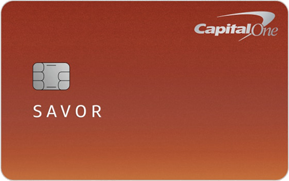
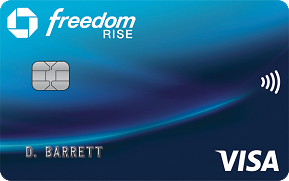
The five cards on this page solve different versions of that first-card problem. Discover it Student Cash Back and Capital One Savor Rewards for Students emphasize cash back, Bank of America Travel Rewards for Students is more useful for travel and studying abroad, BankAmericard for Students focuses on a long 0% introductory APR, and Chase Freedom Rise is designed for people who are new to credit, including students.
Start by asking what you need the account to do over the next year. If the goal is simply to begin building credit, simplicity and cost matter most. If you expect to travel internationally, foreign transaction fees deserve more attention. If a planned school-related purchase needs financing, the introductory APR may be more valuable than rewards.
Being a student does not replace the ability-to-pay requirement
Student cards are marketed toward people with limited or developing credit histories, but approval is not automatic because you are enrolled in school. Card issuers still evaluate the application and the applicant's ability to make required payments. The exact underwriting criteria are private to the issuer, so a student label should be treated as a product category rather than a guarantee of approval.
Age also matters. Federal credit-card rules generally require an applicant under 21 to show an independent ability to make the required payments, unless an eligible person who is at least 21 becomes liable on the account in a way the issuer accepts. For applicants 21 or older, issuers have more flexibility in how they evaluate income or assets that the applicant can reasonably access.
Use accurate income information on the application and follow the issuer's instructions about what can be included. Part-time work, seasonal work and other current or reasonably expected income can matter, but money you merely hope to receive is not the same thing as income the rules allow the issuer to consider. Do not inflate income to improve the odds of approval.
The habit matters more than the amount you charge
You do not need to run large amounts of spending through a student card to make the account useful. A few ordinary purchases each month can be enough to practice the important parts of credit-card management: checking the statement, recognizing the due date, making the payment on time and noticing whether spending is growing faster than expected.
Autopay can reduce the risk of forgetting a due date, especially when school schedules change from week to week. Chase Freedom Rise even includes a small current statement-credit incentive tied to setting up and maintaining automatic payments. Whether or not a card provides an incentive, autopay works best when the linked bank account is monitored so there is enough money available for the payment.
Paying on time is the non-negotiable part. Carrying a balance is not necessary to build credit, and paying interest does not make a payment history more valuable. If the budget allows, paying the statement balance in full keeps the account simpler and lets rewards remain a genuine benefit rather than a small offset against financing charges.
Treat a small credit limit as a guardrail, not a problem to solve
A first credit line may be modest, particularly when the applicant has a short credit history. That can be useful because it places a natural ceiling on spending while you learn how the account behaves. The credit limit is the maximum the issuer is willing to extend, not a monthly budget or a target to use.
Keep purchases tied to money you already expect to have available for repayment. A $500 limit does not mean $500 of discretionary spending has suddenly become affordable. If one school expense uses a large share of the line, make a payment when appropriate rather than adding unrelated purchases simply because there is still some available credit.
Over time, the issuer may review the account for a higher limit, or you may become eligible for other products. There is no need to rush that process. A low-cost account managed consistently can be more useful than seeking additional credit before the first card is comfortably integrated into the budget.
Choose rewards that match student spending, not an idealized budget
Student spending patterns vary widely. Someone living on campus with a meal plan may spend relatively little at grocery stores, while a commuter may spend much more on gas, dining or transit. A rewards card should be evaluated against the categories you actually use instead of the categories that appear most valuable in a marketing chart.
Capital One Savor Rewards for Students is strongest when grocery, dining, entertainment and streaming spending is meaningful. Discover it Student Cash Back can provide a higher rate in rotating categories, but it requires activation and the useful categories change during the year. Bank of America Travel Rewards for Students gives up category complexity in favor of a straightforward 1.5-point base rate, plus a higher rate on eligible Travel Center bookings.
If your spending is very small, the difference between two competitive reward structures may only amount to a few dollars a month. In that situation, ease of use, annual fee, foreign transaction fee and application fit can matter more than squeezing out the highest theoretical return.
A 0% APR offer can help with one planned expense, not an ongoing shortfall
Introductory APR offers can be useful when a known expense needs several months of repayment. BankAmericard for Students currently provides the longest purchase-financing window in this group, while Bank of America Travel Rewards for Students and Discover it Student Cash Back provide shorter introductory periods. The right offer depends on the amount financed and the monthly payment you can realistically make.
Calculate the payoff amount before using the promotion. If a $1,200 laptop is placed on a 12-month plan, the rough target is $100 a month before allowing for any additional purchases. A promotional rate saves interest only when the balance is actually reduced during the window; it does not make an expense affordable by itself.
Do not use a 0% card to cover a recurring gap between income and living expenses. If the account is used every month because basic expenses exceed available cash, the promotional period can hide the problem until the regular APR begins. The better use case is a finite purchase with a clear repayment date.
Studying abroad changes what matters in a student card
A card that works well on campus can become expensive overseas if it charges a foreign transaction fee. Bank of America Travel Rewards for Students and Capital One Savor Rewards for Students currently have no foreign transaction fee, which makes them more natural candidates for international use than a card that adds a percentage charge to foreign purchases.
Foreign transaction fees are only one part of the travel decision. Check whether the card network is widely accepted where you are going, keep a backup payment method in a separate place and make sure the issuer has up-to-date contact information. A lost or blocked card is much easier to deal with when it is not your only way to pay.
If you expect to book flights or hotels, also compare how rewards work outside the United States. A card with travel-oriented points may be more useful than a domestic cash-back category, but do not choose a complex travel system solely for one semester abroad. The account may remain open long after the trip is over.
An authorized-user card and your own account are not the same thing
Some students first encounter credit cards as an authorized user on a parent or family member's account. That can provide access to a card without making you the primary account holder, but the primary cardholder remains responsible for the account under the issuer's terms. An authorized-user arrangement therefore does not teach every part of managing your own credit line.
Opening your own account means you are responsible for the balance, statements and payments associated with that card. That responsibility can be useful when you are ready for it because the budgeting decisions are no longer filtered through someone else's account. It also means mistakes are yours to correct, so the first limit and spending pattern should be deliberately manageable.
If you are already an authorized user, do not feel pressure to open a separate card on a particular timeline. Apply when you have a practical reason for the account and a reliable way to make payments. The goal is not to collect accounts early; it is to add responsibility at a pace the budget can support.
A good student card should not become useless after graduation
Graduation does not automatically make a student card worthless. Many student products have no annual fee and can continue to function as ordinary credit-card accounts after your circumstances change. The issuer may eventually offer a product change or another card, but there is no requirement to abandon a useful account simply because you are no longer in school.
This is one reason long-term usefulness matters in the initial comparison. Savor Student can continue to earn in everyday categories, Travel Rewards for Students remains a no-foreign-transaction-fee travel card, and Discover's rotating cash-back structure does not depend on staying a student forever. A simple financing card can remain useful as a no-fee account even after its introductory APR is gone.
When income and credit history improve, reassess the wallet as a whole instead of automatically replacing the oldest account with a premium card. A new card can add better rewards or benefits while the student card remains open if it still has no annual cost and is manageable. The decision should be based on value and account management, not on the label printed on the original application page.
When getting a student credit card should wait
A credit card is not a requirement for college. If income is unpredictable, the budget is already strained or the temptation to spend borrowed money would make school more stressful, waiting can be the better choice. A debit card and savings buffer can handle everyday spending without adding a revolving credit obligation.
It can also make sense to wait after several recent credit applications or if you are unsure how an existing account is being managed. Another application should solve a real need, not act as a test of whether you can be approved. Repeatedly applying after denials can add more inquiries without improving the underlying reason the applications are unsuccessful.
The best first-card experience is deliberately uneventful. The card is used for ordinary purchases, statements are understood, payments are made on time and the account gradually becomes a routine financial tool. Rewards and welcome offers are useful extras only after that basic system works.
What mattered most for a first independent card
For this list, we emphasized costs, accessibility and manageability before rewards. We compared annual fees, introductory and ongoing APRs, foreign transaction fees, rewards structures, current offers and whether the product is designed for students or people who are new to credit. A richer rewards rate received less credit when the card was expensive to keep or poorly suited to the practical needs of a first account.
We also wanted the final group to cover different student situations rather than five versions of the same cash-back card. The picks include rotating rewards, everyday category cash back, a travel-focused card with no foreign transaction fee, a long 0% APR option and a card positioned for people new to credit. That variety makes the choice depend on how the account will actually be used.