

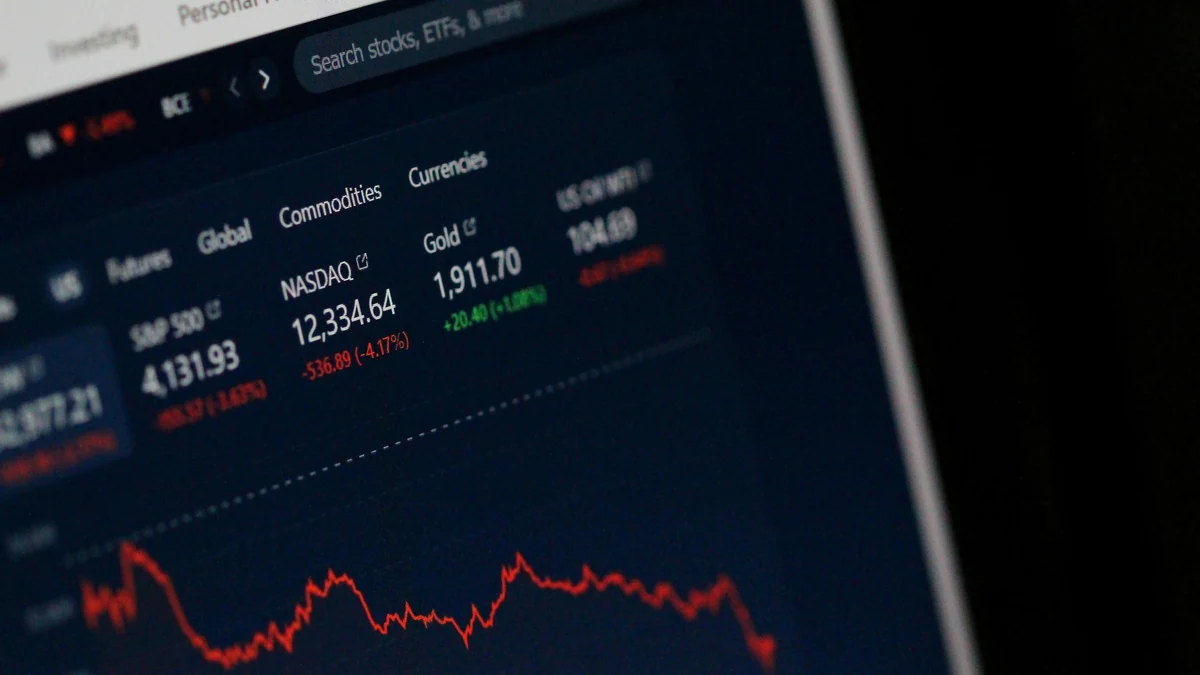
Commodity speculation is a deliberate attempt to profit from a change in the price of a raw material or a contract linked to it. The underlying market may be crude oil, natural gas, gold, copper, corn, coffee, cattle or another traded commodity, but the important question for a speculator is not whether the commodity is useful. It is whether the price exposure being taken is understood well enough, and sized carefully enough, for the trade to have a defensible risk and reward profile.
Futures are the most direct route into many commodity markets, but they are not the only route. Investors can also use commodity-focused funds, shares of producers and, in some cases, the physical commodity itself. Those choices are not interchangeable: each one responds to commodity prices differently, carries different costs and creates a different kind of risk.
What commodity speculation actually involves
At its simplest, commodity speculation is betting on commodity prices without needing the commodity for a commercial purpose. A refiner buying crude oil futures to stabilize input costs has a business exposure it is trying to control. A trader buying the same contract because they expect crude prices to rise is deliberately taking the price risk that the commercial user is trying to reduce.
The distinction between hedging and speculation is therefore about economic purpose, not about whether one side is somehow participating in a different market. Both may use the same contract. The hedging side of futures uses derivatives to reduce an existing or expected exposure, while the speculator accepts exposure in the hope of earning a return from the price move.
This matters because commodity speculation should not be confused with buying a productive asset and waiting for its business value to compound. A share of stock represents an ownership claim on a company. A commodity futures position is a financial derivative whose value changes with the relevant contract market. The trade can be profitable, but it does not acquire earnings, reinvest cash flow or create an ownership interest in the commodity producer.
How futures turn a price view into a trade
A futures contract standardizes the quantity, quality, delivery month and other terms for a transaction, leaving price as the variable negotiated in the market. A trader who expects the contract price to rise can go long, while a trader expecting it to fall can go short. Because the contract is exchange-traded and centrally cleared, the trader can normally offset the position by making the opposite trade rather than locating a new counterparty privately.
When you buy a futures contract, you are not usually paying the full notional value of the underlying commodity. You post margin, which is a performance bond that supports the position, and the account is adjusted as the contract gains or loses value. That structure is what gives futures their capital efficiency, but it is also what makes a seemingly modest price change capable of producing a large percentage gain or loss relative to the cash committed as margin.
Contract size and price movement
The size of the contract determines how much money is gained or lost for each unit of price movement. A trader can be directionally right and still take an unsuitable amount of risk if the contract is too large for the account. This is one reason micro and smaller-sized contracts, where available, can be useful: they allow the same market view to be expressed with less dollar exposure per tick.
Contract specifications also differ across markets. A one-point move in crude oil does not have the same dollar effect as a one-point move in gold, corn or coffee, and margin requirements can change when volatility rises. The correct comparison is therefore not the quoted price alone, but the dollar value of a normal price move relative to the amount of capital the trader is prepared to risk.
Closing a position before delivery
Most speculators do not want warehouses of metal, truckloads of grain or barrels of oil. They typically close or roll positions before the contract reaches the point at which delivery obligations become relevant. The earlier article was right to distinguish speculative trading from commercial use, but cash settlement is not the universal explanation: some commodity contracts are cash-settled, while many major contracts are physically deliverable even though speculators usually exit before delivery.
A trader who holds a physically settled contract too close to expiration without understanding its rules can create an operational problem that has nothing to do with the original price thesis. Delivery periods, first notice dates, last trading dates and broker restrictions differ by contract. Anyone using futures should know when the broker requires a position to be reduced or closed and what happens if it is not.
What moves commodity prices and futures contracts
The physical market still matters even when the trade takes place in a futures account. Supply disruptions, production changes, inventories, weather, transportation constraints, seasonal demand, industrial activity, currency moves and government policy can all alter what buyers are willing to pay and sellers are willing to accept. The relative importance of those variables differs sharply between commodities, which is one reason a method that works in gold may translate poorly to natural gas or agricultural futures.
Expectations matter as much as the latest reported fact. A drought that everyone expects may already be reflected in grain futures before the crop report arrives, while a smaller-than-expected inventory change can move an energy contract even if inventories remain high in absolute terms. Commodity markets continuously discount changing information about future availability and demand, so the speculator is usually trading the difference between what happens and what the market had already priced in.
The futures curve matters
Commodity traders also need to look beyond the nearest quoted price. Futures for different delivery months often trade at different levels because carrying a physical commodity involves financing, storage, insurance and convenience considerations, while current scarcity can make prompt delivery more valuable than later delivery. When later contracts are priced above nearer contracts, the curve is commonly described as contango; when nearer contracts are above later contracts, it is commonly described as backwardation.
The curve affects speculators because a position that is rolled from one contract month into the next can gain or lose value from the roll itself, separate from the change in the spot commodity price. This is especially important for funds that maintain futures exposure continuously. A commodity can rise in the cash market while a futures-based product delivers a weaker result if repeated rolls occur at unfavorable prices.
What speculators contribute to futures markets
Speculation is not merely an activity that sits on top of commercial hedging. Speculators accept positions that producers, processors, merchants and other commercial participants may not want to hold, which helps make it easier for those participants to enter or exit hedges. The futures market also aggregates competing views about future conditions into observable prices, giving both commercial users and traders a continuously updated reference point.
The economic effect of speculation is more nuanced than the claim that speculators either determine commodity prices or are irrelevant to them. Futures order flow can move contract prices in the short run, particularly when liquidity is thin or many participants try to enter or exit at once. Over longer horizons, however, commodity prices remain constrained by physical supply, demand, inventories, storage economics and the relationship between futures and cash markets, so it is not enough to explain every large price move as speculation alone.
Leverage and margin change the risk
The main practical danger in futures speculation is that margin allows a trader to control a large notional position with a much smaller amount of cash. Leverage magnifies favorable moves, but it magnifies adverse moves by the same mechanism, and losses can force additional funds into the account or require the position to be closed. The CFTC specifically warns that speculative short-term trading becomes more dangerous when unfamiliar markets and leverage are combined, and it advises traders to use only capital they can afford to lose.[1]
Margin should therefore not be treated as the amount at risk. The relevant risk is the expected dollar loss if the market reaches the trader’s exit point, plus the possibility that a fast move, price gap or temporary loss of liquidity produces a worse execution than planned. A position can satisfy a broker’s minimum margin requirement and still be far too large for the trader’s account.
Commodity markets can also experience abrupt repricing around weather events, geopolitical developments, production announcements, inventory reports and policy decisions. In such conditions, a stop order is an instruction to exit, not a guarantee that the fill will occur at the exact stop price. Position sizing has to leave room for slippage and for the possibility that volatility expands after the trade is entered.
How traders analyze commodity opportunities
Fundamental analysis asks what is changing in the underlying market and whether the current futures price already reflects it. Depending on the commodity, that can involve crop conditions, refinery runs, mine supply, inventories, export flows, shipping bottlenecks, interest rates, currency levels or industrial demand. The challenge is not simply collecting more data, but identifying the few variables that are actually capable of changing the balance of supply and demand during the life of the trade.
Price-based methods approach the same problem from a different angle. Traders using charting and technical analysis focus on trend, volatility, support and resistance, momentum, volume or other features of market behavior. Technical analysis does not make the fundamentals irrelevant; it provides a way to observe how market participants are responding to the information that has reached the market.
The CFTC’s Commitments of Traders reports can add another layer of context by showing how reportable open interest is distributed across trader classifications in covered futures and options markets. The reports use position data supplied by reporting firms and classify traders according to their predominant business purpose, but the CFTC cautions that a category does not reveal the specific reason for each position. COT data is therefore useful for understanding positioning and concentration, not as a simple signal that commercial or managed-money traders must be correct about the next price move.[2]
A sound process combines market understanding with a pre-defined reason for entering and exiting. The trader should know what would invalidate the thesis, how much can be lost if that happens and whether the expected payoff is large enough to justify the risk. If the trade only works when every assumption goes right, the setup is fragile even if the market narrative sounds persuasive.
Other ways to speculate on commodities
Futures are not appropriate for every investor who wants commodity exposure. There are several ways to trade commodities indirectly, and the best instrument depends on whether the goal is a short-term price trade, longer-term exposure, portfolio diversification or ownership of a related business. The critical step is to understand what the chosen instrument actually owns or tracks.
Commodity exchange-traded products can be convenient because they trade through a securities account, but their construction varies. Some hold a physical commodity, some use futures, some hold shares of producers and some combine several methods. The benefit of ETFs is easy access and intraday tradability, yet a fund that rolls futures can behave differently from the spot commodity because of management costs, collateral returns and the shape of the futures curve.
Precious metals illustrate the distinction clearly. An investor seeking gold exposure can buy bullion, trade gold futures, own a gold ETF or buy shares of a mining company. Those positions share some sensitivity to gold prices, but they are not substitutes: miners add operating and corporate risk, bullion adds storage and transaction considerations, and futures add leverage and expiration mechanics.
Commodity-producer stocks can sometimes offer a leveraged economic response to commodity prices because a change in selling prices may alter the producer’s profit margin by more than the percentage change in the commodity itself. That relationship is unstable, however, because labor costs, debt, hedging programs, production volumes, political risk and management decisions can overwhelm the commodity price. Buying an oil producer is a view on both oil and the company, not a pure oil trade.
Regulation and position limits
Commodity futures speculation takes place inside a regulated market structure. Certain physically settled commodity derivatives and linked instruments are subject to federal speculative position limits, and exchanges can impose their own limits or accountability levels. The CFTC’s current framework applies federal limits to 25 core referenced physically settled commodity futures contracts, with exemptions for qualifying bona fide hedges and certain other positions.[3]
These rules matter most to large participants, but retail traders still need to understand that the market is not an unlimited arena where any position can be built in any contract. Brokers and exchanges can also raise margin requirements, restrict trading near delivery or impose risk controls that are more conservative than the legal maximum. A trading plan should account for those operational constraints before the position becomes urgent to exit.
Building a sensible speculation process
Commodity speculation becomes more defensible when the trade is reduced to a small number of explicit decisions. The trader needs a reason for the trade, a price or market condition that would show the reason was wrong, a position size that keeps the resulting loss tolerable and an exit method for both favorable and unfavorable outcomes. The market may still behave unexpectedly, but the account should not depend on a single forecast being right.
Time horizon also has to match the evidence being used. A thesis based on a seasonal supply deficit may take weeks or months to play out, while a short-term technical setup may be invalidated within hours. Mixing those horizons can turn a losing short-term trade into an improvised long-term investment, which is especially dangerous in expiring futures where the position eventually has to be closed or rolled.
Transaction costs deserve more attention than they often receive. Commissions may be small, but bid-ask spreads, slippage and repeated rolling can materially reduce the return of an active strategy. The more frequently a trader changes position, the more edge is required simply to overcome the friction of trading.
The final test is whether commodity exposure improves what the investor is trying to accomplish. For an active trader, a liquid futures market may provide a direct way to express a defined view with tight risk controls. For a long-term investor, an unleveraged fund or a modest allocation to a commodity-related asset may be easier to manage, while someone without a clear view, risk budget or reason for taking the exposure is not made better off merely by adding a complex instrument.
Sources
- Commodity Futures Trading Commission: Customer Advisory: Understand Risks and Markets before Reacting to Internet Hype
- Commodity Futures Trading Commission: Commitments of Traders
- Commodity Futures Trading Commission: Position Limits for Derivatives