

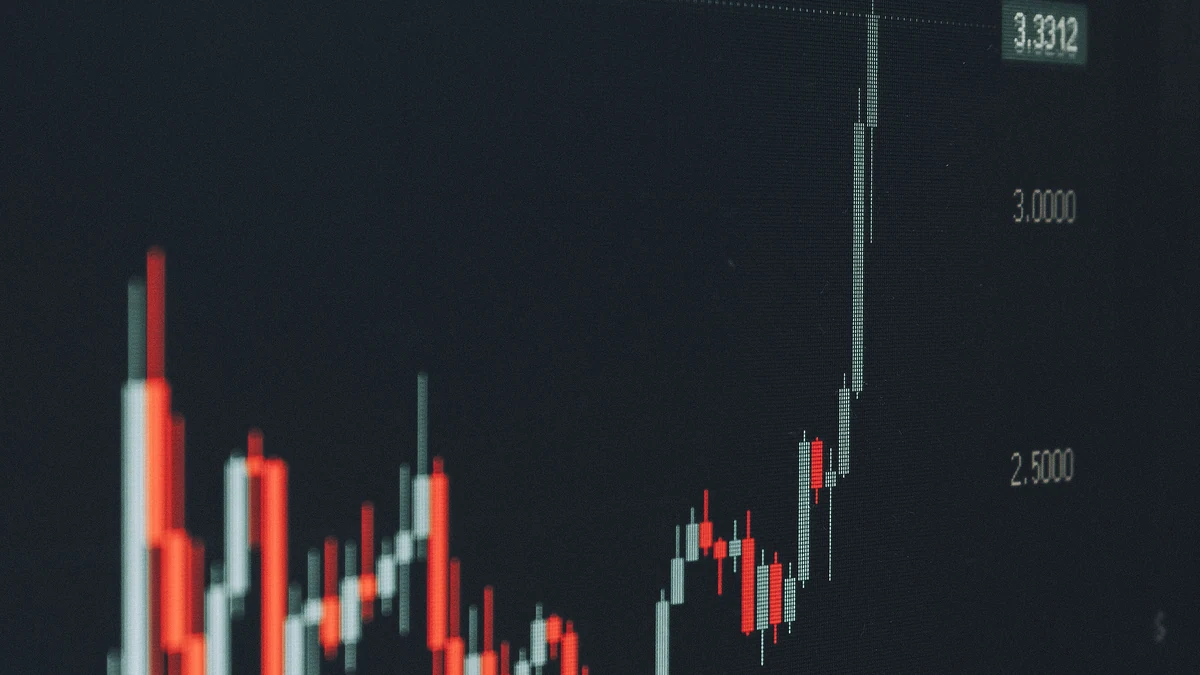
Futures speculation is simple in concept: a trader takes a position because they expect the price of a futures contract to rise or fall, then tries to exit at a more favorable price. The mechanics underneath that trade are less forgiving than the basic idea suggests, because every contract has a defined size, expiration month and settlement process, and the position is subject to margin and daily profit-and-loss settlement.
That structure is what separates informed futures speculation from merely having a market opinion. A trader can be right about the broad direction of oil, an equity index or interest rates and still lose money because the position was too large, the chosen contract month behaved differently from the spot market, the move happened after the trade had to be closed, or adverse price movement triggered a margin problem before the thesis played out.
What speculation means in the futures market
The futures markets bring together participants with different reasons for trading. A commercial hedger may use futures to reduce an existing business exposure, such as the risk of a crop price falling before harvest or an input cost rising before purchase, whereas a speculator deliberately accepts price risk in an effort to profit from a forecast. The speculator does not need a commercial interest in the underlying commodity or financial instrument, but does need to understand the obligations and cash flows created by the contract.
Exchange-traded futures should also be distinguished from private forward contracts. Futures are standardized contracts traded under exchange rules and cleared through a clearing organization, while forwards are customized agreements commonly negotiated over the counter between counterparties. Treating the two as interchangeable obscures important differences in standardization, liquidity, counterparty arrangements and the way positions are settled.
Speculation can be long or short from the outset. A trader expecting a price increase buys a contract and later sells an offsetting contract to close the position, while a trader expecting a decline can sell first and later buy an offsetting contract. This ability to establish a short position directly is one reason futures are widely used to express views on falling as well as rising markets.
The gain on one side of a futures position is matched by a loss on the other side before transaction costs, which is the useful sense in which futures trading is described as zero sum. That does not make the market economically pointless, because a hedger may willingly accept a loss on the futures leg when it offsets a favorable move in the underlying business exposure, and a speculator may willingly take the price risk that the hedger wants to reduce. The futures profit or loss therefore cannot always be judged in isolation from the reason the position exists.
How a futures trade produces profit or loss
A futures quote is only the starting point for understanding the money at risk. Each contract specifies the quantity of the underlying asset, or a multiplier that converts a quoted price change into dollars, and it also specifies a minimum price increment known as the tick. Before entering a position, a trader needs to translate an ordinary market move into the actual dollar change that will hit the account.
Consider a hypothetical financial futures contract with a multiplier of $50 for each full price point. A move from 5,000 to 5,010 is a 10-point change, so one contract would gain or lose $500 depending on whether the trader was positioned in the right direction. If the position contained four contracts, the same price movement would change the account by $2,000, even though the quoted market moved only 0.2 percent.
The same principle applies to commodity futures, although the contract unit may be stated in barrels, bushels, ounces or another physical measure. A small-looking change in the quoted commodity price can represent a large dollar move after it is multiplied by the contract size, which is why the contract specification matters more than the visual size of a move on a chart.
Smaller contracts, including many micro contracts, reduce the dollar value of a given market move and can make position sizing more precise. They do not change the underlying logic of the trade, however, because profit and loss still depend on the price move multiplied by the contract’s value per point or tick and then by the number of contracts held. A trader who focuses only on the amount required to open the position can therefore underestimate the economic exposure being controlled.
Margin and daily settlement are the core risk mechanics
Futures margin is not a down payment that buys a percentage ownership interest in an asset. It is a performance bond or collateral amount that supports the obligations created by the position, with an initial margin required to open the trade and a maintenance level that must continue to be met. U.S. futures positions are also marked to market, so gains and losses are credited or debited as the market is revalued rather than being left unresolved until the trader eventually exits.[1]
Leverage comes from the gap between the contract’s notional exposure and the margin posted to support it. If a hypothetical contract represents $100,000 of market exposure and the trader posts $10,000 of margin, a 1 percent move in the contract’s value represents $1,000, which is 10 percent of the margin amount. Actual margin requirements vary by contract, broker and market conditions, and they can be raised when risk increases, so a trading plan built around the assumption that today’s margin will remain unchanged is fragile.
An adverse move that pushes account equity below the required level can lead to a demand for additional funds or liquidation of the position. That creates path risk: being correct about where the market eventually goes is not enough if the account cannot withstand the price path taken to get there. The National Futures Association consequently tells prospective traders to treat futures as highly risky and to use risk capital, meaning money that is not needed for necessities, emergencies, savings or long-term financial objectives.[2]
Position size should therefore be based on the dollar consequences of adverse movement rather than on the maximum number of contracts that available margin happens to permit. The challenges of futures trading become more severe when a trader uses nearly all available buying power, because ordinary volatility can then become an account-level liquidity problem instead of merely an unrealized trading loss.
Stop orders can limit some exposures but they do not guarantee a particular exit price in every market condition. Fast markets, gaps, thin liquidity or price limits can produce execution away from the intended level, so a risk estimate based on a perfectly filled stop is not the same as a maximum-loss guarantee. Futures risk control needs room for slippage and exceptional moves rather than assuming that every exit will occur exactly where planned.
Futures speculation is trading, not ownership investing
What separates trading from investing is not simply the number of days a position remains open, but the economic source of the expected return. Buying shares of stocks gives an investor an ownership interest in a company and potentially a claim on dividends and long-term business value, whereas holding a futures contract creates a contractual exposure to price changes for a defined contract month. The futures position itself does not create ownership of the underlying company, commodity or index.
That distinction does not mean futures can only be used for very short-term trading. Institutions and systematic strategies can maintain futures exposure for long periods by replacing expiring contracts with later-dated contracts, and some investors use futures as an efficient way to adjust portfolio exposure. The important point is that a sequence of rolled futures contracts has its own economics, including differences between contract months and repeated trading costs, so it should not be described as identical to owning the underlying asset indefinitely.
The zero-sum nature of futures price changes also differs from the wealth creation that can occur when productive businesses earn profits and reinvest capital over many years. A futures speculator is primarily trying to transfer money through successful price forecasting and trade management rather than waiting for the contract itself to generate earnings. That makes entry price, exit price, leverage, timing and transaction costs central to the result.
Expiration, settlement and rolling positions
Every standard futures contract has contract-specific rules governing its expiration and settlement. Some contracts settle in cash, while others permit or require physical delivery if a position remains open into the relevant delivery process, and the dates and procedures are not the same across markets. Speculators who do not intend to make or take delivery need to know when their broker or exchange requires action rather than assuming they can ignore expiration until the final day.
The usual way to leave a speculative position is to offset it before expiration. A long position is closed by selling the same contract month, and a short position is closed by buying the same contract month, which ends the market exposure without transferring the position to some third party in a special private transaction. Different futures contracts can have very different liquidity across listed months, so choosing an expiry is part of the trade rather than an administrative detail.
Rolling is a new transaction rather than a magical extension of the existing contract. A trader who wants to stay long might sell the expiring contract and buy a later-dated one, while a trader who wants to remain short would make the opposite pair of transactions. The price difference between the two contract months, commissions and bid-ask costs all affect the economics of maintaining exposure.
The relationship between nearby and later-dated futures also carries information about the market. In commodity markets, storage costs, financing, convenience value and expectations about future supply and demand can influence the curve, while interest rates and other carrying relationships matter in financial futures. A speculator who is right about the spot market but ignores the futures curve can therefore get a different result from the one that a simple directional forecast seemed to imply.
What speculators are actually trying to forecast
The old debate that tries to make futures trading a contest between fundamental analysis and technical analysis is too simplistic. Fundamental information can be decisive in futures markets because crop conditions, inventories, interest-rate expectations, inflation data, monetary policy, geopolitical disruptions and changes in industrial demand can alter expected future prices. Technical information can also matter because price, volume, volatility and market structure help traders judge how participants are responding to those fundamentals and where orders may be concentrated.
The appropriate mix depends partly on the trading period. A trader holding a position for minutes around a scheduled data release faces different information and execution problems from a trader holding a commodity position for several months, but a shorter time frame does not automatically make technical analysis more accurate or fundamental analysis irrelevant. Short-horizon prices can react violently to new fundamental information, while longer-horizon trades can still be derailed by poor entry levels or changes in market positioning.
Price forecasts also need to specify which price is being forecast. The spot price, the front-month futures contract and a contract expiring six months later are related but not identical, and their differences can widen or narrow as market conditions change. A useful thesis therefore identifies the actual contract being traded, the expected catalyst or price behavior, the time window in which the thesis should work and the evidence that would show the thesis is wrong.
Futures speculation also makes timing more important than it is in many long-horizon investment decisions. A trader can have a sound view that interest rates will eventually fall or that a commodity will become scarcer, but still lose if the selected contract expires first or if adverse movement overwhelms the risk budget before the expected repricing occurs. That is one reason comparisons with trading stocks based upon fundamentals need care, because the contractual time dimension is more explicit in futures.
Why speculators matter to futures markets
Hedgers do not always arrive in perfectly matched pairs at the same moment, with one commercial participant wanting exactly the opposite exposure of another. Speculators can take the other side of those imbalances, which helps create trading interest and can make it easier for hedgers to enter or leave positions. A CFTC-hosted study examining several futures markets found evidence consistent with speculators providing liquidity and, in the markets studied, found no support for the simple claim that speculation necessarily destabilized prices.[3]
That finding should not be stretched into the claim that every speculative position improves every market. Large concentrated positions, crowded trades, abrupt liquidations and manipulative conduct can create different concerns, which is why futures markets operate with exchange rules, surveillance and, in certain commodities, speculative position limits. The useful distinction is between speculation as a normal risk-taking function of the market and particular behavior that can impair orderly trading.
Hedgers should not be viewed as unsophisticated traders who exist to lose money to more skillful speculators. A producer who sells futures and later loses money on that futures position may simultaneously receive a higher price in the cash market, which is precisely the offset the hedge was designed to create. Likewise, a commercial buyer may accept a futures loss because the underlying input became cheaper, so comparing the futures legs alone can give a false impression of who benefited from the overall strategy.
Speculators also compete with one another, and their willingness to take risk does not guarantee a positive expected return after costs. Every strategy faces execution costs, changing market conditions and the possibility that a previously useful relationship stops working. The fact that futures make it easy to trade both directions and control substantial notional exposure does not create an edge by itself.
A disciplined way to think about futures speculation
A credible futures trade begins with the contract rather than the forecast. The trader should know the contract unit or multiplier, tick value, margin requirements, expiration schedule, settlement method and the liquidity of the specific contract month before deciding how large a position to take. Without those details, it is impossible to translate a market opinion into a realistic estimate of account-level risk.
The next question is how the trade is expected to make money and what would invalidate that expectation. A fundamental thesis should identify which economic or market variables matter and when they are likely to matter, while a technical thesis should define the observed price behavior without assuming that a chart pattern is a law of nature. In both cases, the exit logic needs to account for the possibility that the market behaves differently from the forecast rather than treating every adverse move as a reason to wait longer.
Position sizing is where a plausible idea becomes either manageable or dangerous. A trader who can withstand a series of ordinary losing trades has more opportunity to evaluate whether a strategy actually works, whereas a trader who commits most available margin to one view can be forced out by a move that was entirely normal for the market. The amount a broker permits is an operational ceiling, not a recommendation for how much exposure should be used.
Costs also deserve more attention than they often receive in discussions of speculative skill. Commissions, exchange fees, bid-ask spreads, slippage and the economics of rolling can turn a small theoretical edge into a negative result, particularly for strategies that trade frequently. A strategy should therefore be judged on net outcomes over a meaningful sample of trades, not on a handful of memorable wins or on gross chart profits that assume perfect execution.
Futures speculation can be an efficient way to express a view on commodities, equity indexes, interest rates and other markets, but efficiency is not the same as safety. The trader is working with a leveraged, time-defined contract whose gains and losses are settled through the account as the market moves, so forecasting skill has to be paired with contract knowledge, liquidity management and a risk budget that can survive being wrong. If the dollar effect of an ordinary adverse move is unclear before the trade is placed, the position is not yet well enough understood to speculate responsibly.
FAQs
- Can you lose more than the margin you initially post on a futures trade?
Yes. Margin is collateral supporting the position, not a cap on the amount that can be lost. A sufficiently large adverse move can create losses beyond the initial margin deposit, and the account holder may need to add funds or face liquidation.
- Do futures speculators have to take delivery of the underlying asset?
Not if the position is properly closed before the applicable delivery process. Many speculators offset or roll positions before expiration, but settlement rules vary by contract, so traders need to know the dates and procedures for the specific market they trade.
- Is futures speculation a zero-sum activity?
Futures profit and loss is zero sum between the two sides of a contract before transaction costs, because one side’s gain from a price move is matched by the other side’s loss. The broader economic use of futures is not zero value, however, because hedgers can use the contracts to transfer price risk that already exists in their businesses or portfolios.
Sources
- U.S. Commodity Futures Trading Commission: Futures Glossary
- National Futures Association: Investor Best Practices
- U.S. Commodity Futures Trading Commission: Is Speculation Destabilizing?