South Korea Launches First Commercial Arctic Shipping Trial to Europe
PanStar Acro left Busan with 837 TEU of cargo and empty containers on a 45-day government-backed test of the Northern Sea Route to Europe.
Our editorial standards
MarketReview publishes clear, independently produced financial information using reliable sources and transparent editorial standards.
Read our Editorial Policy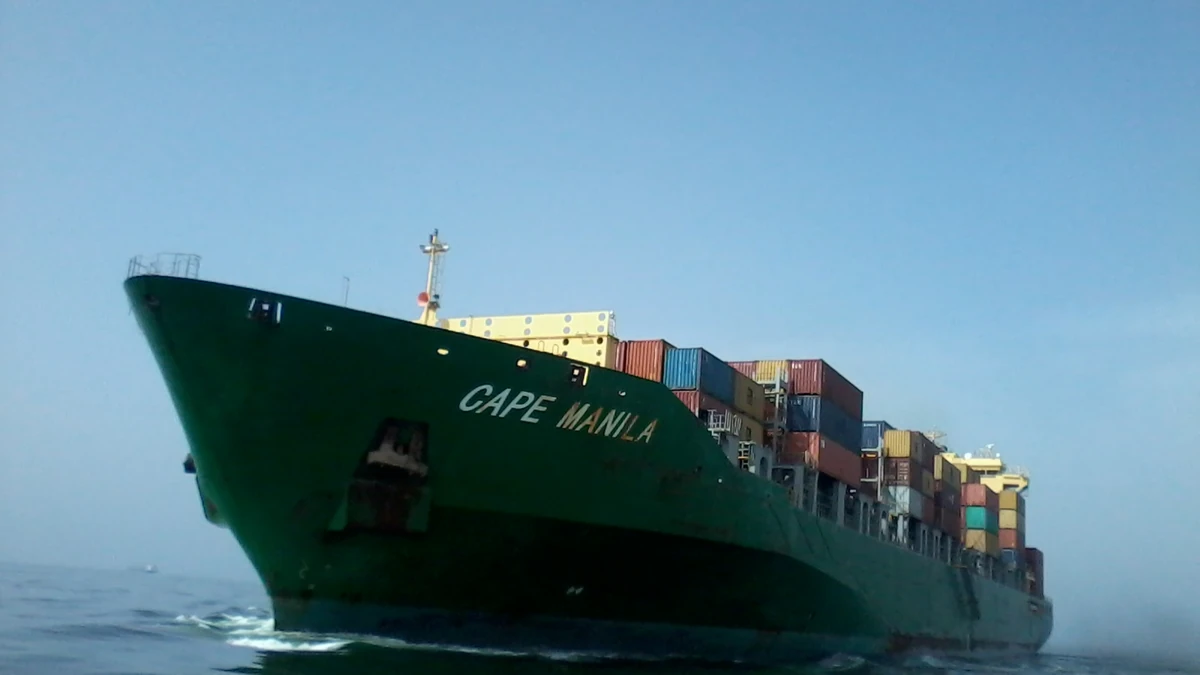
South Korea sent a container ship from Busan toward Europe through the Arctic on Aug. 22, beginning the country’s first commercial trial of the Northern Sea Route with real cargo. The 2,758-TEU PanStar Acro left Busan New Port at about 9 p.m. local time on Saturday on a government-backed voyage intended to test whether the shorter northern corridor can work as a repeatable freight service rather than only as a technical navigation exercise.
The ship is carrying 837 TEU in total, including about 737 TEU of cargo and 100 empty containers. The Ministry of Oceans and Fisheries said the load includes chemical products, used vehicles and auto parts, among other goods. The vessel is scheduled to reach Arctic waters around Aug. 30, complete the Arctic portion around Sept. 7 and return to Busan around Oct. 5 after calls in Britain, the Netherlands and Poland.
South Korean ships have used the Arctic route before, but the ministry says this is the country’s first trial involving a container ship on the Northeast Passage and the first voyage on the route by a Korean carrier since 2016. Carrying customer cargo makes the sailing more useful as a commercial test because officials can compare operating costs, schedule performance and shipper demand under actual service conditions.
A 45-day round trip with three European port calls
The Ministry of Oceans and Fisheries’ voyage plan sends PanStar Acro from Busan through waters north of Russia before the vessel heads to Felixstowe in Britain, Rotterdam in the Netherlands and Gdansk in Poland. The first European call is expected at Felixstowe around Sept. 9, followed by Rotterdam around Sept. 11 and Gdansk around Sept. 15. PanStar Acro is then due to return to Busan through the same northern corridor.
From Busan to Rotterdam, the planned route is about 13,000 kilometers. Roughly 6,400 kilometers of the Europe-bound leg will be in Arctic waters, which the ministry defines for this voyage as waters north of 66 degrees 30 minutes. Officials expect that Arctic segment to take about eight days, although the route and timing can change with weather and sea conditions.
Preparation involved a public-private process rather than a stand-alone sailing by PanStar. Korea Ocean Business Corporation and the Korea Shipowners’ Association selected PanStar Line Dot Com as the operator in May, after which the ministry and other organizations worked on cargo, crew arrangements, insurance and emergency-response procedures. The government also said consultations with relevant countries and agencies had been completed for administrative requirements and compliance with international rules.
Safety preparation is unusually important because the service is entering a remote operating environment with ice risk and limited support infrastructure. The captain and navigation officers have completed specialized polar-water training, according to the ministry. A navigator with experience aboard South Korea’s ARAON icebreaking research vessel is serving as chief officer, and officials said a 24-hour communication system will be maintained during the voyage.
The test is designed to produce a commercial cost record
The main economic question is not simply whether the ship can complete the route. South Korea wants data showing what the trip costs once fuel use, insurance, weather-related changes and the practical limits of Arctic navigation are included. The ministry plans to collect actual figures for distance, voyage time, fuel consumption and operating expenses, then use those results to shape policy for possible wider use of the route.
A shorter map distance does not settle the business case. A regular liner service also needs dependable schedules, enough cargo to support repeated sailings and costs that remain competitive after Arctic-specific requirements are included. A 45-day demonstration with several European calls and a return leg will provide a broader operating record than a one-way transit, but it will not by itself establish that a regular service is commercially viable across seasons.
PanStar had already begun testing the demand side before departure. At a July shipper briefing held with Korea Ocean Business Corporation and the Korea International Trade Association, the company said more than 150 participants attended and that booking and quotation requests had increased after it opened a dedicated Arctic-route reservation system. PanStar listed auto parts, resins and used vehicles among the cargo categories it was pursuing. Those statements came from the operator, but the final sailing’s 737 TEU of loaded cargo gives the trial a real freight base on which to measure customer interest.
Seoul’s longer-term target goes beyond this voyage. In June, the Ministry of Oceans and Fisheries said it intended to develop Arctic shipping in stages and establish a navigation system aimed at opening a regular Korea-Europe route by 2030. The same plan calls for more polar specialists and icebreaking capacity, along with infrastructure and international cooperation. The Aug. 22 departure is therefore an operational test inside a larger maritime policy, not the launch of a permanent scheduled route.
Ice conditions, international rules and Russia remain key constraints
Commercial calculations on the Northern Sea Route are inseparable from its operating environment. The International Maritime Organization’s Polar Code sets mandatory safety and environmental requirements for ships in polar waters, including vessel capability, training, voyage planning and emergency preparedness. The IMO also notes that poor weather, limited communications and the remoteness of polar waters can make navigation and rescue more difficult, while ice can impose additional loads on a ship’s hull and propulsion systems.
Arctic navigation also remains seasonal. The practical window for voyages depends on ice conditions, and a schedule that works in late summer does not automatically translate into a year-round service. Reliability matters for container shipping because shippers plan production, inventory and onward transport around expected arrival times. Even a meaningful distance advantage can lose value if weather or ice produces large variations in transit time.
A second complication is geopolitical. The route runs along Russia’s Arctic coast, and Reuters reported that some Western diplomats have raised concerns about the coordination and permits required for voyages in the area while Russia remains under sanctions related to the war in Ukraine. South Korea’s oceans ministry said separately that it had completed consultations with relevant countries and organizations for the trial and would prioritize compliance with international rules. The current voyage will therefore test not only ship performance but also how smoothly those procedures work in practice.
The next checkpoints are already defined. PanStar Acro is expected to enter Arctic waters around Aug. 30 and clear that segment around Sept. 7, before reaching Felixstowe around Sept. 9, Rotterdam around Sept. 11 and Gdansk around Sept. 15. If weather and operating conditions keep the schedule intact, the ship is due back at Busan New Port around Oct. 5, when the government will have the fuel, cost and timing data needed to judge what the experiment actually demonstrated.
More News


Latest News
View all news- Reliance Worldwide Signs Binding Brookfield Scheme Deed, Implied at A$4.75 a Share
- Xenetic Agrees to Acquire Santersus in All-Stock Share Exchange
- Apollo Funds Close €3 Billion Bayer Capital Solution as KKR Joins Investment
- Pagaya Signs $700 Million Auto-Loan Forward-Flow Agreement With Neuberger Specialty Finance
- U.S. Business Inventories Rise 0.8% in July as Sales Gain 0.3%