Japan Eyes 3.8% Interest-Rate Assumption for FY2027 Government Debt-Servicing Costs
The reported 3.8% planning rate would be the highest used at Japan’s budget-request stage in 29 years, as rising JGB yields push up the cost of servicing government debt.
Our editorial standards
MarketReview publishes clear, independently produced financial information using reliable sources and transparent editorial standards.
Read our Editorial Policy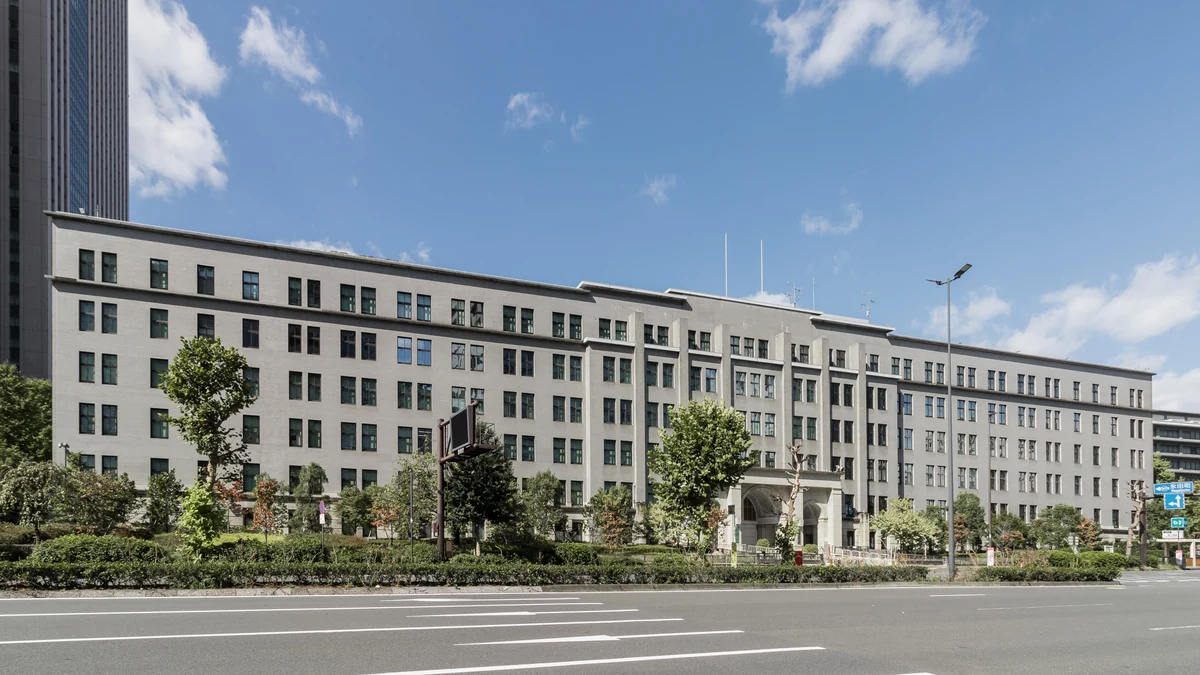
Japan’s Ministry of Finance is considering using a 3.8% assumed interest rate to calculate government debt-servicing costs in its fiscal 2027 budget request, Reuters reported Friday, citing two government sources. If adopted at the request stage, the rate would be the highest in 29 years and would rise sharply from the 3.0% assumption built into the current fiscal 2026 budget.
As of Saturday, the ministry has not published 3.8% as a final request figure. Its fiscal 2027 budget page lists the request framework approved by the Cabinet on July 30, but not the ministry’s completed debt-service request. The figure should therefore be treated as a reported planning assumption rather than an officially announced final budget parameter. Japan’s fiscal 2027 begins in April 2027.
For budget purposes, the assumed rate is used to estimate future interest payments on government debt. It is not a forecast that every Japanese government bond will yield 3.8%, and it does not instantly reprice the entire stock of outstanding debt. The calculation instead has to allow for the cost of new issuance and bonds that mature and are refinanced at higher rates.
Japan was already facing a steep increase in debt-service spending before the latest move in market yields. In the Ministry of Finance’s February projection of later-year spending and revenue, national debt service was estimated at ¥31.3 trillion for fiscal 2026 and ¥34.7 trillion for fiscal 2027, with interest payments rising from ¥13.0 trillion to ¥15.5 trillion. That projection used a 3.0% budget rate for fiscal 2026 and a 3.2% 10-year government-bond rate for fiscal 2027.
Higher market yields are changing the budget arithmetic
At 3.8%, the reported assumption would be 0.8 percentage point above the rate used in the fiscal 2026 budget and 0.6 point above the 3.2% rate embedded in the ministry’s February fiscal 2027 projection. Reuters also reported that the benchmark 10-year Japanese government bond yield touched 2.945% on Aug. 18, its highest level in roughly three decades.
Last year’s budget process shows how the planning rate can move between the request and the final budget. When the Ministry of Finance assembled its fiscal 2026 request in August 2025, then-Finance Minister Katsunobu Kato said the debt-service request used a 2.6% rate based on the recent three-month average of long-term rates and their fluctuation range. The request put national debt service at ¥32.3865 trillion. By the time the government produced the fiscal 2026 budget, the rate assumption had been raised to 3.0%, even though the final debt-service amount was lower at ¥31.2758 trillion.
Fiscal 2026 materials also show how quickly the interest component has been rising. The ministry estimated interest payments at ¥13.0 trillion, up ¥2.5 trillion from the fiscal 2025 initial budget. About ¥1.0 trillion of that increase was attributed to the rise in the rate used for the budget calculation from 2.0% to 3.0%. Another ¥1.5 trillion came from higher interest on outstanding bonds as older debt is replaced by securities carrying higher rates.
Interpreting the 3.8% figure therefore requires a distinction between the planning assumption and the average rate actually paid across Japan’s debt stock. Much of the existing debt was issued when yields were lower, so the fiscal impact builds as bonds mature, new debt is sold and the government’s funding mix turns over.
Official estimates show the rate shock gets larger over time
Official sensitivity analysis illustrates that lag. Starting from the ministry’s February baseline, a 1 percentage-point increase in interest rates would add about ¥0.8 trillion to national debt service in fiscal 2027. The estimated addition grows to ¥2.1 trillion in fiscal 2028 and ¥3.8 trillion in fiscal 2029 as more debt is refinanced under the higher-rate environment.
Even before the reported 3.8% request assumption emerged, the same projection put fiscal 2027 national debt service at ¥34.7 trillion. Within that total, interest payments were projected to reach ¥15.5 trillion, up 18.7% from fiscal 2026 in the ministry’s 3% nominal-growth scenario. The figures were explicitly described as mechanical estimates rather than commitments for future budgets, but they show why a sustained rise in yields can increasingly constrain spending choices.
Japan’s debt stock makes even gradual repricing consequential. Fiscal 2026 budget materials projected government bonds outstanding at about ¥1,145 trillion at the end of the fiscal year. A large stock of fixed-rate debt cushions the immediate effect of higher yields, but the protection fades as securities are rolled over. Interest costs can therefore keep rising even if the market rate eventually stabilizes at a higher level rather than continuing to climb.
At the same time, the government is trying to preserve room for other priorities. Finance Minister Satsuki Katayama said in July that the fiscal 2027 request framework would create a separate investment category for crisis-management and growth spending without a request ceiling. Larger debt-service costs do not automatically determine which programs will be funded, but they increase mandatory spending and reduce flexibility when the government balances competing demands later in the year.
Bank of Japan normalization adds another source of uncertainty
Monetary policy is part of the backdrop. The Bank of Japan currently targets the uncollateralized overnight call rate at around 1.0%, after raising the guideline in June. Higher short-term rates do not mechanically set 10-year JGB yields, but the shift away from years of exceptionally easy monetary policy has changed expectations about the level at which government borrowing costs may settle.
Long-term yields also respond to inflation expectations, fiscal policy, bond supply and investor demand. Reuters linked the recent rise in JGB yields partly to concern about the pace of Bank of Japan tightening and Prime Minister Sanae Takaichi’s expansionary fiscal stance. Those are market interpretations rather than fixed relationships, and the 3.8% budget assumption is designed to provide a planning cushion rather than predict a single market outcome.
What happens next will be clearer once the formal fiscal 2027 requests are filed. Ministries are working toward the end-of-August deadline, after which the government will scrutinize spending plans before assembling the draft budget toward year-end. The rate can still change during that process. Fiscal 2026 provides a recent example: the request-stage assumption was 2.6%, but the final budget calculation used 3.0%.
For Japan’s public finances, the key issue is not only whether the request is filed at 3.8%, but whether bond yields remain high enough for that assumption to persist when the budget is finalized. A sustained higher-rate environment would gradually feed through refinancing and lift the interest bill over several years, making debt service a larger claim on the general-account budget.
More from Investing


Latest News
View all news- U.S. Crude Inventories Fall 3.2 Million Barrels in Latest EIA Report
- UK Trade Remedies Authority Proposes Five-Year Anti-Dumping Duty on Chinese Rutile Titanium Dioxide
- OCC Launches Direct Payments-Fraud Reporting Tool for Community Banks
- Norway Proposes NOK 608.4 Billion in Wealth-Fund Spending and NOK 6.4 Billion Income-Tax Cut in 2027 Budget
- New York Fed Research Finds Most Firms Barely Change Investment After Rate Shocks, but a Small Minority React Sharply