
Build-A-Bear Cuts 2026 Outlook as Q2 Revenue Falls 7%
The retailer lowered full-year revenue and pre-tax income guidance after second-quarter sales and margins weakened, while maintaining plans for at least 50 net new experience locations.
Our editorial standards
MarketReview publishes clear, independently produced financial information using reliable sources and transparent editorial standards.
Read our Editorial Policy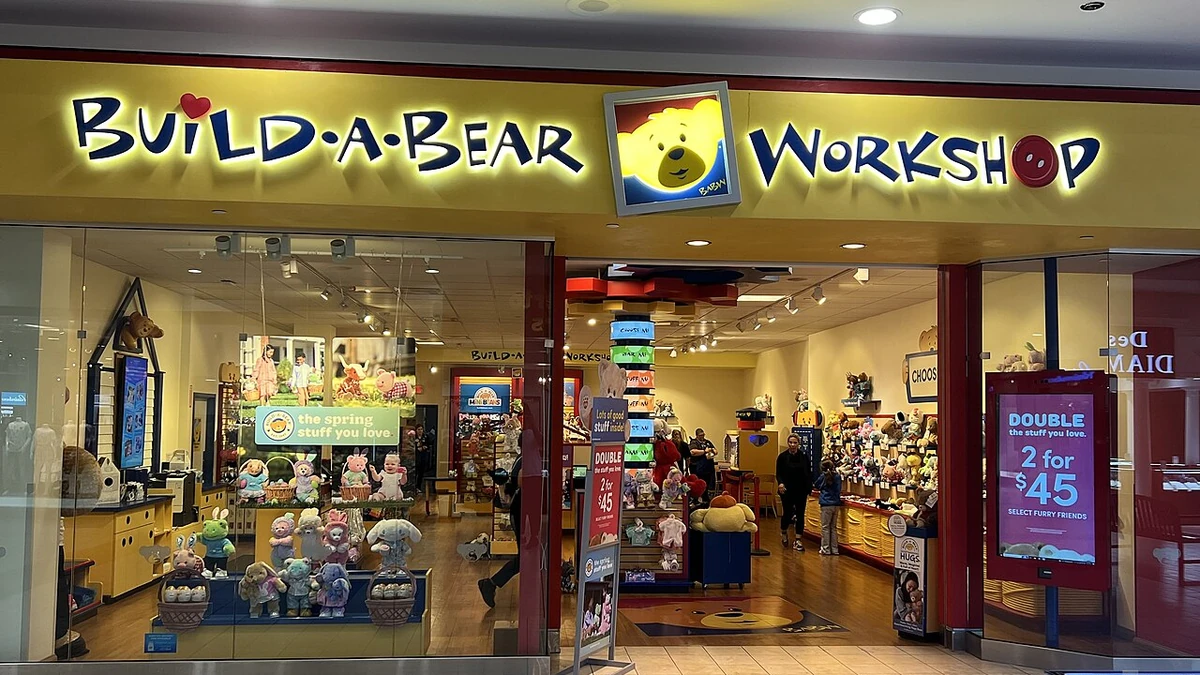
Build-A-Bear Workshop cut its fiscal 2026 outlook after second-quarter revenue fell 7.2% from a year earlier, extending a slowdown that had already prompted the retailer to lower sales expectations in May. Total revenue for the 13 weeks ended Aug. 1 was $115.3 million, down from $124.2 million, and the company now expects full-year revenue of $500 million to $525 million.
The new forecast is below the $530 million to $550 million range issued after the first quarter. Build-A-Bear also reduced its pre-tax income outlook to $60 million to $68 million from $72 million to $78 million. Chief Executive Chris Hurt said the second quarter fell short of expectations and that some wholesale opportunities may take longer to materialize, leading management to moderate its assumptions for the rest of the year.
Build-A-Bear’s Aug. 27 Form 8-K reported second-quarter pre-tax income of $11.6 million, down from $15.3 million, while diluted earnings per share fell to $0.70 from $0.94. The filing also said the company returned $22.7 million to shareholders through buybacks and dividends during the first half of fiscal 2026.
Q2 weakness reaches retail, e-commerce and margins
Net retail sales declined 7.1% to $106.5 million in the quarter. Consolidated e-commerce demand, which includes online orders fulfilled from warehouses or stores, fell 15.6%, and combined commercial and international franchise revenue slipped 9.0% to $8.8 million. Those declines left the quarter weaker across the company’s main sales channels rather than concentrated in a single line of business.
Profitability also narrowed. Pre-tax margin fell to 10.1% of revenue from 12.3% a year earlier, a 220-basis-point decline. Build-A-Bear attributed the pressure primarily to a 340-basis-point decrease in gross margin from occupancy-cost deleverage and increased promotional activity, partly offset by lower selling, general and administrative expense as incentive compensation declined and interest income improved. EBITDA was $15.2 million, or 13.2% of revenue, compared with $18.8 million, or 15.1%, a year earlier.
The first-half figures show how unusual items and weaker operating trends are interacting. Revenue for the first 26 weeks of fiscal 2026 was $240.6 million, down 4.8%, with net retail sales down 6.1% and e-commerce demand down 21.2%. Reported pre-tax income nevertheless rose slightly to $35.5 million from $34.9 million because the first quarter included a $7 million refund tied to International Emergency Economic Powers Act tariffs from prior fiscal-year costs. Excluding that benefit, first-half adjusted pre-tax income was $28.5 million, or 11.9% of revenue.
Tariffs remain embedded in the new annual forecast. Management said the updated outlook assumes $10 million to $11 million of ongoing tariff and related costs based on a 12.5% tariff rate, plus about $3 million of longer-term investments. The company also expects about $13 million of IEEPA tariff refunds; excluding roughly $7 million related to prior-year costs, adjusted pre-tax income is projected at $53 million to $61 million.
Full-year reset goes beyond the headline revenue cut
This is the second reduction to Build-A-Bear’s sales expectations in fiscal 2026. In May, after first-quarter revenue declined 2.4%, the company lowered its revenue outlook to $530 million to $550 million while setting pre-tax income guidance at $72 million to $78 million. That May range still assumed commercial revenue growth of at least 20%, capital spending of $22 million to $25 million and depreciation and amortization of about $16 million.
The August update changes several of those operating assumptions. Commercial revenue is now expected to be approximately flat with fiscal 2025, capital expenditures are projected at about $25 million, and depreciation and amortization are expected to be about $17 million. Build-A-Bear kept its expectation for at least 50 net new experience locations and an income tax rate near 24%, excluding discrete items.
The revenue reset is especially notable against the company’s recent record. Build-A-Bear generated $529.8 million of revenue in fiscal 2025, its fifth consecutive year of record revenue. Both ends of the new $500 million to $525 million range are below that prior-year total, so the current guidance implies a year-over-year revenue decline even if results finish at the high end. That marks a clear change from the company’s initial fiscal 2026 outlook, which had called for mid-single-digit revenue growth.
The altered commercial assumption is another important shift. Combined commercial and international franchise revenue was up 11.6% in the first half, helped by a strong first quarter, but the second quarter turned lower and management said some wholesale opportunities are taking longer than expected. The company is therefore no longer counting on the commercial channel to deliver the growth contribution embedded in its May outlook.
Store expansion remains a back-half priority
Build-A-Bear is still pressing ahead with physical expansion despite the weaker revenue forecast. The company ended the quarter with 674 global locations, including 379 corporately managed locations, 177 partner-operated locations and 118 franchise locations. Net unit growth in the quarter was five locations, following seven net additions in the first quarter. With the full-year target still set at at least 50 net new experience locations, most of the planned expansion remains to be delivered in the second half.
Capital spending has already accelerated. Build-A-Bear spent $8.6 million in the second quarter and $15.4 million in the first half, compared with $3.4 million and $6.3 million in the corresponding periods a year earlier. Cash and cash equivalents fell to $14.0 million from $39.1 million a year earlier, which the company attributed mainly to share repurchases and the timing of capital expenditures, though it finished the quarter with no borrowings under its revolving credit facility.
Shareholder returns have continued alongside the expansion program. During the first half, Build-A-Bear spent $17.1 million to repurchase 403,236 shares and paid $5.8 million in quarterly dividends. It bought back another $1.5 million of stock through Aug. 26, leaving $43.2 million available under its $100 million repurchase authorization.
Management is looking to the second half for a heavier pace of store openings and improved cash generation. Hurt highlighted the planned opening of a large, multi-level Build-A-Bear destination at ICON Park in Orlando as part of that effort. The company’s revised guidance now sets a lower financial bar for the year, but the retained unit-growth target means execution on those openings remains a central part of the remaining fiscal 2026 plan.
More News

Latest News
View all news- Union Pacific Third-Quarter Profit Rises 16% to $2.1 Billion as Freight Volumes Grow
- Nasdaq Q3 Revenue Jumps 13% as Annual Recurring Revenue Reaches $3.4 Billion
- Census Bureau Releases New Business Conditions Data Covering U.S. Employers
- Blackstone Reports Third-Quarter Earnings With Assets Under Management Near $1.4 Trillion
- BEA Expands State-Level R&D Economic Statistics With New 2024 Estimates
