
Bank of Canada Holds Policy Rate at 2.25% as Inflation Risks Rise
The central bank kept its overnight-rate target unchanged for a seventh straight decision as high energy prices and new trade measures complicated the outlook.
Our editorial standards
MarketReview publishes clear, independently produced financial information using reliable sources and transparent editorial standards.
Read our Editorial Policy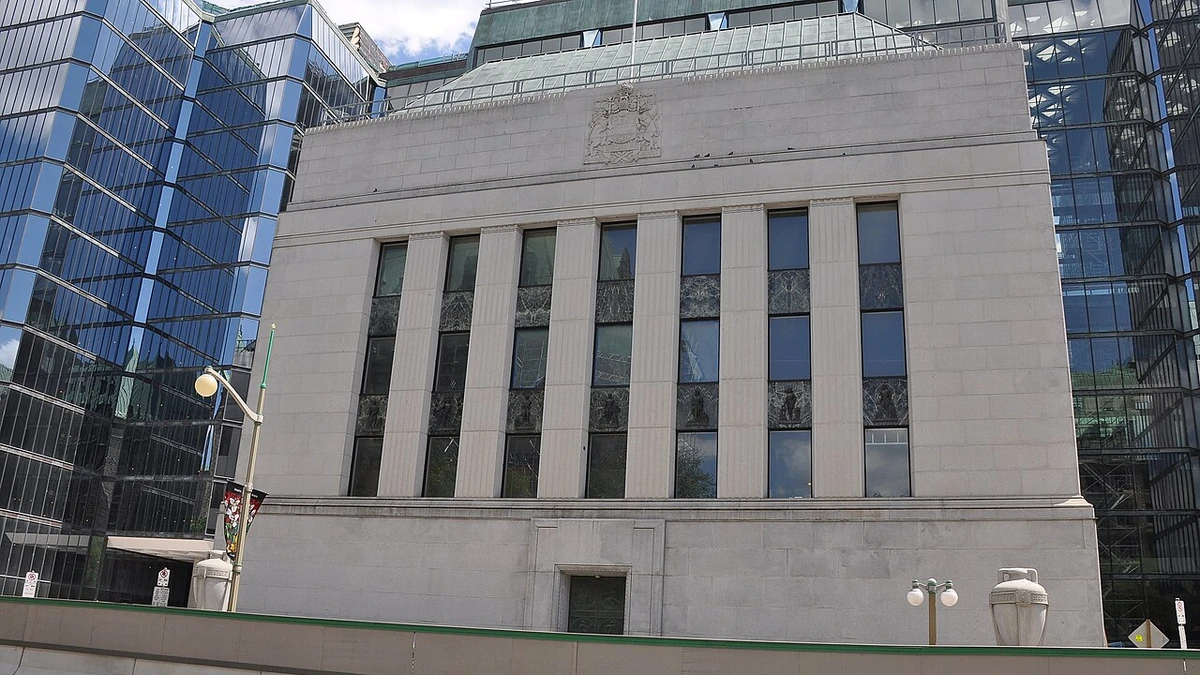
The Bank of Canada held its target for the overnight rate at 2.25% on September 2, keeping borrowing costs unchanged as stronger domestic growth collided with a less comfortable inflation outlook. The Bank Rate remains at 2.5% and the deposit rate at 2.20%.
Governing Council said recent growth and inflation data were broadly consistent with the forecasts it published in July, but the balance of risks has shifted. Persistently high energy prices tied to the Middle East conflict have kept headline inflation near 3%, while new U.S. tariffs and Canadian counter-measures could raise costs for businesses and consumers. At the same time, the Bank still sees excess supply in the economy and uncertainty over whether the recent rebound can last.
The decision extends a long pause in Canadian monetary policy. The overnight-rate target has been at 2.25% since the Bank cut it from 2.50% in October 2025, and September marks the seventh consecutive rate announcement at the same level.
Stronger second-quarter growth gives the Bank room to wait
Canada’s economy strengthened more than the Bank had expected during the second quarter. In its September 2 policy statement, the central bank said gross domestic product grew at an annualized 3.3% rate after very weak growth in the first quarter. Its July Monetary Policy Report had estimated second-quarter growth at 2.5%.
The improvement was not concentrated in one part of the economy. Consumer spending remained resilient, housing activity rebounded after several weak quarters, and both exports and business investment increased sharply. Those gains reaffirmed Governing Council’s view that Canada’s recovery is broadening after a year in which activity was weak and uneven.
Labour-market conditions have also improved. The unemployment rate fell to 6.4% in July, its lowest level in two years, while employment rose by 75,000 that month. Even so, the Bank said demand for labour remains subdued and indicators continue to point to excess supply. That distinction matters for policy because a stronger quarter does not necessarily mean the economy is pressing against capacity or generating broad inflation pressure.
The 3.3% growth figure also came with a caution. The Bank said part of the second-quarter strength reflected temporary factors, and the outlook has become harder to read after new U.S. trade actions. Trade uncertainty could still weaken investment, hiring and exports if businesses become more cautious, even after the recent rebound.
Energy prices and tariffs have shifted inflation risks upward
Inflation is the more immediate reason the September statement sounds less comfortable than a routine rate hold. Statistics Canada’s July Consumer Price Index report showed headline inflation at 3.0%, up from 2.8% in June. Gasoline prices were 25.7% higher than a year earlier, while the all-items index excluding gasoline rose 2.2% for a third consecutive month.
That split is central to the Bank’s assessment. Measures of core inflation have remained close to 2%, and the central bank said there has been little evidence so far that higher energy costs are spreading widely through other categories. The problem is the duration of the shock. Oil prices and refinery margins have stayed elevated as the Middle East conflict continues and shipments through the Strait of Hormuz remain curtailed.
The Bank said market expectations for oil prices have moved higher since July. Its earlier forecast assumed inflation would ease during the second half of 2026 as gasoline prices declined, with inflation returning to around 2% in early 2027. A longer period of expensive energy would make that path harder to achieve because transportation and production costs could eventually be passed through to a wider range of goods and services.
Trade policy adds another possible source of price pressure. The Bank noted that new U.S. tariffs and Canadian counter-tariffs will raise costs for some businesses and could feed into consumer prices over time. Monetary policy cannot reverse tariffs or determine global oil prices, but the Bank can respond if those shocks begin to produce more persistent inflation or change inflation expectations.
For now, the data argue against treating headline inflation alone as evidence that domestic price pressure is accelerating across the economy. Inflation excluding gasoline remains much closer to target, core measures are near 2%, and economic slack has not disappeared. The September decision therefore keeps the policy rate unchanged while making clear that the upside inflation risk has become more serious.
October decision will test whether the rebound and price pressure persist
The Bank now faces a more difficult mix of risks than it did earlier in the summer. Stronger recent growth reduces the urgency for lower rates, but the new tariff environment could undermine the recovery. Higher energy prices raise inflation in the near term, yet the Bank has not seen much evidence that the increase is becoming generalized. Those forces can push policy in different directions depending on how the next several weeks of data develop.
Governor Tiff Macklem said the Bank will assess the sustainability of the economic rebound and the outlook for inflation, and that Governing Council is prepared to adjust monetary policy as needed. The wording stops short of signaling a specific next move. Instead, it places more weight on whether energy-price pressure broadens, whether tariffs raise consumer costs, and whether the improvement in growth survives the latest trade shock.
The next scheduled rate decision is October 28, when the Bank will also publish a new Monetary Policy Report. That update will give policymakers an opportunity to revise the July growth and inflation projections using newer information on oil prices, trade measures and domestic demand. Until then, the 2.25% rate remains in place with the Bank watching a recovery that has strengthened at the same time as inflation risks have moved higher.
More from Banking



Latest News
View all news- U.S. Median Weekly Pay Rises 1.5%, Trailing 3.5% Consumer Inflation
- U.S. Mortgage Applications Drop 5.3% Even as 30-Year Rate Falls to 7.41%
- U.S. Energy Department Offers Up to 315,000 Barrels From Heating Oil Reserve
- U.S. Crude Inventories Fall 3.1 Million Barrels in Latest EIA Report
- Thermo Fisher Scientific Reports 9% Revenue Growth to $12.14 Billion
