
U.S. Treasury Sanctions 36 Iran Aviation Targets and Issues Alert to Financial Institutions
Treasury sanctioned 36 Iran aviation-related targets, including 27 remaining Iranian airlines, while FinCEN warned financial institutions to watch for procurement networks seeking aircraft and parts.
Our editorial standards
MarketReview publishes clear, independently produced financial information using reliable sources and transparent editorial standards.
Read our Editorial Policy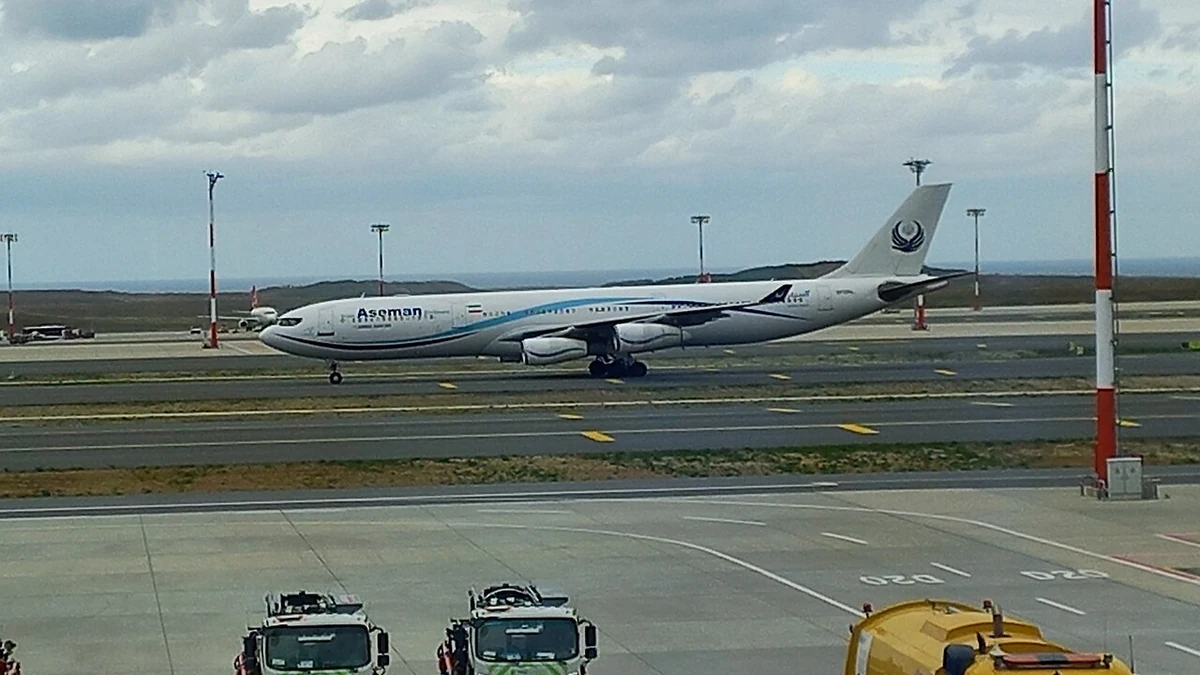
The U.S. Treasury Department imposed sanctions on 36 Iran aviation-related targets on September 8 and paired the move with a new Financial Crimes Enforcement Network alert asking financial institutions to help detect and report procurement networks that support Iranian airlines. The action broadens Washington’s pressure campaign against Iran’s aviation sector by hitting both the carriers themselves and the third-country intermediaries used to move aircraft, parts and related services.
In a Treasury press release, the department said the Office of Foreign Assets Control sanctioned 36 targets for supporting Iran’s aviation sector under what it described as Operation Economic Outcast. Treasury said the sector is used to move weapons, personnel and illicit cargo, and that the new action also targeted covert front companies, foreign intermediaries and deceptive transshipment routes used to obtain U.S.-origin aircraft and sensitive technology. At the same time, FinCEN issued an alert to financial institutions describing how Iranian procurement networks operate and what suspicious patterns should prompt closer review.
Sanctions sweep covers 27 Iranian airlines and a Mahan Air-linked network
The largest part of the package was OFAC’s first use of its August 24 aviation-sector determination against Iranian airlines. Treasury said 27 Iranian carriers were designated for operating in the aviation sector of the Iranian economy pursuant to Executive Order 13902. The list includes Iran Aseman Airlines, Qeshm Air, Kish Airlines, Iran Air Tour, Zagros Airlines, Karun Airlines, Sepehran Airlines, Taban Airlines and 19 other carriers that Treasury described as all remaining Iranian airlines.
The remaining nine sanctions targets were not simply more airlines. Treasury said those designations focused on the international support structure tied to already sanctioned Mahan Air. OFAC added eight entities and one individual across the United Arab Emirates, the United Kingdom, Türkiye, Malaysia and Kazakhstan. According to the Treasury release and OFAC’s sanctions update, those targets include procurement and logistics firms such as ECT Aviation Support LLC in the UAE, ECT Aviation Support Ltd in the U.K., MES Cargo in Türkiye, S Sistem Lojistik in Türkiye, Sky Phoenix Airways Transportation Trading Company Limited in Türkiye, iCargo in Malaysia, Tour Invest in Kazakhstan and Aerobravo Airplane Management and Operation LLC in the UAE, along with Ibrahim Ali Mohamed Mohamed Mahran.
Treasury said those firms and the individual helped Mahan Air procure U.S.-origin aircraft, provide cargo and sales-agent support, or otherwise facilitate illicit operations. Secretary Scott Bessent said the action was meant to show that companies supporting Mahan Air or doing business with Iran’s remaining airlines risk being cut off from the global financial system. Treasury also warned that foreign firms or individuals that enable sanctioned Iranian airlines through aircraft transfers, cargo services or general sales agent support face exposure to U.S. sanctions consequences.
The legal and practical effect of the sanctions differs somewhat across the targets. The 27 airlines were designated under the Iran program for operating in the aviation sector, while several members of the support network were designated under counterterrorism authorities and flagged for secondary-sanctions risk. In both cases, the move sharply raises compliance risk for banks, brokers, freight forwarders, insurers, lessors and other counterparties that might otherwise touch payments, shipments, maintenance support or aircraft-related documentation involving these parties.
FinCEN tells institutions what to watch for
FinCEN’s new four-page alert is directed broadly to financial institutions rather than only to banks. In the September 8 alert, FinCEN said Iranian commercial airlines, including Mahan Air and Iran Air, are used to support the Islamic Revolutionary Guard Corps and its proxies by moving fighters, weapons, sensitive technologies, gold and hard currency. The agency said Iranian airlines also take part in the procurement and transport of unmanned aerial vehicles, ballistic missiles and other weapons.
The alert lays out several red flags that compliance teams are being asked to consider in context. One is a recently incorporated technology, aviation or logistics company in a jurisdiction at high risk for transshipment to Iran that has opaque ownership and a limited online presence but makes a large number of purchases of aircraft parts or other aviation-related components from U.S. or Western suppliers. Another is a similar company that uses a residential address, shares beneficial ownership information with an unusual number of other companies, or is co-located with many recently formed businesses that have similar profiles.
FinCEN also highlighted activity tied directly to aircraft sales and movement. The alert said documentation surrounding an aircraft sale may show that the aircraft sat in storage for an extended period, was repeatedly re-registered, changed ownership through multiple companies in several jurisdictions or moved unusually often between jurisdictions, particularly in Central Asia, before arriving in Iran. The agency separately pointed to customers who claim their aviation-related activity is authorized by OFAC or the Commerce Department’s Bureau of Industry and Security but cannot produce the relevant licenses or authorizations.
Additional warning signs include general trading companies in free-trade zones or high-risk jurisdictions placing orders for U.S.- or Western-origin aircraft parts even though aviation goods are not their ordinary business, customers arranging delivery chains that route goods through freight forwarders in a second country, and logistics or air-freight companies that do business in Iran or work with sanctioned Iranian or Russian aviation firms. FinCEN said no single factor is determinative and that institutions should review the totality of available facts and circumstances before concluding that activity is suspicious.
For reporting purposes, FinCEN asked institutions filing suspicious activity reports to include the key term “FIN-2026-IRANAIR” in SAR field 2 and in the narrative. It also encouraged institutions to submit notifications to OFAC when they identify potential sanctions violations through the agency’s disclosure portal while continuing to file SARs as appropriate.
Treasury also tightened aviation authorizations
The September 8 action went beyond new names on the sanctions list. OFAC’s same-day recent-actions notice said the agency suspended Iran General License J-1, which had authorized the reexportation of certain civil aircraft to Iran on temporary sojourn and related activities. The notice also said OFAC was issuing Iran General License DD to authorize the wind-down of certain civil aviation-related and other activities that had previously been permitted under the Iran sanctions regulations.
Treasury’s press release said the department was suspending three Iran-related aviation authorizations as part of the pressure campaign. It said those measures included authorizations that had allowed overflights and had permitted non-U.S. airlines to fly U.S.-origin or U.S.-controlled commercial aircraft into Iran. Treasury added that OFAC would consider aviation safety-related requests on a case-by-case basis, a qualification that matters because sanctions pressure on civil aviation can create operational and compliance questions for service providers and counterparties beyond Iran itself.
The combined package shows Treasury trying to use several tools at once. OFAC expanded the sanctions perimeter around Iran’s commercial aviation sector, including carriers that had not previously been designated. FinCEN, for its part, tried to sharpen private-sector detection by outlining the structures and behaviors that procurement networks often use. The change in licensing policy adds another layer by narrowing authorized pathways that had allowed certain aviation-related dealings to continue.
For financial institutions and other firms in the aviation ecosystem, the immediate takeaway is not just the 36-name count. It is that Treasury is signaling a broader expectation of scrutiny around counterparties, end users, shipping routes, aircraft-registration histories, and documentation offered to justify exports or related payments. Firms that handle cross-border payments, trade finance, leasing, insurance, logistics or aircraft sales now have a larger sanctions list to screen against and a more detailed official roadmap for identifying evasion patterns tied to Iranian commercial aviation.
More News



Latest News
View all news- U.S. Crude Inventories Fall 3.1 Million Barrels in Latest EIA Report
- Thermo Fisher Scientific Reports 9% Revenue Growth to $12.14 Billion
- OCC Issues Final Rule to Implement GENIUS Act Stablecoin Regulations
- Ohio Auto Parts Manufacturer Agrees to Pay $3 Million Over PPP Loan Allegations
- CFTC Announces $9.2 Million Penalty in Louisiana Forex Fraud Case
