
Cegid and Silae Plan €10 Billion-Plus French Software Merger
Silver Lake plans to remain majority shareholder, while Christian Pedersen will lead the group and closing is targeted for the first half of 2027.
Our editorial standards
MarketReview publishes clear, independently produced financial information using reliable sources and transparent editorial standards.
Read our Editorial Policy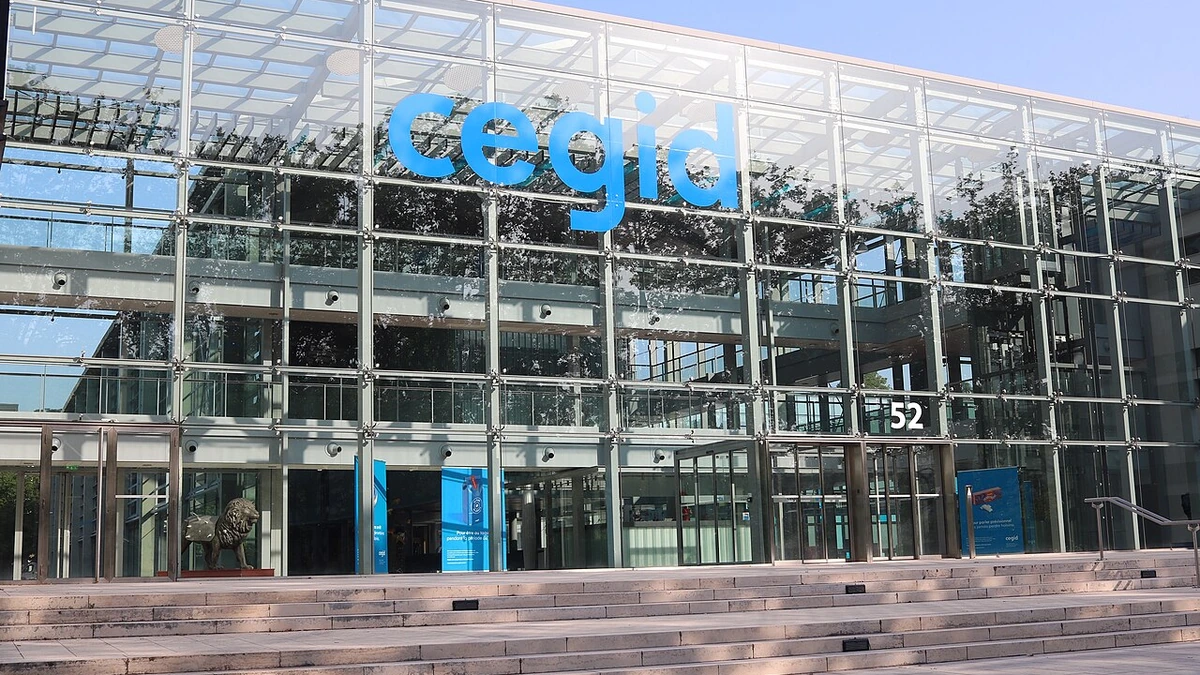
French business-software companies Cegid and Silae said on September 9 that they plan to merge, a move expected to value the resulting group at more than €10 billion in enterprise value. Silver Lake, the private-equity firm that is already the majority shareholder of both companies, intends to remain the majority owner after the merger.
The companies are targeting a closing in the first half of 2027, after consultation with employee representative bodies and approval from the relevant regulators. Christian Pedersen, newly appointed chief executive of Cegid, is expected to lead the merged group. Pierre Cesarini will continue to lead Silae, while Rico Adlor-Andersen will remain in charge of Shine.
In their September 9 announcement, Cegid and Silae said their businesses together support the day-to-day accounting, tax, finance and payroll needs of 2 million end-customers and more than 15,000 chartered accountancy firms. They also said their software produces more than 13 million payslips across Europe each month. The planned group would bring Cegid’s accounting and tax software, Shine’s digital business-account and finance tools, and Silae’s payroll and human-resources platform under the same ownership structure.
Merger would span accounting, payroll and digital finance
Cegid was founded in Lyon in 1983 and has developed a broad portfolio of cloud software for finance, accounting, human resources and retail. Silae, rooted in Aix-en-Provence, specializes in payroll and HR technology. Silae says its platform is used by about 6,000 partners and produces roughly 8 million payslips a month for around 1 million businesses in France.
The strategic case presented by the companies centers on connecting business functions that are often handled in separate systems. Payroll data can feed accounting, tax and cash-management workflows, while digital invoicing, business accounts and payments can sit closer to the same financial records. Cegid’s ownership of Shine adds the business-account and payments layer to that software footprint.
Management also tied the merger to a larger research-and-development effort. Cegid and Silae said the group would have about 1,400 developers and would be able to increase investment in AI-based products. That is a company-stated rationale rather than a disclosed financial forecast: the announcement did not provide expected cost savings, revenue synergies or a timetable for realizing specific financial benefits from the merger.
For customers, the practical question will be how closely the separate products are connected after closing. The companies described plans for payroll information to work more directly with accounting software, for Shine services to become available through the My Silae platform, and for treasury and cash-forecasting tools to draw on a wider set of business data. Those plans point to a broader product suite, but the announcement did not set out a detailed migration schedule or say that customers would be required to move from existing systems.
The €10 billion figure is enterprise value, not a disclosed purchase price
The headline number needs a careful reading. Cegid and Silae said the planned merger is expected to value the merged group at more than €10 billion in enterprise value. Enterprise value measures the value of the operating business with debt and cash taken into account; it is not the same thing as the equity value paid to shareholders or a cash purchase price.
The announcement did not disclose a merger ratio, the exact post-merger ownership percentages, a new financing package or the amount of debt that the merged group would carry. It also did not describe one company as buying the other. That distinction matters because Silver Lake already controls both businesses. The private-equity firm has been involved with Cegid since 2016 and with Silae since 2020, and the companies said it will remain the majority shareholder after the merger.
Pedersen’s appointment gives the proposed group a designated chief executive before closing. He joined Cegid from enterprise-software provider IFS, where he most recently served as chief innovation officer and previously as chief product officer. Earlier in his career he held product and enterprise-software roles at SAP and Microsoft. Bruno Vaffier is expected to remain general manager of the merged group.
The companies also plan to establish a dedicated body representing the accounting profession across Cegid, Silae and Shine. That reflects how important accountancy firms are to the businesses’ distribution and customer relationships. Jean-Michel Aulas, who founded Cegid, is expected to serve on that body alongside other industry figures.
France’s e-invoicing rollout adds a near-term backdrop
The timing of the merger overlaps with a major change in French business administration. France’s electronic-invoicing reform took effect on September 1. All businesses must now be able to receive electronic invoices, while large companies and mid-sized enterprises must issue them electronically. Small and micro businesses are scheduled to face the issuance requirement from September 1, 2027.
Cegid and Silae explicitly cited that reform as part of the commercial backdrop for the proposed group. The overlap is relevant because accountants, payroll providers and business-software vendors sit directly in the flow of invoice, tax, payroll and payment data. A platform serving those functions can become more useful if customers can move information between them with less manual work, though the companies have not disclosed how much revenue they expect the regulatory change to generate.
The merger is not yet completed. Under the announced timetable, the companies must first go through consultation with employee representative bodies and obtain the necessary regulatory approvals. Those steps leave room for the structure or timing to change before closing.
If the required approvals are secured, Cegid and Silae expect the merger to close in the first half of 2027. Until then, the €10 billion-plus figure remains the expected enterprise value of the planned group, not a completed valuation event or a disclosed cash consideration paid by one company for the other.
More News

Latest News
View all news- ICZOOM 1-for-5 Share Consolidation Takes Effect on Nasdaq
- Rainier Acquisition Shares and Warrants Begin Separate Nasdaq Trading
- New York Fed Moves Agency MBS Operations to FedTrade Plus
- France’s Harmonized Inflation Finalized at 2.6% in August
- Japan Activation Capital Discloses 6.2% Stake in Nihon Kohden
