
Xi Proposes BRICS AI Open-Source Community and SEZ Partnership in New Delhi
China’s five-part proposal also covers a digital-industry cloud platform, smart factories and joint engineering and science-talent programs across BRICS.
Our editorial standards
MarketReview publishes clear, independently produced financial information using reliable sources and transparent editorial standards.
Read our Editorial Policy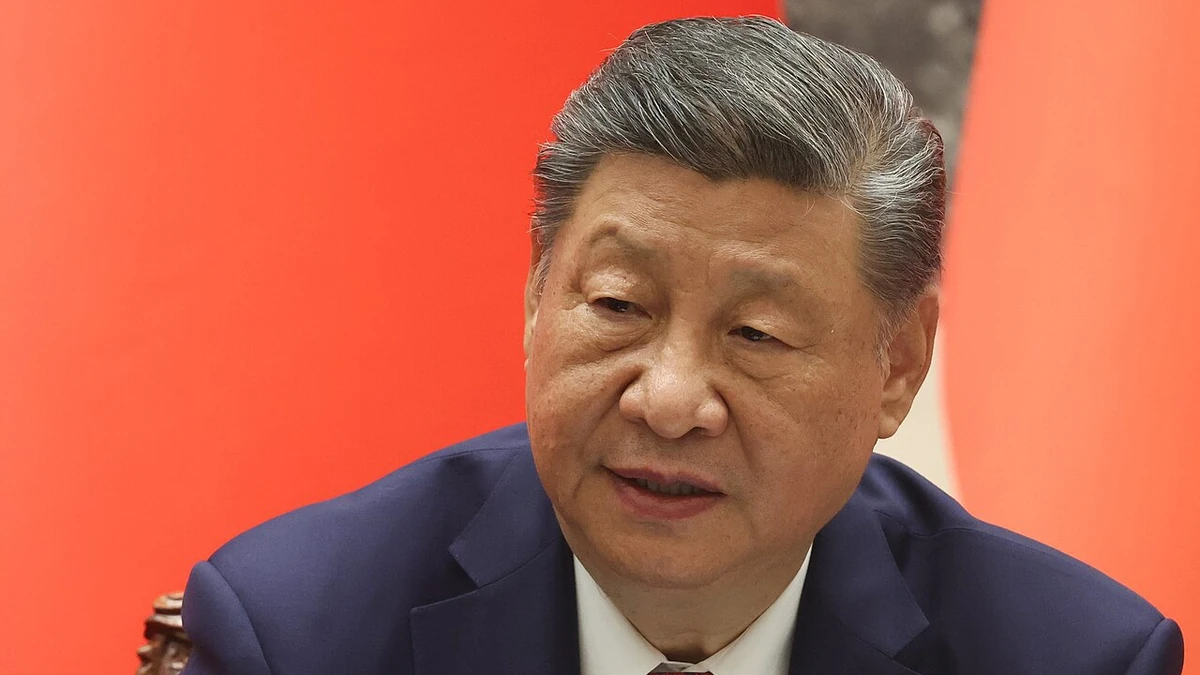
Chinese President Xi Jinping laid out five proposals for deeper BRICS cooperation on Sunday at the group’s summit in New Delhi, led by a China-backed open-source artificial intelligence initiative and a proposed partnership linking special economic zones across member countries.
The AI proposal would support cooperation on the development and use of large language models, specialized AI training and an open technology ecosystem. Xi’s trade and investment proposal would pair a BRICS special economic zone partnership with an intelligent portal and policy coordination, while China plans to host a BRICS Forum on Trade in Services in 2027.
An official Chinese readout of Xi’s Session II remarks described the proposals as part of a broader effort to turn the expanded BRICS grouping into a platform for practical economic and technology cooperation. The same speech added initiatives on digital industry, intelligent manufacturing and science and engineering talent.
China puts open-source AI at the center of its BRICS pitch
Xi’s AI proposal is the clearest technology element of the five-part plan. China said it would take the lead in establishing a BRICS AI open-source community, support joint work on developing and applying large language models, organize AI seminars and training, and help build an open AI ecosystem. The wording points toward shared development and capacity building rather than a single new physical facility.
A day earlier, during the summit’s first session, Xi called for stronger BRICS cooperation in artificial intelligence, urged members to encourage open-source development and sharing, and invited BRICS countries to participate in the World AI Cooperation Organization. He also proposed a BRICS initiative focused on using AI to support new industrialization.
What the new open-source initiative will look like in practice is still unclear. Xi’s speech did not specify where the community would be hosted, how projects would be governed, which models or datasets would be covered, how computing resources would be shared, or whether China would provide dedicated financing. Those details will determine whether the initiative develops into a working cross-border platform or remains primarily a political and technical cooperation framework.
The New Delhi summit declaration separately recognized AI as an opportunity for economic growth and sustainable development and backed stronger international cooperation around the technology. It also noted work on emerging technologies and digital connectivity. That gives the AI proposal a broader BRICS policy backdrop, but Xi’s specific China-led initiative will still require follow-through from participating governments and institutions.
SEZ partnership would pair an intelligent portal with policy coordination
Xi’s second proposal focuses on trade and investment facilitation. China wants BRICS countries to establish a special economic zone partnership, create an intelligent portal and coordinate policies. The stated goal is to make it easier for businesses to operate across participating zones and to create a new channel for investment and industrial cooperation.
This is not a BRICS free-trade agreement, and Xi did not announce a common tariff schedule or binding investment rules. Special economic zones are typically governed under national laws and can differ widely in tax treatment, customs procedures, infrastructure and investment eligibility. A BRICS partnership would therefore depend on how far members agree to make information, procedures and standards easier to navigate across jurisdictions.
The summit declaration gives the idea some institutional support. BRICS leaders said they were willing to explore the potential for cooperation among special economic zones and pointed to business conditions, infrastructure, streamlined regulatory procedures and other facilitation measures as areas that could help companies. Xi’s proposed intelligent portal and policy coordination mechanism would provide a more concrete China-backed route for advancing that agenda.
China also plans to host a BRICS Forum on Trade in Services next year. Services trade covers areas such as finance, information technology, professional services, transport and other cross-border commercial activity. Xi presented the forum as a way to develop new sources of economic and trade cooperation, though no venue, agenda or participant list was announced in his summit remarks.
Five initiatives reach into digital industry, factories and talent
The remaining three proposals extend the plan beyond AI and special economic zones. China said it would promote a BRICS digital-industry cloud platform for digital-skills training, technology exchanges and industrial connections. A separate intelligent-manufacturing initiative would support smart-factory development and work on standards and specifications intended to help manufacturers upgrade production.
Xi also proposed a BRICS engineer-training alliance. The plan calls for joint training and mutual recognition of capability standards, along with a youth science and technology innovation exchange program aimed at developing more advanced technical talent. The speech did not provide targets for the number of engineers, factories or training participants, so the scale of those programs remains to be defined.
India’s 2026 chairship has emphasized resilience, innovation, cooperation and sustainability. An Indian government background note on the summit says BRICS now comprises 11 countries, reflecting the group’s expansion beyond its original core and the wider range of economic systems that any common technology or trade initiative must accommodate.
Implementation will be the central test. Cooperation on open-source AI can run into different rules on data, cybersecurity, intellectual property and model access. An SEZ partnership has to work through national customs and investment regimes, while shared manufacturing standards and engineer credentials require technical agreements before they have practical cross-border value.
China will hold the BRICS chairship in 2027, giving Beijing an opportunity to carry the proposals into the group’s next annual cycle. The first concrete milestone Xi identified is the BRICS Forum on Trade in Services next year. Whether the AI community, SEZ portal and other programs acquire formal governance, participating institutions and measurable projects is likely to become clearer as China prepares for the 19th BRICS Summit.
More News


Latest News
View all news- First Trust’s Palantir Target-Income ETF Registration Takes Effect
- Saudi Stocks Post Sharpest Drop Since April as Energy-Supply Risks Escalate
- South Korea Broadens Espionage Law to Foreign States as Seoul Targets Chip and AI Technology Leaks
- New Hampshire Raises Housing Finance Authority Bond Caps to $1 Billion
- Trump Says Iran Probably Behind Saudi Pipeline Attack as Energy-Route Risk Deepens
