Trio-Tech Moves Its Stock Listing From NYSE American to Nasdaq
The semiconductor testing company kept the TRT ticker, saying the Nasdaq move better aligns its public-market profile with its technology-focused growth strategy.
Our editorial standards
MarketReview publishes clear, independently produced financial information using reliable sources and transparent editorial standards.
Read our Editorial Policy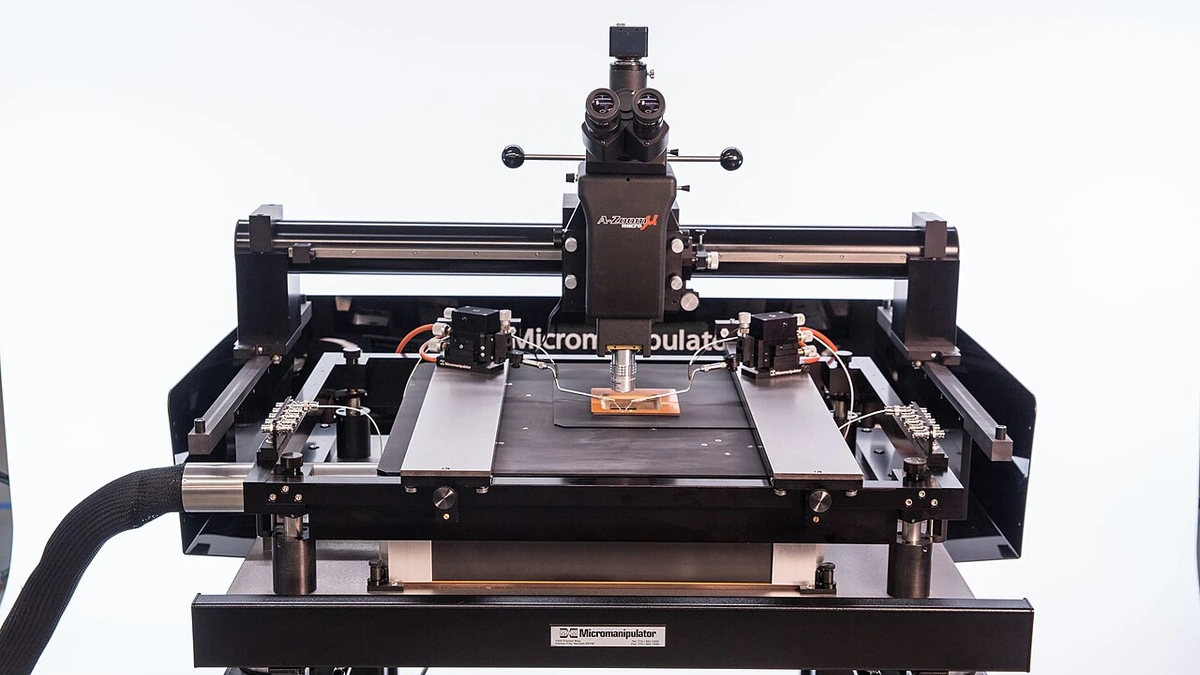
Trio-Tech International moved its common-stock listing from NYSE American to the Nasdaq Global Market on Wednesday, September 16, while keeping the ticker symbol TRT. Trading on NYSE American was scheduled to end after the September 15 close, giving the semiconductor testing and industrial electronics company a new exchange venue without changing its trading symbol.
The transfer was announced in August after Nasdaq approved Trio-Tech for listing. Nasdaq now identifies TRT as a Nasdaq-listed security, matching the timetable the company disclosed to regulators. The move comes as Trio-Tech is trying to raise its profile with technology investors while expanding semiconductor testing capacity in Southeast Asia.
TRT keeps its ticker as the exchange venue changes
Trio-Tech disclosed the listing transfer in an August 19 Form 8-K filed with the Securities and Exchange Commission. The filing said the company’s common stock was expected to begin listing on the Nasdaq Global Market at the opening of trading on or about September 16 and that trading on NYSE American would cease after the September 15 session. The ticker remains TRT.
Chief Executive Officer S.W. Yong framed the move as a better match for Trio-Tech’s technology-focused business and growth strategy. Management said it believes a Nasdaq listing can broaden awareness among institutional investors, improve the stock’s visibility and support greater market participation over time. Those points are company expectations rather than guaranteed effects of changing exchanges.
For shareholders following the stock, the most immediate practical difference is where TRT is listed. The company did not announce a new ticker in connection with the move, and its August filing described the action specifically as a transfer of the common-stock listing from NYSE American to Nasdaq. Nasdaq’s market pages now label TRT as Nasdaq listed.
The listing move follows a sharp rise in semiconductor testing revenue
The exchange transfer comes after a period of rapid top-line growth for Trio-Tech’s semiconductor operations. In the fiscal third quarter ended March 31, 2026, the company reported total revenue of $16.5 million, up 124% from $7.4 million a year earlier. Semiconductor Back-End Solutions revenue rose 141% to $13.1 million, while Industrial Electronics revenue increased 76% to $3.4 million.
The growth did not translate into an equally large improvement in margins. Gross margin was 16% of revenue in the quarter, down from 27% a year earlier, which Trio-Tech attributed to a higher mix of lower-margin, high-volume testing services. The company posted an operating loss of $81,000 and a net loss attributable to common shareholders of $38,000 for the quarter, both narrower than the losses reported in the year-earlier period.
For the first nine months of fiscal 2026, revenue reached $47.7 million, an 85% increase from the same period a year earlier. Semiconductor Back-End Solutions accounted for $36.9 million of that total, more than double the prior-year figure, while Industrial Electronics generated $10.8 million. Trio-Tech reported $62,000 of operating income for the nine-month period and $165,000 of net income attributable to common shareholders.
Trio-Tech describes its core business as semiconductor testing, manufacturing solutions and value-added distribution. Its testing work includes electrical, environmental and burn-in services used to assess semiconductor reliability, while the company also designs and manufactures burn-in and reliability test equipment. Trio-Tech was founded in 1958 and operates in the United States, Singapore, Malaysia, Thailand and China.
Capacity expansion gives the Nasdaq move a broader backdrop
Trio-Tech has also been adding physical capacity as demand grows. Through its Malaysian subsidiary, the company signed a lease in April for about 104,000 square feet in Perai, Penang. The lease began June 1, 2026, runs through May 30, 2028 and carries initial monthly base rent of about $115,000, with an option for an additional one-year term.
Management tied that expansion to demand from North American and European semiconductor customers and said the additional space would support AI-related testing services in Southeast Asia. The company’s fiscal third-quarter earnings materials also pointed to demand tied to high-performance CPU and GPU computing requirements and electric-vehicle automotive applications. That operating expansion helps explain why management is presenting the Nasdaq move as part of a broader effort to sharpen Trio-Tech’s technology-market identity.
Capital raising has been part of that growth push as well. In April, Trio-Tech completed a registered direct offering of 1,052,632 common shares at $9.50 per share for gross proceeds of about $10 million before fees and expenses. The company said the net proceeds were intended for working capital and general corporate purposes, including investments to expand capacity and support growth in AI and automotive markets.
The Nasdaq listing does not by itself establish that Trio-Tech will gain more liquidity, more institutional ownership or a higher valuation. The company’s own listing announcement treated those potential benefits as forward-looking and warned that they might not be realized or could take longer than expected. As of September 16, the confirmed change is the listing venue: TRT has moved from NYSE American to the Nasdaq Global Market while retaining the same ticker.
More News

Latest News
View all news- Reliance Worldwide Signs Binding Brookfield Scheme Deed, Implied at A$4.75 a Share
- Xenetic Agrees to Acquire Santersus in All-Stock Share Exchange
- Apollo Funds Close €3 Billion Bayer Capital Solution as KKR Joins Investment
- Pagaya Signs $700 Million Auto-Loan Forward-Flow Agreement With Neuberger Specialty Finance
- Sensorion Confidentially Submits Draft F-1 for Potential U.S. IPO