Pagaya Signs $700 Million Auto-Loan Forward-Flow Agreement With Neuberger Specialty Finance
Neuberger Specialty Finance will purchase up to $700 million of auto loans sourced through Pagaya's network, adding committed funding capacity as the company's auto business expands.
Our editorial standards
MarketReview publishes clear, independently produced financial information using reliable sources and transparent editorial standards.
Read our Editorial Policy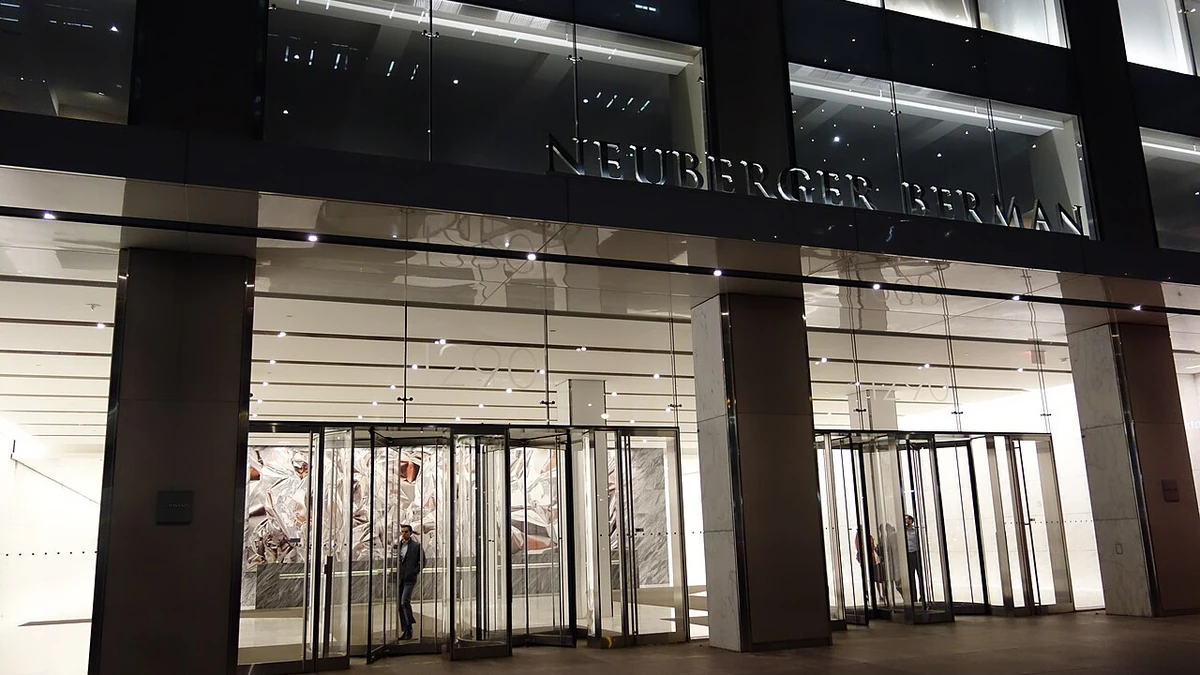
Pagaya Technologies has signed a forward-flow agreement with Neuberger Specialty Finance for the purchase of up to $700 million of auto loans sourced through Pagaya’s network of lending partners. The agreement is Pagaya’s second auto-loan forward flow and its first such arrangement with Neuberger.
The funding adds another institutional buyer as auto lending becomes a larger part of Pagaya’s business. Pagaya said its auto network reached a $4.8 billion annualized volume run rate in the second quarter of 2026 and accounted for more than 75% of the company’s year-over-year network volume growth.
Pagaya announced the agreement on September 16. Neuberger Specialty Finance, or NBSF, is the asset-based finance arm of Neuberger. The group manages more than $5 billion across over 50 portfolio companies and investment vehicles and, according to the announcement, has invested more than $16 billion through 80 global origination partners since its strategy began in 2018.
The agreement gives Pagaya another committed buyer for auto loans
A forward-flow structure provides a standing channel for eligible loans to be purchased as they are produced, rather than requiring each pool of loans to wait for a separate capital-markets issuance. In this case, NBSF can purchase up to $700 million of auto loans sourced through Pagaya’s network. Pagaya described the capital as predictable, long-term capacity that broadens the funding options available to its lending partners.
The new arrangement sits alongside Pagaya’s asset-backed securitization program, not in place of it. The company has repeatedly used securitizations to fund auto assets and has also been adding forward-flow buyers. In November 2025, Pagaya announced its first auto forward flow, an agreement with Castlelake for the purchase of up to $500 million of auto loans. The Neuberger agreement is the second.
Pagaya has followed the same funding-diversification approach in other consumer-credit categories. It announced a forward flow with Sound Point Capital Management in January 2026 for up to $720 million of point-of-sale loans, after earlier agreements in personal loans. The purpose is to avoid depending on one funding format as loan production grows.
That matters for Pagaya’s model because the company connects lending partners that generate consumer credit with institutional investors that provide capital. Pagaya says its technology network now spans more than 35 lending partners across personal loans, auto loans and point-of-sale lending. The company also says its data network has processed more than $4 trillion in applications since inception. Those figures are company-reported and describe the scale of the network rather than the amount of loans currently outstanding.
Auto lending has become Pagaya’s main source of volume growth
The timing of the Neuberger agreement follows a quarter in which auto was the strongest contributor to Pagaya’s expansion. In its second-quarter results filed with the SEC, Pagaya reported $3.5 billion of network volume, up 33% from a year earlier. The company also reported $387 million of total revenue and other income and $45 million of GAAP net income attributable to shareholders.
Within that broader result, Pagaya highlighted a $4.8 billion annualized run rate for its auto vertical. The company said auto drove the majority of its year-over-year network volume growth as it moved further into lending partners’ approval funnels. That makes funding capacity especially important: higher loan production has to be matched by investors willing to purchase or finance the resulting assets.
Pagaya has also been expanding its auto securitization program. In July it closed a $750 million RPM 2026-4 auto asset-backed securitization, its largest auto ABS at the time. Pagaya said that was its fourth fully pre-funded auto ABS of 2026 and brought the year’s pre-funded auto ABS issuance to $2.25 billion through that deal.
The forward-flow model gives Pagaya a different route to institutional capital. Securitizations package loan pools into bonds sold to investors, while a forward flow establishes a buyer for qualifying loans over the life of the agreement. Using both can reduce dependence on any single market window, although the economics still depend on loan performance, investor pricing and the terms governing which assets are eligible for purchase.
Neuberger is extending an existing relationship into auto forward flow
Pagaya and Neuberger already had a relationship across capital-markets and financing arrangements before this agreement. The September announcement identifies the $700 million program as their first forward flow together, so the new element is not the introduction of Neuberger as a capital partner but the extension of that relationship into a recurring auto-loan purchase channel.
NBSF’s role also fits its broader specialty-finance strategy. Neuberger says the group invests in asset-based credit across areas that include consumer lending, small-business finance and hard assets. The strategy has been led by Peter Sterling since its launch in 2018. Neuberger reported in April that the group managed more than $5 billion across more than 50 portfolio companies and investment vehicles, consistent with the figures in Pagaya’s announcement.
For Pagaya, the significance of the agreement is therefore less about a one-time $700 million pool and more about having another source of committed capital available as auto volumes rise. The company still has to source loans that meet the agreement’s requirements, and the headline amount is an upper purchase limit rather than evidence that $700 million of loans changed hands on the announcement date.
The public announcement does not disclose the agreement’s duration, purchase pricing, detailed loan-eligibility criteria or the schedule at which NBSF may acquire assets. Those terms will determine how quickly the $700 million capacity is used and how the arrangement contributes to Pagaya’s funding mix as its auto business continues to scale.
More from Loans
Latest News
View all news- U.S. Retail Sales Jump 1.2% in August, Rebounding From July Decline
- Reliance Worldwide Signs Binding Brookfield Scheme Deed, Implied at A$4.75 a Share
- Xenetic Agrees to Acquire Santersus in All-Stock Share Exchange
- Apollo Funds Close €3 Billion Bayer Capital Solution as KKR Joins Investment
- U.S. Import Prices Rise 0.7% in August as Annual Increase Reaches 7%