
Xenetic Agrees to Acquire Santersus in All-Stock Share Exchange
Santersus holders are expected to own about 85% of the combined company, which plans to adopt the Santersus Bio name and SNTS ticker after closing.
Our editorial standards
MarketReview publishes clear, independently produced financial information using reliable sources and transparent editorial standards.
Read our Editorial Policy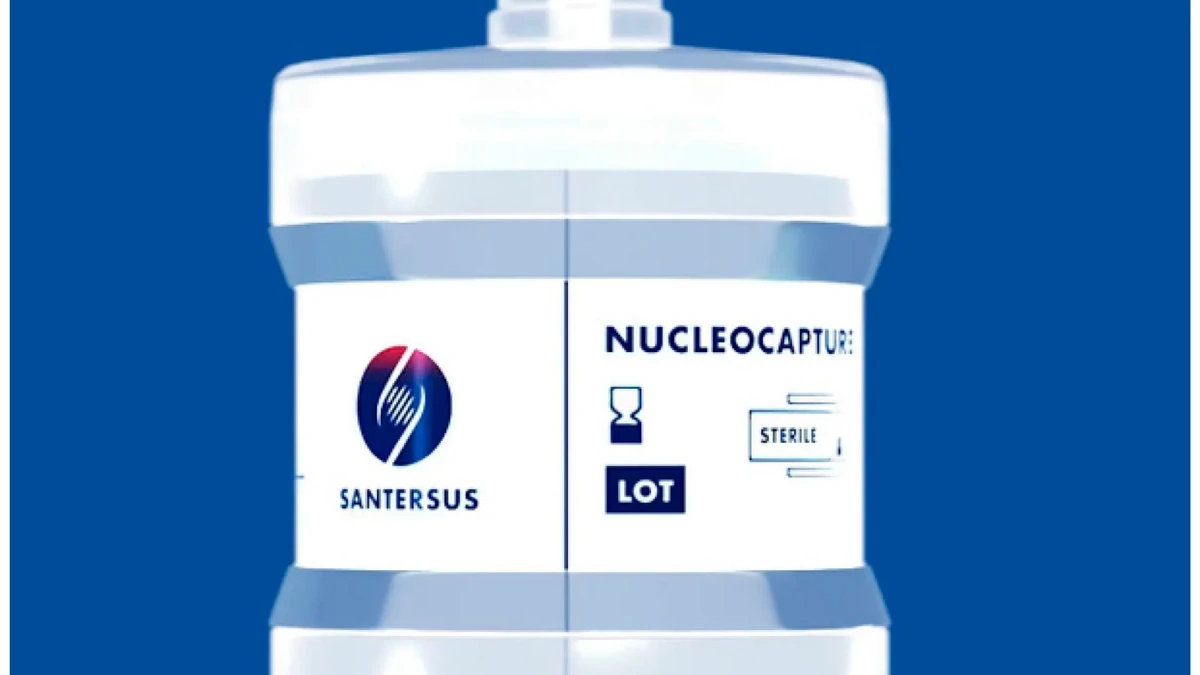
Xenetic Biosciences has agreed to acquire privately held Santersus AG in an all-stock share exchange that would give Santersus shareholders most of the equity in the Nasdaq-listed company after closing.
Under the agreement announced Wednesday, Xenetic will acquire all outstanding share capital of Santersus by issuing new shares of Xenetic common stock. If the acquisition closes on the announced terms, Santersus will become a wholly owned subsidiary of Xenetic, Xenetic Biosciences will be renamed Santersus Bio, Inc., and the company expects to trade on the Nasdaq Capital Market under the new ticker symbol SNTS.
Current Xenetic equity holders are expected to own about 15% of the combined company on a fully diluted, as-converted basis, while Santersus equity holders are expected to own about 85%. The final percentages can change based on Xenetic’s net cash at closing and other adjustments specified in the share exchange agreement. The announcement did not disclose a headline dollar purchase price.
Santersus holders would own about 85% after closing
Xenetic said in its September 16 acquisition announcement that key equity holders, directors and officers of Xenetic, along with certain parties identified by Santersus, have signed agreements restricting transfers of the post-closing company’s stock for 180 days, subject to limited exceptions. The acquisition has been approved by both boards, with Xenetic’s board acting on the unanimous recommendation of its independent Special Committee.
The expected leadership and board structure also reflects the post-closing ownership split. James Ladtkow, Santersus’ chief executive officer, is expected to lead the combined company with the current Santersus management team. The board is expected to have eight members, with six nominees from Santersus and two from Xenetic. Corporate headquarters are expected to remain in Framingham, Massachusetts.
The relationship between the two companies predates the proposed acquisition. Xenetic’s April 2026 Form 10-K/A filed with the SEC identifies Xenetic board chair Dmitry Genkin as a founder and board member of Santersus and says Xenetic director Moshe Mizrahy also sits on Santersus’ board. The filing also says Genkin and Mizrahy were not considered independent directors. Xenetic’s September 16 announcement says the company’s independent Special Committee unanimously recommended approval of the acquisition, but it does not say that the committee was formed specifically for this deal.
The net-cash adjustment could also matter to the final ownership math. Xenetic reported about $6.5 million of cash and cash equivalents as of June 30, down from about $7.9 million at the end of 2025. Its second-quarter general and administrative expense rose to about $1.1 million from roughly $0.7 million a year earlier, with the company attributing the increase mainly to higher legal expenses associated with its strategic review process.
NucleoCapture would broaden Xenetic’s NET-focused pipeline
The acquisition would bring together two different approaches aimed at neutrophil extracellular traps, or NETs. Xenetic’s DNase program is designed to enzymatically degrade NETs in tissue, including in the tumor microenvironment. Santersus’ NucleoCapture platform is an investigational extracorporeal adsorption column designed to remove cell-free DNA and NETs from plasma as blood is processed through a therapeutic apheresis system.
Santersus says NucleoCapture has received U.S. Food and Drug Administration Breakthrough Device Designations for sepsis and severe, treatment-refractory systemic lupus erythematosus. The acquisition announcement describes the sepsis program as being evaluated in a pivotal clinical study and the lupus program as advancing toward a pivotal study. It also identifies a liver-transplantation program that the companies say is ready to enter pivotal studies following work with donated human livers.
A public ClinicalTrials.gov record sponsored by Santersus describes NUC-CAP as a prospective, multinational, randomized, open-label study of NucleoCapture in patients with sepsis and respiratory failure, with an estimated enrollment of 73. That registry entry was last updated in November 2024 and listed the study as not yet recruiting. Because the record has not been updated since then, it does not independently establish the current enrollment status of the sepsis program described by the companies in September 2026.
Xenetic’s contribution is centered on recombinant human DNase I. The company says the technology is intended to break down NETs that can interfere with immune-cell access to tumors. Its current clinical work includes an investigator-initiated Phase 1b study in Israel evaluating DNase I with anti-CD19 CAR-T cells in patients with high-risk large B-cell lymphoma. Before the Santersus agreement, Xenetic had also been pursuing DNase applications in pancreatic cancer and other advanced solid tumors through research and clinical collaborations.
The strategic logic presented by the companies is that one platform targets circulating NETs and the other targets NETs within tissue. That gives the post-closing company programs spanning critical care, autoimmune disease, transplantation and oncology, but the clinical and regulatory stages vary substantially. NucleoCapture remains investigational, and Xenetic’s DNase work is still early in clinical development. Breakthrough Device Designation is intended to speed interaction with the FDA for qualifying devices, but it is not marketing approval and does not establish that a device is safe or effective.
Stockholder approval and Nasdaq conditions remain
The companies are targeting a fourth-quarter 2026 closing, but several conditions must be met first. Xenetic stockholders must approve the acquisition, the newly issued Xenetic shares must be approved for Nasdaq listing, and a resale registration statement on Form S-1 must become effective. Other customary closing conditions also apply.
Xenetic’s cautionary disclosure identifies additional risks around the expected ownership percentages, financing needs and continued Nasdaq compliance. The company said the post-closing business could need a reverse stock split to satisfy Nasdaq listing requirements. The ownership percentages can also move above or below the announced 15%-85% split if the exchange ratio is adjusted under the agreement.
The acquisition follows a strategic review that Xenetic had been discussing publicly before the Santersus agreement. In its August second-quarter update, Xenetic said it was allocating capital in part toward that review while continuing to advance its DNase platform. The Santersus agreement now provides a defined path that would shift most post-closing ownership and most board seats to Santersus stakeholders while keeping Xenetic’s Nasdaq listing as the public-company vehicle.
Xenetic said it will provide additional details in a Current Report on Form 8-K and will file a proxy statement and Form S-1 in connection with the acquisition. Those filings, along with the stockholder vote, are the next concrete steps before the companies can reach their targeted fourth-quarter closing.
More from Investing



Latest News
View all news- U.S. Retail Sales Jump 1.2% in August, Rebounding From July Decline
- U.S. Import Prices Rise 0.7% in August as Annual Increase Reaches 7%
- Pagaya Signs $700 Million Auto-Loan Forward-Flow Agreement With Neuberger Specialty Finance
- U.S. Business Inventories Rise 0.8% in July as Sales Gain 0.3%
- Trio-Tech Moves Its Stock Listing From NYSE American to Nasdaq
