Adobe’s David Wadhwani Steps Down as Creativity & Productivity President
Wadhwani’s departure from the president role takes effect September 27, with Adobe keeping him on as a senior adviser for a transition period.
Our editorial standards
MarketReview publishes clear, independently produced financial information using reliable sources and transparent editorial standards.
Read our Editorial Policy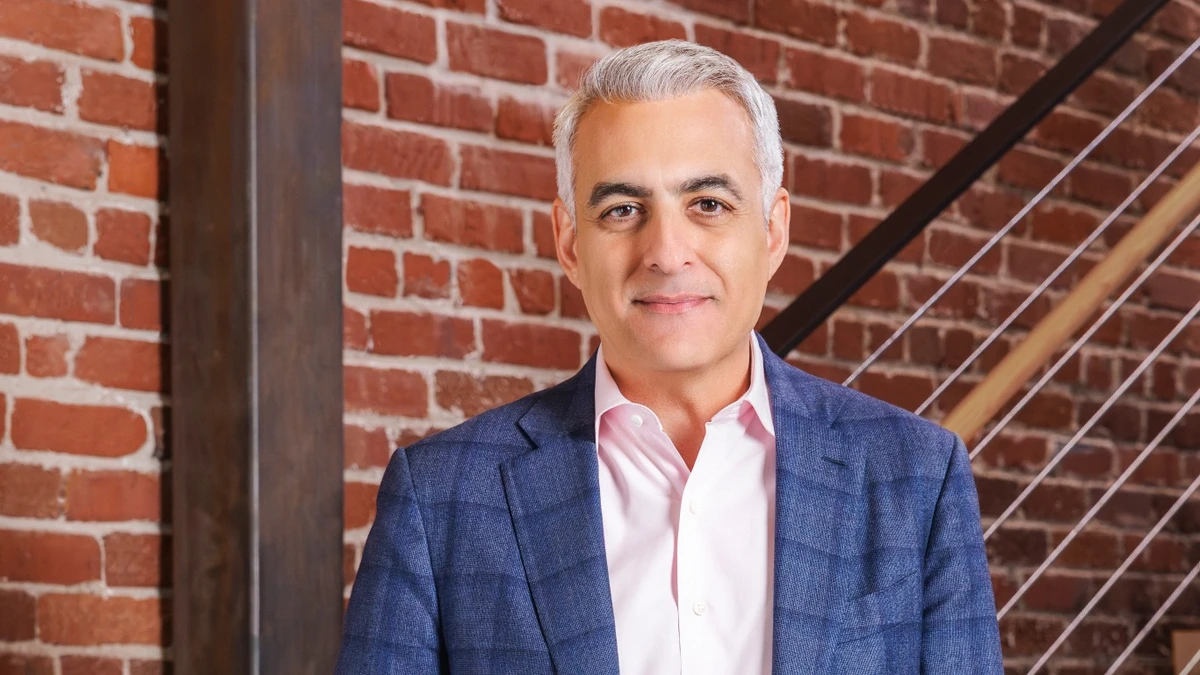
David Wadhwani stepped down as Adobe’s President, Creativity & Productivity Business on September 27, bringing an end to his current operating role overseeing products that include Photoshop, Acrobat, Express, Firefly, Illustrator, Lightroom and Premiere.
The change was disclosed earlier this month in an Adobe Form 8-K. The company said Wadhwani notified it on September 2 that he had decided to step down, with the move effective September 27. Adobe said he will remain with the company as a senior adviser for a transition period. The filing did not identify a successor for the Creativity & Productivity role, state how long the advisory period will last or give a reason for his decision.
Wadhwani’s step-down takes effect during a broader leadership handoff at Adobe, though the company has not said the changes are causally linked. The same filing disclosed that Adobe’s board appointed Anil Chakravarthy, currently President, Customer Experience Orchestration Business, to become president and chief executive officer on December 1. Shantanu Narayen is set to retire as CEO on that date and become executive chair of the board.
Wadhwani oversaw Adobe’s flagship creative and productivity products
Wadhwani’s remit covered one of Adobe’s most visible parts of the business. Adobe’s executive biography says he was responsible for the global Creativity & Productivity operation, including product management, product marketing, engineering, strategic partnerships, customer support and go-to-market activity across geographies. The portfolio spans professional creative software, document products and newer generative-AI offerings.
His history with Adobe stretches back more than two decades. Wadhwani originally joined in 2005 through Adobe’s acquisition of Macromedia, where he had been vice president of developer products. He later served as senior vice president and general manager of Adobe’s Digital Media business from 2010 to 2015, a period that included Adobe’s shift toward a cloud-based subscription model.
After leaving Adobe, Wadhwani became president and CEO of AppDynamics from 2015 to 2019 and then a venture partner at Greylock Partners. He returned to Adobe in June 2021 as executive vice president and chief business officer of Digital Media. By December of that year, Adobe had promoted him to president of the Digital Media business. Company filings show that he served in that role through January 2026 before becoming President, Creativity & Productivity Business.
That sequence makes the September 27 change more than a routine title adjustment. Wadhwani had direct responsibility for a portfolio that sits at the center of Adobe’s relationship with creative professionals, business users and consumers. His role also placed him prominently in the company’s effort to add generative and agentic AI features across established applications rather than build AI as a separate product category.
The exit comes as Adobe pushes AI deeper into its product base
Adobe has spent 2026 expanding AI features across both creative and document workflows. Wadhwani was a public face of that strategy, discussing the company’s Creative Agent and Productivity Agent and presenting how AI assistants could work across products such as Firefly, Photoshop, Premiere and Acrobat.
The underlying businesses remain large and are still growing. Adobe reported record fiscal third-quarter results for the period ended August 28, with total revenue of $6.76 billion, up 13% from a year earlier. Subscription revenue was $6.58 billion, up 14%.
Adobe’s current financial reporting groups do not map perfectly onto Wadhwani’s management portfolio, but they help show the scale of the products involved. Creative & Marketing Professionals subscription revenue reached $4.65 billion in the quarter, a 13% year-over-year increase. Business Professionals & Consumers subscription revenue, which includes Acrobat and Adobe Express, rose 16% to $1.91 billion.
The company also said it had surpassed one billion monthly active users across creativity and productivity solutions and that AI-first annualized recurring revenue grew more than 150% year over year. Those figures put the management change against a backdrop of continued growth rather than a disclosed operating retrenchment. Adobe has not linked Wadhwani’s decision to the quarter’s performance.
At the product level, the company has continued to move AI into workflows used by both professionals and less specialized users. Recent releases have extended generative tools in Creative Cloud and Firefly while Adobe has also pushed AI-assisted document work in Acrobat. That makes continuity in the Creativity & Productivity organization important because the portfolio spans mature subscription products and newer services that Adobe is trying to scale.
Adobe has not named a successor to Wadhwani
The most immediate unanswered question is who will take permanent operating responsibility for Wadhwani’s portfolio. Adobe’s September filing names no replacement, and the company has not disclosed in that filing whether the duties will be assigned to one executive, divided among existing leaders or covered under another structure during the advisory period.
Wadhwani’s continued role as a senior adviser provides some transition continuity, but Adobe has not specified the scope of that advisory work. The company also has not given an end date for the arrangement. Without those details, it would be premature to infer how much day-to-day involvement he will retain after September 27.
The leadership change also sits close to Adobe’s CEO succession. Chakravarthy is scheduled to take over as president and CEO on December 1, while Narayen moves to executive chair. Chakravarthy has led Adobe’s Customer Experience Orchestration business and worldwide field operations, so his elevation will already require the company to redistribute or replace responsibilities on that side of the organization.
For investors, the next concrete corporate milestone is therefore December 1, when Adobe’s new CEO structure becomes effective. By then, Adobe may also provide more clarity on how the Creativity & Productivity business will be led after Wadhwani’s departure from the president role.
More News



Latest News
View all news- Guardian Pharmacy Converts Final 13.5 Million Reorganization Class B Shares Into Class A Stock
- ExxonMobil’s XTO Energy Redeems $626.5 Million of Senior Notes
- Air Liquide’s $1.25 Billion U.S. Dollar Bond Reaches Maturity
- NineFive95 Expands Distressed Multifamily Strategy Across Midwest and Sun Belt
- Qatar Financial Centre, U.S. Chamber Sign Cross-Border Investment MoU