Israel Cuts Fuel Excise Tax as Gasoline Price Falls by 0.50 Shekel a Liter
Israel’s maximum self-service price for 95-octane gasoline will fall to NIS 7.77 a liter on Oct. 5 after an excise-tax adjustment, reversing the early-October increase.
Our editorial standards
MarketReview publishes clear, independently produced financial information using reliable sources and transparent editorial standards.
Read our Editorial Policy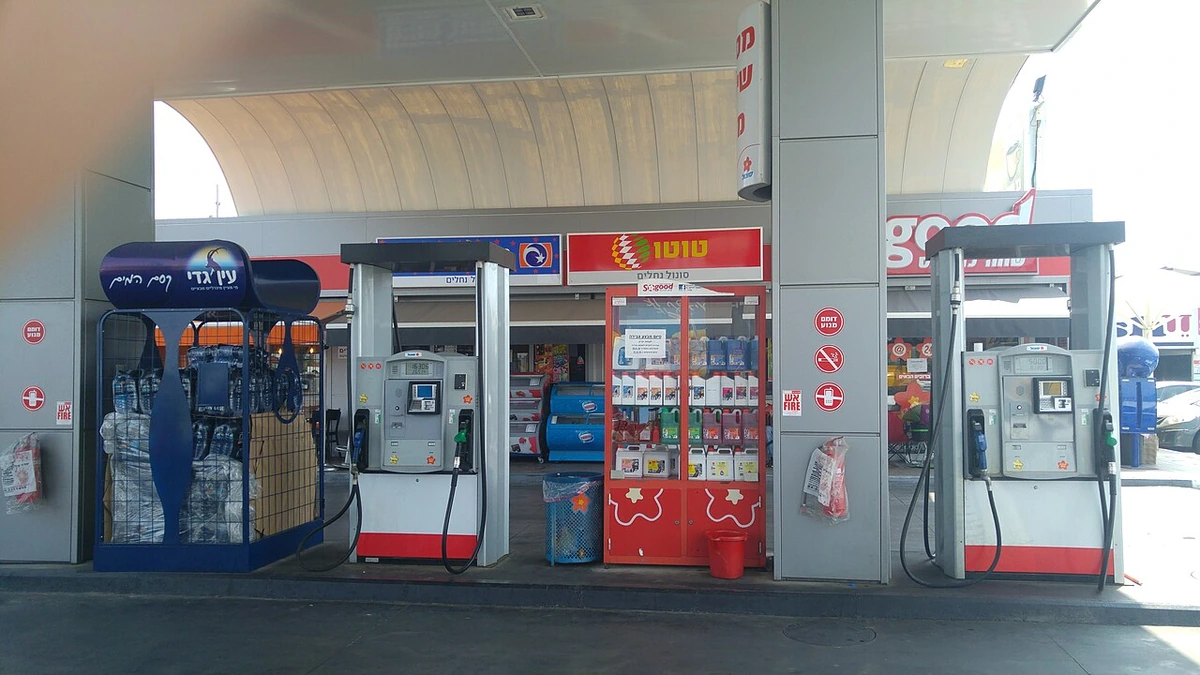
Israel will lower the maximum price of self-service 95-octane gasoline by 0.50 shekel per liter starting at midnight between Sunday and Monday, Oct. 4-5, after an adjustment to the fuel excise tax. The regulated cap will fall to NIS 7.77 per liter from NIS 8.27, effectively reversing the increase that took effect at the start of October.
Israel’s Ministry of Energy and Infrastructure said in its Oct. 4 fuel-price notice that the new maximum applies to unleaded 95-octane gasoline sold at self-service stations and includes value-added tax. The surcharge for full-service fueling will remain NIS 0.26 per liter including VAT, so the maximum full-service price will be NIS 8.03 per liter.
The change is tied to the excise component of Israel’s regulated gasoline price rather than to a fresh monthly move in the underlying fuel benchmark. Excise is an indirect tax on fuel, and the government publishes fuel excise rates as fixed monetary amounts. Changes to that tax feed into the pump-price calculation alongside the underlying gasoline cost, marketing expenses and VAT.
The tax change cuts 50 agorot from the regulated price
The headline reduction is 50 agorot, or half a shekel, for each liter sold under the national self-service cap. For a driver buying 40 liters, that lowers the maximum bill by NIS 20. A 50-liter fill costs up to NIS 25 less than it would have under the NIS 8.27 cap, assuming the station charges the regulated maximum in both cases.
The effect is smaller in Eilat because fuel there is sold without VAT. The ministry set the new maximum self-service price in Eilat at NIS 6.58 per liter, down NIS 0.43 from the previous level. The full-service surcharge there remains NIS 0.22 per liter excluding VAT, putting the maximum full-service price at NIS 6.80.
That difference between the national reduction and the Eilat reduction is consistent with the way the tax change flows through the retail price. Outside Eilat, lowering the excise amount also reduces the VAT collected on the final taxable price. In Eilat, where the ministry quotes the gasoline price without VAT, the change reflects the lower tax component without that additional VAT effect.
The government’s move therefore does not represent a 50-agorot reduction in every component of the fuel-price formula. It is a tax-driven change that produces a 50-agorot reduction in the final maximum self-service price in most of Israel. The ministry’s notice specifically attributes the Oct. 5 update to a change in the gasoline excise amount.
The cut reverses the early-October jump
The timing makes the decision especially visible to motorists. Israel entered October with the self-service ceiling at NIS 8.27 per liter. The Oct. 5 adjustment brings the cap back down to NIS 7.77 after only a few days at the higher level. In percentage terms, the new cap is about 6% below NIS 8.27.
Israel’s gasoline price-control system can produce sharp changes when several inputs move at once. The regulated 95-octane price incorporates an international gasoline benchmark converted into shekels, a regulated marketing component, excise tax and VAT. That means a change in the tax rate can offset part or all of an increase coming from international fuel prices or currency movements, but it does not remove those market inputs from future calculations.
The excise tax is set by the Finance Ministry’s customs and VAT authorities and updated through an order. The Energy Ministry then publishes the regulated consumer price that follows from the applicable pricing formula. In practical terms, Sunday’s action uses the tax lever to lower the maximum amount drivers can be charged even though other components of the gasoline price are not being reset in the same way.
This distinction matters because the new NIS 7.77 figure is a regulated maximum, not a mandatory nationwide selling price. Stations can compete below the ceiling. The ministry also advises consumers to compare prices, while the separate full-service surcharge remains capped at the amounts stated in the notice.
What the Oct. 5 price update does not settle
The ministry’s Oct. 4 notice establishes the new pump-price ceilings and the effective time, but it does not state in the notice how long this particular excise-tax adjustment will remain in force. That leaves the next regulated price subject to the normal mix of international gasoline costs, exchange-rate movements, regulated marketing expenses and whatever excise and VAT rules are in effect when the next update is calculated.
For consumers, the immediate change is straightforward. From midnight into Oct. 5, the maximum self-service price for 95-octane gasoline will be NIS 7.77 per liter including VAT across most of Israel, while Eilat’s VAT-free maximum will be NIS 6.58. Full-service surcharges stay unchanged at NIS 0.26 nationally and NIS 0.22 in Eilat.
The update also shows how quickly tax policy can alter the final price at the pump under Israel’s regulated system. A 50-agorot reduction on each liter is large enough to materially change the cost of a normal fill-up, but future prices will still depend on both government tax decisions and the market inputs embedded in the official formula. Any subsequent change in the regulated ceiling will require another official price update.
More News

Latest News
View all news- TOTE Maritime Starts Peak-Season Surcharge on U.S.-Virgin Islands Shipments
- Seaboard Marine Raises Bunker Charges on Caribbean and South America Routes
- New RTP Operating Rules Take Effect at The Clearing House
- Northern Ireland Locks In 2026 Household Electricity Discount Eligibility
- NBX MoneyGram Agent Registration Takes Effect, Expanding Its International Payments Reach