Seaboard Marine Raises Bunker Charges on Caribbean and South America Routes
Seaboard Marine's October 4 bunker increases lift standard 20-foot dry-container charges by $25 and 40-foot dry charges by $50 on major Caribbean and South America services, with larger dollar increases on refrigerated equipment.
Our editorial standards
MarketReview publishes clear, independently produced financial information using reliable sources and transparent editorial standards.
Read our Editorial Policy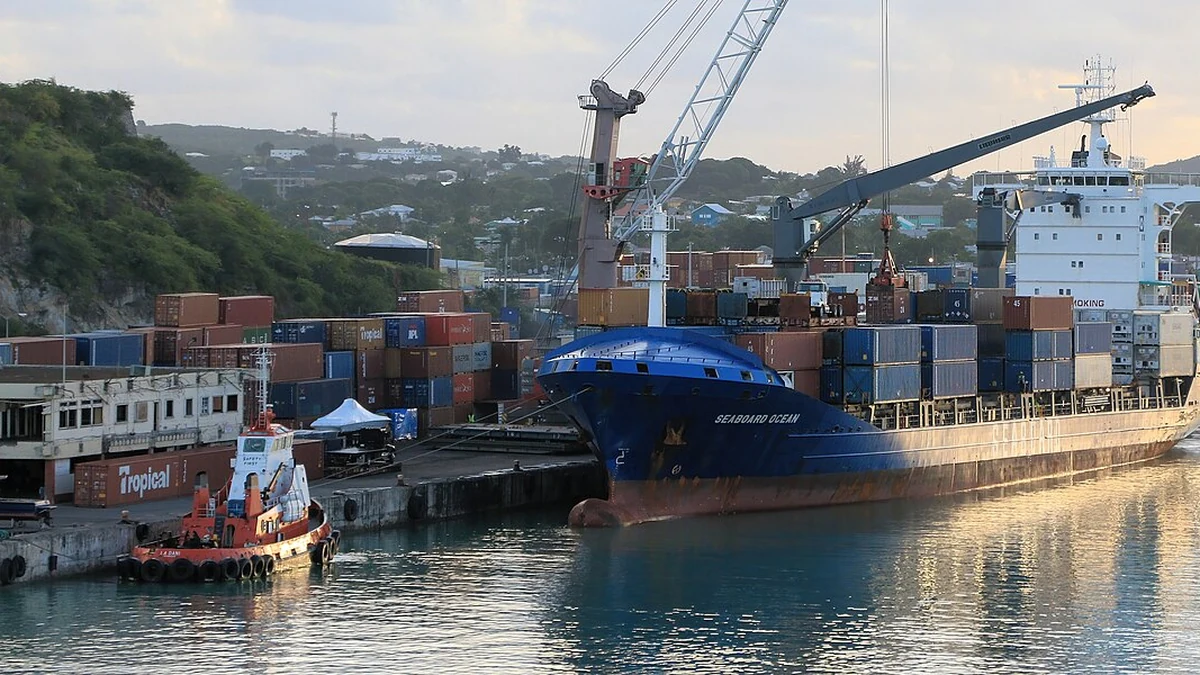
Seaboard Marine raised bunker charges effective October 4 on import and export cargo moving between the United States and Canada and a group of Caribbean and South American markets. The increases apply to tariff and contract rates, with standard 20-foot dry equipment rising by $25 and standard 40-foot dry equipment rising by $50 on both of the main route groups covered by the carrier’s notices.
For the Caribbean group, the adjustment covers Antigua, Barbados, Guyana, Jamaica, St. Kitts, St. Maarten, Suriname and Trinidad. The South America advisory covers Aruba, Bonaire, Chile, Colombia, Curacao, Ecuador, Peru and Venezuela. Seaboard also posted separate October 4 bunker changes for other routes, including the Cayman Islands, Haiti and trade between non-U.S. ports, showing that the fuel-related pricing action extends beyond the two lane groups highlighted here.
Seaboard’s Caribbean customer advisory says the increase applies to all tariff and contract rates. The carrier notes that changes requiring 30 days’ notice are published in the applicable public tariff, and that its advisory does not replace the tariff itself.
Standard dry-container increases are similar across both regions
On the Caribbean routes listed in the advisory, the bunker charge for 20-foot dry equipment moved from $400 to $425, a 6.25% increase. The 40-foot dry charge rose from $800 to $850, also 6.25%. For dry equipment over 40 feet, the charge increased from $927.50 to $983.50, a $56 increase.
Refrigerated cargo carries higher absolute bunker charges. A 20-foot refrigerated unit on the listed Caribbean routes rose from $640 to $680, while a 40-foot refrigerated unit moved from $1,280 to $1,360. Less-than-container-load and breakbulk cargo increased from $18.72 to $19.78 per weight or measurement unit. A vehicle not exceeding 750 cubic feet rose from $213 to $228.
The South America schedule uses the same $425 level for 20-foot dry equipment and $850 for 40-foot dry equipment. A 45-foot dry unit increased from $926 to $984, or $58. The 40-foot refrigerated charge rose by $80, from $1,250 to $1,330. Passenger vehicles increased from $105 to $115, while less-than-container-load and breakbulk cargo moved from $16 to $19 per weight or measurement unit.
The notices do not state a fuel-price benchmark, a formula behind the new levels or a planned end date for the bunker increases. That matters for customers comparing the change with temporary surcharges: the carrier presents these as new bunker levels effective October 4 rather than as a surcharge with a stated expiration date.
Other surcharges can add to the October cost changes
The bunker increases are not the only pricing changes touching parts of Seaboard’s Caribbean network this month. A separate peak-season surcharge also took effect October 4 on specified United States and Canada trades with the Eastern Caribbean and Jamaica. That charge is $250 for a 20-foot dry container, $500 for a 40-foot dry container and $600 for a 40-foot refrigerated container, and is scheduled to run through March 7, 2027. Seaboard states that the peak-season charge does not apply to Trinidad and Barbados joint service contracts.
Another October 4 notice set an inter-Caribbean peak-season surcharge of $125 for a 20-foot dry container, $250 for a 40-foot dry container and $300 for a 40-foot refrigerated container on specified inter-island trades and non-U.S. origins serving a wider list of Eastern Caribbean destinations. Those charges are separate from the bunker adjustment, so actual shipping costs depend on the origin, destination, equipment type and the tariff or service contract governing the move.
South America customers face a different timing sequence. Seaboard has announced a peak-season surcharge effective October 11 on northbound cargo from Chile, Ecuador and Peru to the United States and Canada. The published amounts are $300 for 20-foot dry equipment, $600 for 40-foot dry equipment and $800 for 40-foot refrigerated equipment. Again, those are separate from the October 4 bunker levels.
Seaboard’s regional network gives the changes broad reach
Seaboard Marine operates across a large Western Hemisphere network. Its parent company says the carrier provides shipping services in the United States and 27 countries in the Caribbean and Central and South America, with more than 20 vessels serving more than 40 ports. Seaboard also operates major terminals at PortMiami and the Port of Houston. That network scale means a relatively small per-container fuel adjustment can affect a wide range of northbound and southbound cargo flows, even though the exact charge varies by lane and equipment.
The parent company’s Seaboard Marine profile also says the carrier has expanded its fleet with dual-fueled vessels designed to operate primarily on liquefied natural gas. The bunker notices themselves, however, do not link the October 4 rate changes to that fleet program or to any specific fuel-cost development, so the reason for the increase should not be inferred from the fleet information.
Another cost change is already scheduled for November 1. Seaboard has announced higher U.S. terminal handling charges on specified Caribbean and South America shipments, including a $75 increase for many container moves. For shippers using the affected routes, that makes the October bunker adjustment one part of a broader sequence of published carrier charges taking effect over the next several weeks.
More News


Latest News
View all news- TOTE Maritime Starts Peak-Season Surcharge on U.S.-Virgin Islands Shipments
- New RTP Operating Rules Take Effect at The Clearing House
- Northern Ireland Locks In 2026 Household Electricity Discount Eligibility
- NBX MoneyGram Agent Registration Takes Effect, Expanding Its International Payments Reach
- Israel Cuts Fuel Excise Tax as Gasoline Price Falls by 0.50 Shekel a Liter