Schneider Electric Announces $22.6 Billion PTC Acquisition
The all-cash offer values PTC at $205 a share, while Schneider plans new equity and debt financing and targets a Q3 2027 close.
Our editorial standards
MarketReview publishes clear, independently produced financial information using reliable sources and transparent editorial standards.
Read our Editorial Policy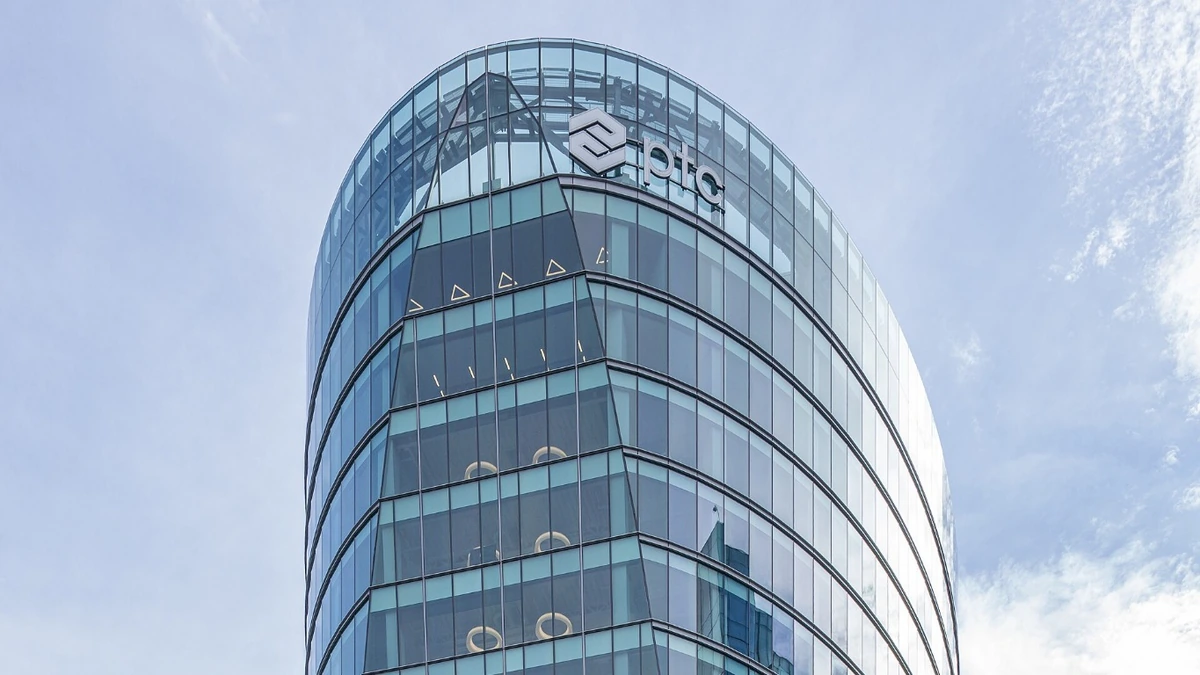
Schneider Electric has agreed to acquire PTC in an all-cash deal that values the U.S. industrial software company’s equity at about $22.6 billion. PTC shareholders would receive $205 per share, and Schneider says the price implies an enterprise value of roughly $23.7 billion.
The offer is 42.3% above PTC’s last closing share price before the announcement and 46.1% above its 30-trading-day volume-weighted average price. Both companies’ boards have approved the acquisition, which is expected to close by the third quarter of 2027 if PTC shareholders and regulators approve it.
Schneider is buying a software business focused on the design, engineering and management of complex physical products. In the companies’ joint announcement filed with the U.S. Securities and Exchange Commission, Schneider said PTC serves more than 30,000 customers and brings computer-aided design, product lifecycle management, application lifecycle management and service lifecycle management software to its portfolio.
The acquisition pushes Schneider further into software at a time when the company is trying to connect product and engineering data with information generated by factories, energy systems and other operating assets. Management is also pursuing a separate acquisition of industrial data software company Cognite, which has not yet closed.
PTC fills a product-design gap in Schneider’s software portfolio
Schneider already owns industrial software provider AVEVA, but PTC adds a different layer of the industrial technology stack. Its products are used earlier in the lifecycle, when manufacturers design products, manage engineering changes, coordinate software development and maintain product information after equipment is in service.
Schneider argues that bringing those capabilities together with its existing automation, energy management and industrial software businesses will give customers a more continuous flow of data from product design through operation. The company says PTC also expands its exposure to discrete and hybrid manufacturing, where product engineering data can be as important as process and energy data.
The financial profile helps explain why Schneider is willing to pay a large premium. PTC reported annual run rate, or ARR, of $2.412 billion on an as-reported basis excluding businesses it had divested as of June 30. Constant-currency ARR excluding those businesses was $2.448 billion, up 9.1% from a year earlier, according to PTC’s latest quarterly results. Revenue for the quarter was $600 million, while free cash flow was $249 million.
PTC’s recent strategy has been centered on what it calls the Intelligent Product Lifecycle, with investment focused on core CAD, PLM, ALM and SLM products and on adding artificial-intelligence capabilities around those systems. Earlier this year, PTC completed the sale of its Kepware industrial connectivity and ThingWorx internet-of-things businesses, leaving the company more concentrated on software tied to product design and lifecycle data.
Schneider estimates that, on a pro forma basis that also assumes completion of its pending Cognite acquisition, Software & Services would represent about 24% of group revenue. It also says the enlarged software operations would include more than 15,000 employees and serve more than 50,000 software customers. Those figures are management estimates and depend in part on another acquisition that remains subject to its own closing conditions.
Schneider plans new equity and debt to fund the purchase
The cash consideration is large relative to Schneider’s existing capital-allocation program, so the company plans to raise both equity and debt. Schneider says it expects to issue roughly €5 billion to €6 billion of equity and €16 billion to €17 billion of new debt. The equity portion is expected to be raised through an accelerated bookbuild using existing shareholder authorization, while the debt is expected to be issued across several currencies.
Schneider has also secured a fully committed bridge facility. PTC’s SEC filing says Morgan Stanley Europe SE and Société Générale committed to provide up to $25 billion under a bridge term loan facility. The acquisition is not conditioned on Schneider obtaining financing, which reduces one category of closing risk for PTC shareholders even though the eventual mix of permanent financing still has to be executed.
Management says it intends to retain Category A credit ratings, subject to the ratings agencies’ own decisions. Schneider is keeping its long-running progressive dividend policy and its €2.5 billion to €3.5 billion share-buyback plan through 2030, but it now expects to pause repurchases in 2027 and 2028 before accelerating them later in the program. It still expects about €600 million of buybacks in 2026.
The economics of the purchase also depend on Schneider delivering the benefits it has outlined. The company expects €250 million of annual run-rate cost savings by the third year after closing and approximately €800 million of revenue synergies. Schneider says the revenue opportunity would come from cross-selling, wider distribution, broader geographic access and joint development of software that connects product, engineering and operating data.
Those synergy figures are forecasts, not realized savings. Schneider also projects that PTC will add a low-single-digit percentage to adjusted earnings per share, before purchase-accounting effects, in the first full year of consolidation. Including the full run-rate synergies, it expects mid- to high-single-digit adjusted EPS accretion and says return on capital employed should exceed its weighted average cost of capital by the fifth year after closing.
Shareholder and regulatory approvals remain before the deal can close
The acquisition will be carried out through a merger subsidiary. Under the agreement signed October 4, Schneider’s wholly owned Grand Slam Merger Sub will merge into PTC, with PTC surviving as a wholly owned Schneider subsidiary. Each eligible PTC share outstanding immediately before completion would convert into the right to receive $205 in cash, and PTC shares would then be delisted from Nasdaq and deregistered under U.S. securities law.
PTC shareholders holding at least a majority of the company’s outstanding shares must approve the merger agreement at a special meeting. The companies also need antitrust and foreign-investment clearances. PTC’s SEC filing specifically lists the U.S. Hart-Scott-Rodino waiting period and approval by the Committee on Foreign Investment in the United States among the required regulatory conditions.
The agreement restricts PTC from actively soliciting competing acquisition proposals, although its board retains customary flexibility to consider a superior offer under specified circumstances. If PTC terminates the agreement to accept a superior offer, or if Schneider ends the agreement after a qualifying change in the PTC board’s recommendation, PTC could owe Schneider a $700 million termination fee.
For Schneider, the strategic question is whether paying a premium for PTC can produce enough recurring software revenue, cross-selling and cash generation to justify the financing burden. For PTC shareholders, the more immediate issues are the timing of the vote and whether regulators clear the acquisition on the timetable the companies expect.
Schneider has moved its third-quarter 2026 revenue release forward to October 16 because of the acquisition announcement. After that, attention will turn to PTC’s proxy materials, the date of the special shareholder meeting and the regulatory process ahead of the companies’ targeted third-quarter 2027 closing.
More from Investing

Latest News
View all news- FinCEN Withdraws Two Proposed Crypto Rules Covering Unhosted Wallets and Mixing
- Tosei Raises Full-Year Profit Forecast and Lifts Dividend to ¥58
- Vaxcyte Reports Positive Pivotal Phase 3 Results for VAX-31 Pneumococcal Vaccine
- TeraWulf Doubles Muskie Contracted Power Capacity to 1 GW, Eyes More Secured Debt
- Pagaya Closes $600 Million AAA-Rated Personal-Loan Securitization