
CFTC’s Revised Whistleblower Award Rules Take Effect October 16
Qualifying whistleblower claims can now receive a presumed 30% award when the statutory maximum is $5 million or less, subject to safeguards and CFTC discretion.
Our editorial standards
MarketReview publishes clear, independently produced financial information using reliable sources and transparent editorial standards.
Read our Editorial Policy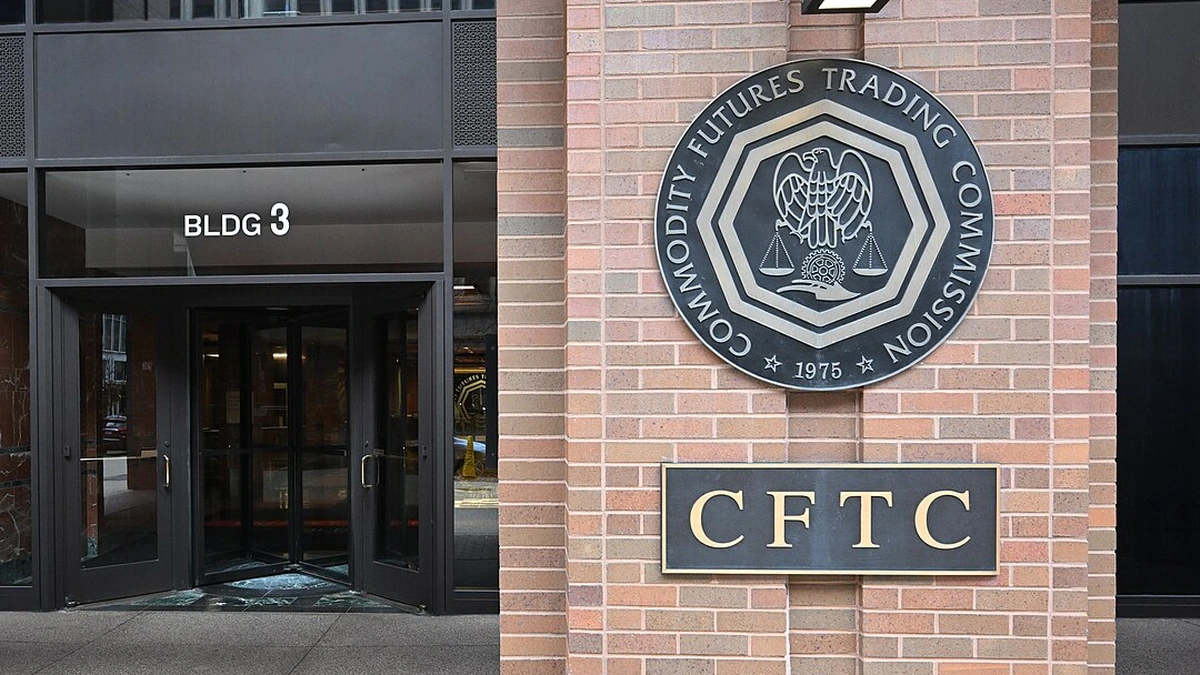
The Commodity Futures Trading Commission’s revised whistleblower award rules take effect October 16, 2026, introducing a presumption that qualifying claimants receive the maximum 30% of collected monetary sanctions in certain enforcement cases. The change is intended to reduce the time needed to decide smaller awards, a longstanding problem for the agency’s whistleblower program.
The presumption is limited to cases in which the statutory maximum payout would be $5 million or less. It is not a guaranteed payment for anyone who reports misconduct, and the CFTC can decline to apply the maximum percentage when specified factors are present. Existing eligibility requirements for receiving an award remain in place.
The Commission approved the change on September 11 and published the final rule in the Federal Register on September 16. The amendments add paragraph (d) to Rule 165.9, which governs how the agency determines whistleblower award amounts, and make related administrative corrections to its regulations.
Who qualifies for the 30% presumption
Under the CFTC program, a whistleblower generally must voluntarily provide original information that leads to a successful enforcement action involving more than $1 million in monetary sanctions, or an eligible related action by another authority. Award payments are based on sanctions collected, not simply the amount a court or the Commission orders a violator to pay. For successful claims, the statute permits awards ranging from 10% to 30% of those collections.
The $5 million limit in the new rule concerns the potential whistleblower award, not the size of the enforcement case. To fall within it, 30% of the combined sanctions collected in the covered and related actions must amount to no more than $5 million. The Commission must also determine that future collections are not reasonably expected to push the maximum award above that threshold.
Other conditions are just as important. Claimants can lose the benefit of the presumption if they were culpable in the underlying violations, interfered with internal reporting or compliance systems, or delayed reporting without a reasonable justification. The rule allows the Commission to excuse an unreasonable reporting delay in limited circumstances when doing so is consistent with the public interest and the program’s objectives.
The CFTC may also reject the enhanced percentage if a claimant provided only limited assistance, or if a maximum award would be inconsistent with the public interest. Those safeguards preserve an individualized judgment in cases where paying the highest permissible percentage would not be appropriate. The presumption therefore affects the starting point for an otherwise valid award claim, rather than eliminating the agency’s review.
Where two or more whistleblowers qualify in the same covered or related enforcement action, the rule addresses the award collectively. If at least one eligible claimant satisfies the conditions, the aggregate award is set at the statutory 30% maximum, with the Commission then allocating shares among successful claimants. It does not promise 30% separately to each person.
Why the CFTC expects shorter award reviews
Delays in award determinations formed the central argument for the change. According to the agency’s rulemaking record, the average period between the deadline to file an award claim and the final order granting an award exceeded two and a half years over 2012 through 2025. That measure starts from the award-application deadline, not from the date a whistleblower first sent a tip.
Previously, even relatively small meritorious claims required officials to weigh numerous factors to select an award percentage. Staff assessed the significance of the information, the degree of assistance, the law-enforcement interest in a payout and any participation in internal compliance efforts. Claimants could also contest preliminary decisions recommending less than 30%, adding further review work.
For smaller qualifying claims, the new presumption narrows that analysis. The CFTC expects staff to spend less time debating how strongly positive factors support an award once the threshold and safeguards have been satisfied. It also expects fewer disputes over awards below the statutory maximum, freeing resources for larger or more complicated cases. Whether those expectations produce materially shorter waits will depend on actual processing results.
The agency estimates that about 82% of awards in its historical data were for $5 million or less, although they accounted for only about 10% of total award dollars paid. That distribution helps explain the design: the CFTC believes it can simplify a large share of award decisions without applying the shortcut to the largest payouts, where an individual assessment may carry more weight.
In a review of 43 matters involving awards of $5 million or less through the end of 2025, 12 had been paid at percentages below 30%. The CFTC calculated that applying the presumption across that historical group would have increased total payments by less than $4 million. That is an estimate of what a different rule might have produced in past cases, not an announcement of additional awards now payable to those claimants.
The program has issued substantial awards even under its existing process. From its first award in 2014 through the end of 2025, the Commission granted 73 awards in 56 matters, totaling more than $395 million. Whistleblower information contributed to enforcement outcomes involving more than $3.3 billion in financial remedies, including roughly $160 million returned to harmed customers, according to the rulemaking record.
The agency also sought consistency with securities regulation. In its September announcement approving the final rule, the CFTC said it modeled the provision on Securities and Exchange Commission Rule 21F-6(c), which established a comparable conditional presumption in 2020. Both agencies run whistleblower programs created under the Dodd-Frank Act, although each applies its own statutes and procedures.
What the rule does not change
The new approach is narrower than some commenters requested. During the rulemaking, supporters proposed deadlines for preliminary and final decisions, a higher $15 million ceiling for presumptive awards and an automatic adjustment of the $5 million threshold for inflation. The Commission retained the fixed $5 million level and declined to impose new processing deadlines, citing the need for flexibility in complex cases.
It also rejected a proposed $5 million minimum payout for certain successful claimants whose enforcement cases fall above the presumption threshold. As a result, a claimant in a larger case could still receive less than $5 million after a full review, even though the recovered sanctions exceed the level at which the 30% shortcut would apply. The Commission said its existing approach remains appropriate for those cases.
Administrative revisions accompany the award-percentage change. They update references to the Whistleblower Office after its 2025 move from the Division of Enforcement to the Office of the General Counsel. The rule also sets out the General Counsel’s administrative responsibilities and the composition of the staff group that reviews claims. The office transfer itself is not a new event occurring on October 16.
The Commission says the amendments do not modify the information required to submit a tip or apply for an award, or the substantive test for eligibility. Nor does the final rule require the agency to publish new annual statistics on how often the presumption is applied or overridden. The immediate regulatory change is a conditional shortcut for determining award percentages; the rule sets no deadline by which eligible whistleblowers must actually receive a payment.
More News



Latest News
View all news- Truist Posts $0.56 Quarterly EPS as $1.4 Billion Securities Loss Weighs on Profit
- Regions Financial Reports $611 Million in Third-Quarter Earnings, Up 11%
- New York Fed Survey Shows Service-Sector Activity Slumping as Price Pressures Intensify
- Fed Research Puts U.S. Private-Credit Loans to Businesses at Nearly $1.5 Trillion
- Citizens Financial Reports 29% Profit Growth, Raises Quarterly Dividend 13%
