
USDA Says Texas Farmers Are Receiving About $1.2 Billion in Safety-Net and Conservation Payments
The Farm Service Agency says the Texas total spans 2025 crop-year price and revenue support and 2026 conservation payments, with some crop assistance still being calculated.
Our editorial standards
MarketReview publishes clear, independently produced financial information using reliable sources and transparent editorial standards.
Read our Editorial Policy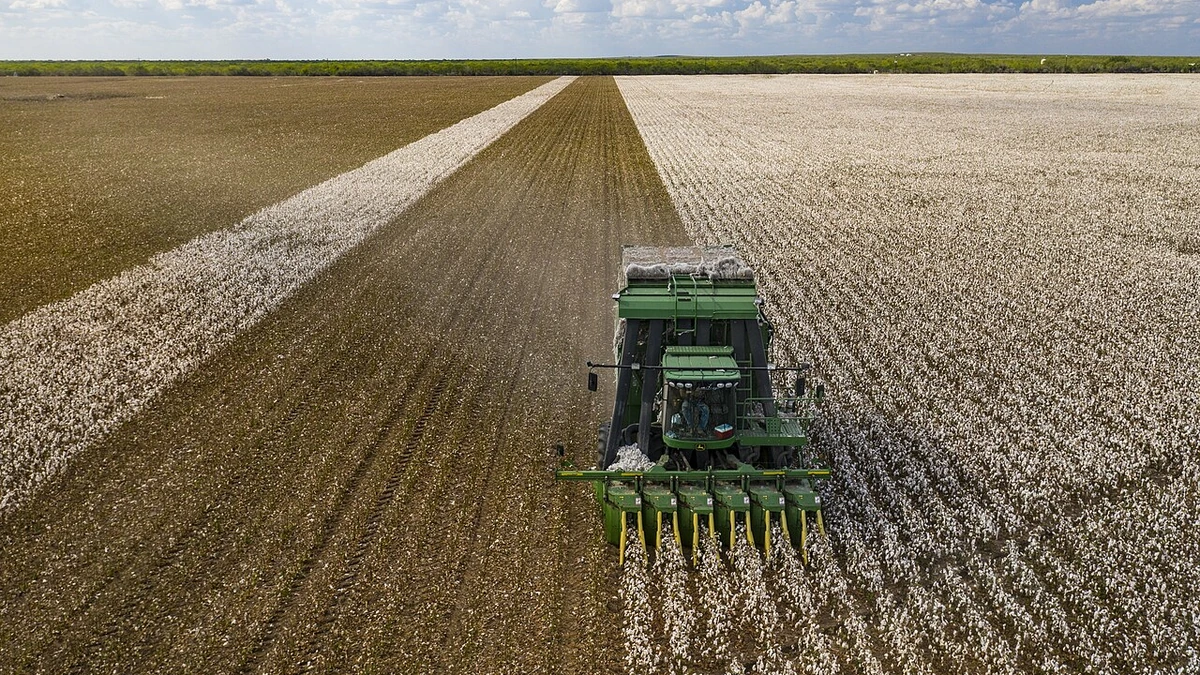
The U.S. Department of Agriculture is delivering approximately $1.2 billion in farm safety-net and conservation payments to Texas farmers, ranchers and landowners, bringing together support for the 2025 crop year and separate land-conservation payments for 2026. The Farm Service Agency announced the statewide total Friday, October 16, as payments tied to crop prices, farm revenue and conservation contracts move through different federal programs.
The agency did not provide a Texas-by-program breakdown of the $1.2 billion, nor did it say that every payment had already reached its recipient. Some crop payments will be issued as calculations are completed, including those awaiting final price data for certain rice varieties. The distinction matters for producers assessing how much assistance is available to their own operations.
USDA’s Texas announcement followed national figures showing approximately $13.8 billion in gross Agriculture Risk Coverage and Price Loss Coverage payments for the 2025 crop year, alongside $1.8 billion in annual Conservation Reserve Program payments for 2026. Those are nationwide totals for two different types of assistance, rather than components that can be assigned directly to Texas from the available release.
Crop safety-net payments reflect weaker prices or revenue
The Agriculture Risk Coverage (ARC) and Price Loss Coverage (PLC) programs are designed to provide income support when specified financial conditions are met. Under PLC, assistance is triggered when a covered commodity’s effective price falls below its effective reference price. ARC instead compares actual crop revenue with a guaranteed level, using either county results or an individual farm’s revenue, depending on the coverage selected.
For the 2025 crop year, USDA identified 16 crops in Texas that triggered a PLC payment. They include seed cotton, grain sorghum, peanuts, corn, soybeans and wheat, as well as long-grain and medium-grain rice. The list establishes which commodities met the price trigger, but it does not mean every farmer producing one of those crops receives the same payment. Eligibility and the amount due depend on the program rules and individual farm circumstances.
Payments for long-grain and medium-grain rice will come later, after final marketing-year average prices become available, the agency said. ARC payments calculated using county revenue also depend on county-level results, so the timing can vary. FSA said it will issue money to eligible producers as the necessary calculations are completed.
Congress changed the crop safety net under the Working Families Tax Cuts Act. For 2025 alone, eligible producers receive the higher calculated payment rate under ARC or PLC regardless of their program election. The law also raised statutory reference prices and revised the effective reference price calculation, changes that can affect when support is triggered and how much is payable.
Payment ceilings have risen as well. FSA said the ARC and PLC limit increased from $125,000 to a statutory $155,000 before inflation adjustments, producing a $160,000 limit for the 2025 crop year. That is a cap, not a standard award. USDA’s $13.8 billion national figure is also a gross amount, before applicable payment-limit reductions and the 5.7% sequestration rate required for ARC and PLC disbursements. It should not be treated as the exact amount farmers will ultimately receive in their accounts.
Conservation payments cover nearly 2.1 million Texas acres
A separate part of the Texas assistance supports landowners who participate in the Conservation Reserve Program (CRP). USDA said its 2026 annual payments cover nearly 2.1 million acres under active CRP contracts in the state. Unlike ARC and PLC, these are rental payments tied to conservation commitments rather than a response to a specific year’s crop-price or revenue decline.
Traditional CRP arrangements compensate eligible landowners for maintaining long-term, resource-conserving vegetative cover. The program is intended to reduce soil erosion, improve water quality and provide wildlife habitat. The acreage figure measures land enrolled under active contracts, not the number of farms receiving checks or the size of the conservation portion of Texas’s $1.2 billion total.
Grassland CRP serves a somewhat different purpose. It supports the preservation of grassland while generally allowing livestock grazing and haying to continue, a feature relevant to ranching operations. USDA identified approximately 462,000 acres in Texas under Grassland CRP and said that, after 2026 enrollment, grassland contracts are expected to account for more than 40% of CRP acreage nationwide. The 40% projection is a national share, not a figure for Texas alone.
Nationally, the department announced about $1.8 billion in 2026 annual CRP rental payments and said it accepted offers on nearly 1 million new acres of Grassland CRP this year. Together, these figures explain why the Texas announcement includes ranchers and private landowners in addition to crop producers. Conservation payments are based on participation in land-management programs, so they should not be read as evidence that cotton, cattle or any other Texas commodity necessarily suffered a new loss.
New base acres and enrollment dates will shape future coverage
The current disbursements come as FSA expands the acreage eligible for future ARC and PLC coverage. Texas received 1.7 million additional base acres under the new allocation process, the agency said. Base acres are used to administer commodity safety-net coverage and should not be confused with a count of newly planted farmland. The newly allocated acres apply beginning with the 2026 crop year and later years, not retroactively to the 2025 payments now being processed.
Across the country, the law authorized an additional 30 million base acres. Because requests for eligible acres exceeded that cap, FSA applied a uniform 3.69% reduction to newly allocated acreage. The agency described the expansion as the first increase in base acres in two decades. Its September enrollment guidance said landowners had an opportunity to review the allocation information before the new acreage was assigned.
Farmers now have a near-term administrative deadline. Election and enrollment for the 2026 ARC and PLC crop year opened September 16 and closes December 11, 2026. FSA says producers must enroll through a signed contract each year, even if they choose not to change their program election. Missing the December 11 deadline leaves a farm ineligible for payments for the 2026 program year, although its prior election carries forward.
The department has also scheduled enrollment for the 2027 crop year from November 2, 2026, through March 15, 2027. Cotton producers face an additional coverage decision: USDA’s enrollment guidance says farmers who enroll seed-cotton base acres in ARC or PLC cannot use the Stacked Income Protection Plan on the planted cotton acres of that farm. Producers weighing those choices or checking the status of a 2025 payment can contact their local FSA county office before the relevant deadline.
More News


Latest News
View all news- Truist Posts $0.56 Quarterly EPS as $1.4 Billion Securities Loss Weighs on Profit
- Regions Financial Reports $611 Million in Third-Quarter Earnings, Up 11%
- Fed Research Puts U.S. Private-Credit Loans to Businesses at Nearly $1.5 Trillion
- Citizens Financial Reports 29% Profit Growth, Raises Quarterly Dividend 13%
- CFTC’s Revised Whistleblower Award Rules Take Effect October 16
