Spain Approves New Gas-System Charges and Underground Storage Payments
Spain has set gas-system charges and €76.24 million in underground-storage remuneration for the 2027 gas year, with new access fees starting November 1.
Our editorial standards
MarketReview publishes clear, independently produced financial information using reliable sources and transparent editorial standards.
Read our Editorial Policy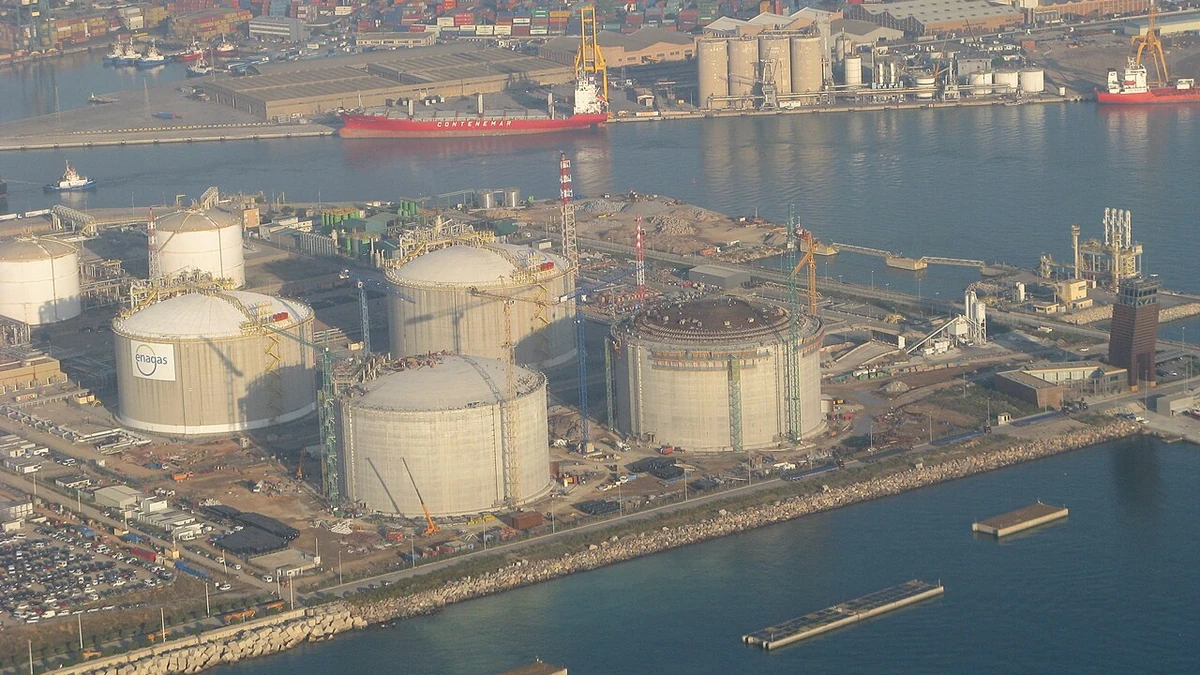
Spain has approved €6.76 million in gas-system charges and €76.24 million in regulated payments to underground natural-gas storage operators for the 2027 gas year. The decision also establishes what users will pay to store gas and to inject it into, or withdraw it from, the country’s basic underground storage facilities.
The Spanish Ministry for the Ecological Transition and the Demographic Challenge issued Order TED/1149/2026 on October 30, and it was published in the Official State Gazette on October 31. Although the gas year began on October 1, the new system charges and storage-access fees will apply from November 1. Storage operators’ recognized remuneration takes effect from October 1.
The two headline amounts cover different parts of the regulated system. Gas-system charges recover certain costs that are not directly tied to using a particular facility, while the larger remuneration figure sets the amounts recognized for underground storage operators. The published ministerial order sets out both calculations and the access fees in separate annexes.
Gas-system charges fall from the previous gas year
The €6.76 million system-charge budget is about 34.8% below the €10.36 million approved for gas year 2026. That comparison concerns the aggregate costs assigned to these charges, not an across-the-board reduction of 34.8% in individual gas bills. The amount payable at a particular supply point depends on its applicable category and contracted capacity.
Most of the new budget, €4.91 million, relates to the annual recovery of a deficit accumulated by the gas system at the end of 2014. A further €1.80 million covers recognized additional costs for manufactured-gas distribution and supply in insular territory without a connection to the natural-gas pipeline network. The order identifies Tenerife as the territory where that arrangement currently operates.
The organized natural-gas market operator is a notable source of the year-on-year difference. The 2026 budget included €3.45 million in operator remuneration, whereas the new schedule records a net €46,673 after prior remuneration and guarantee-management balances are reconciled with market-liquidity costs. That accounting change is distinct from any shift in the physical cost of transporting gas.
Under the ministry’s allocation, 85.54% of the €6.76 million is assigned on the basis of contracted capacity and 14.46% by supply point. The split is unchanged from the preceding gas year, although the euro amounts allocated to each part are smaller because the total budget is lower.
Unit charges vary with annual consumption bands. For the lowest band, covering annual use of no more than 5,000 kilowatt-hours, the schedule specifies €0.19 per customer per year plus a capacity-related unit charge of €0.011055 per kilowatt-hour per day of contracted capacity per year. Higher-consumption bands have their own values, with the capacity component becoming the principal stated charge for large users.
The schedule uses a demand scenario of about 7.92 million supply points and 308.9 terawatt-hours of annual gas consumption. Those are calculation assumptions rather than a report of realized consumption. Spain also retains the CNMC regulatory levy at 0.140% of the relevant billed tolls, storage fees and system charges.
Enagás and Trinity receive €76.24 million in recognized payments
The ministry recognizes €76,238,261.72 in total regulated remuneration for basic underground storage, down approximately 6.4% from the €81.47 million provided for gas year 2026. Enagás Transporte accounts for €69.49 million of the new total and Trinity Almacenamientos Andalucía for €6.75 million.
The payments are calculated from several components rather than a single flat annual fee. Investment-related remuneration contributes €36.11 million, while provisional operating and maintenance costs account for €32.88 million. The calculation also includes allowances for extending useful asset life, certain nonrecurring operating costs and an incentive linked to asset reliability and valuation, as well as a specified deduction.
For 2027 the regulatory return rate used in the storage calculation is 6.46%, compared with 5.44% in the preceding gas year. The higher percentage does not mean total payments increase. The published schedules show the aggregate recognized amount falling as the amounts assigned to the underlying remuneration components change.
Underground storage gives the gas system a way to hold supplies for later use and manage differences between injections and withdrawals. The regulated payments recognize the eligible investment and operating costs of those assets. They should not be confused with the access fees charged to companies reserving storage services, or with the LNG tanks at a regasification terminal.
Spain’s storage-remuneration tables also detail individual eligible maintenance and investment-related projects at facilities including Gaviota, Serrablo, Yela and Marismas. The order assigns budgets and future remuneration start dates to listed works; those entries do not mean every project cost becomes a payment during gas year 2027.
Injection and withdrawal fees rise, but the storage fee edges lower
For storage users, the annual capacity-based charge for injection rises to €0.151406 per kilowatt-hour per day of contracted capacity, from €0.141516 in gas year 2026. The corresponding withdrawal rate increases to €0.109699 from €0.101405. These are increases of about 7.0% and 8.2%, respectively.
The storage charge moves in the other direction, declining to €0.002486 from €0.002525 on the same published annual capacity unit. The different movements matter: a lower overall system-charge budget does not imply that every underground-storage service becomes cheaper. The effect on an individual storage user depends on which services it contracts for and the capacity involved.
These figures are regulated fees for the use of basic underground storage, not the market price of the gas itself. The order retains the established multipliers for storage-access contracts under the applicable rules, rather than creating a single uniform per-unit energy price for every booking and service.
There is also a timing distinction. The ministerial order takes legal effect on its October 31 publication date, but its new unit charges and storage-access fees begin November 1. Recognized underground-storage remuneration instead applies from October 1, the start of gas year 2027. A separate October 28 decree expressly permits this split in effective dates for the new regulatory period.
The same order tightens a biomethane quality limit
Beyond the financial schedules, the ministry has revised technical rules for renewable gas entering Spain’s network. The maximum oxygen concentration for biomethane injected into transport and distribution pipelines is reduced from 1% to 0.4% on a molar basis. The government says the change is intended to protect infrastructure and sensitive equipment while allowing renewable-gas injections to develop.
Transitional provisions address how the oxygen limit applies to production plants at different stages of their grid-connection arrangements. The order also calls for a register of facilities or equipment sensitive to specified gas-quality deviations and updates some emergency-contact requirements for large, non-protected gas users.
More News

Latest News
View all news- New PBGC Pension Valuation Spreads Take Effect for Terminating Plans
- Three State Street SPDR Bond ETFs Adopt New Names on October 31
- Taiwan Launches Expanded Credit-Information Sharing Between Banks and Securities Firms
- New Zealand Eases Trustee Requirements for Four Retirement Schemes
- U.S. Opens Final 100,000-Ton Beef Import Quota as Food Prices Remain Under Pressure