
UK Raises Asbestos Compensation for Bereaved Families, Ending Reduced Payouts
Eligible bereaved families in England, Wales and Scotland will receive the same government lump-sum rates as sufferers under two schemes, but the new rules are not retrospective.
Our editorial standards
MarketReview publishes clear, independently produced financial information using reliable sources and transparent editorial standards.
Read our Editorial Policy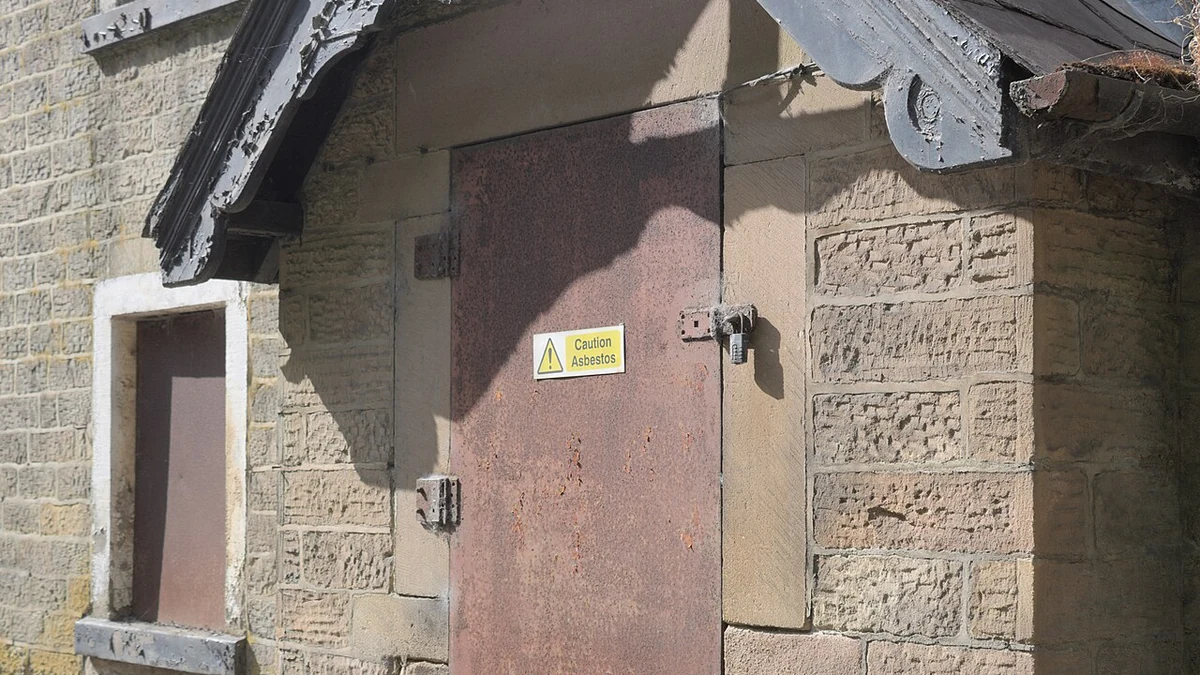
The UK government has ended lower lump-sum compensation rates for eligible bereaved families in England, Wales and Scotland when someone dies from certain asbestos-related or other dust diseases before claiming. The change took effect on October 31, 2026, and is expected to benefit around 300 families a year.
Until now, the government schemes paid surviving dependants less than the people who developed the diseases could have received. In 2025, payments to sufferers averaged about £17,700, compared with roughly £10,700 for dependants, according to the Department for Work and Pensions (DWP). These averages describe past awards, not a fixed payment for every new claim.
The government’s announcement of the reform brings dependant rates into line with the rates for people who became ill under two existing schemes. It does not create universal compensation for all asbestos-related deaths, and eligibility requirements still apply.
The difference can be substantial. Under the 2008 Diffuse Mesothelioma Scheme, the government gives the example of a claimant aged 60 whose applicable payment is £56,656. A dependant who previously would have been entitled to £24,526 would now receive £56,656 under the new rate, an increase of £32,130. The figure is an illustration for that age, not a new standard payout for every family.
Two compensation schemes, with different eligibility rules
The first scheme was established under the Pneumoconiosis etc. (Workers’ Compensation) Act 1979. It makes one-off payments for specified work-related dust diseases, including pneumoconiosis and diffuse mesothelioma, where statutory conditions are met. It is especially relevant when a former employer is no longer trading and a worker cannot obtain damages through the usual route.
An award under the 1979 scheme is not based on a single flat rate. The amount depends on factors including the age of the person with the disease and the assessed level of disablement. DWP illustrates the new rule with a 60-year-old person whose disablement assessment falls between 31% and 40%: the payment to the sufferer would be £34,062 under 2026-27 rates. A qualifying dependant would previously have received £21,011 but will instead receive £34,062 in an eligible new case.
The second arrangement, created in 2008, pays lump sums in cases of diffuse mesothelioma where a person cannot receive a payment through the 1979 scheme or other excluded sources. Its scope is not restricted to people exposed to asbestos as employees. Government guidance describes possible cases involving exposure in the home, the surrounding environment or self-employment, provided the scheme’s other conditions are satisfied.
For that mesothelioma scheme, the payment tables use the person’s age at diagnosis for a living claimant, or age at death for a dependant. The October reform removes the separate lower dependant rate table and substitutes rates aligned with those for sufferers. The result is a change to how a qualifying award is calculated, rather than an across-the-board grant to every family affected by asbestos.
The 1979 rules also change how certain cases are administered. The regulations remove older top-up provisions and identify the dates relevant to calculating an award. They clarify that, if a claimant dies after submitting a claim but before payment, payment can be made to the person’s legal representatives once the required estate documentation has been provided. That is a distinct situation from a dependant making a new claim after a death.
New claims are covered, but past cases do not reopen
The effective date matters as much as the new rates. DWP says the reform applies to new dependant claims from October 31 and will not provide retrospective payments. The detailed commencement provisions are more specific: under the mesothelioma amendment, the higher dependant rates apply when the person with diffuse mesothelioma dies on or after October 31, 2026. For the 1979 scheme, the new rules apply where a person first meets the statutory conditions for payment on or after that date.
Those distinctions mean a family should not assume that filing a fresh application today will automatically convert an older death into an award at the new rate. The legal basis of the claim, the relevant dates and the conditions of the appropriate scheme all matter. The announcement does not say previously paid dependants will receive a top-up, and it expressly rules out retrospective claims under the reform.
Existing application requirements have not disappeared. Under government guidance, claimants for the 2008 diffuse mesothelioma payment normally need to apply within 12 months of diagnosis, and dependants normally within 12 months of death, subject to provisions allowing extensions in some circumstances. For payments under the 1979 Act, the conditions are different and include links to the industrial injuries benefit system. Families still need to establish that they qualify rather than relying only on a medical diagnosis.
The announced changes cover the schemes operating in England, Wales and Scotland. Northern Ireland has separately administered arrangements. Its own mesothelioma amendment, made by the Department for Communities, also provides for aligned dependant amounts from October 31, but the separate legal and claims framework should not be confused with the DWP schemes described in the announcement.
Long-running asbestos exposure and the cost of the reform
An independent legal review recommended changes to the two compensation schemes, including the treatment of dependants and clearer rules for identifying the date used to calculate an award, according to DWP. Ministers estimate the additional public cost at between £2 million and £6 million annually.
The continuing impact of asbestos helps explain why the issue remains active decades after many harmful exposures occurred. The Health and Safety Executive reported 2,146 mesothelioma deaths in Great Britain in 2024, its latest annual figure released in July 2026. That was 109 fewer than in 2023. Mesothelioma is a cancer associated with past asbestos exposure, and the death figures are not a count of people eligible for these two compensation schemes.
Higher dependant awards cannot address the underlying exposure or replace compensation available through other legal routes. They do, however, remove a payment gap that arose from whether a person survived long enough to make a claim. The financial effect will vary markedly with the claimant’s age, the disease involved and, under the 1979 scheme, the assessed degree of disablement.
Sir Stephen Timms, the minister for social security and disability, said families should not be financially penalised following a death from an asbestos-related illness. DWP credited a long-running campaign by the Asbestos Victims Support Group Forum UK and others for bringing the payment disparity to the government attention.
More News

Latest News
View all news- New PBGC Pension Valuation Spreads Take Effect for Terminating Plans
- Three State Street SPDR Bond ETFs Adopt New Names on October 31
- Taiwan Launches Expanded Credit-Information Sharing Between Banks and Securities Firms
- New Zealand Eases Trustee Requirements for Four Retirement Schemes
- U.S. Opens Final 100,000-Ton Beef Import Quota as Food Prices Remain Under Pressure
