
Jollibee Franchise Agreements Target 35 Australian Stores and A$60 Million in Investment
Happy Food Group will lead the Victoria rollout and Lucky Bee Australia will cover New South Wales, with roughly 900 jobs projected over five years.
Our editorial standards
MarketReview publishes clear, independently produced financial information using reliable sources and transparent editorial standards.
Read our Editorial Policy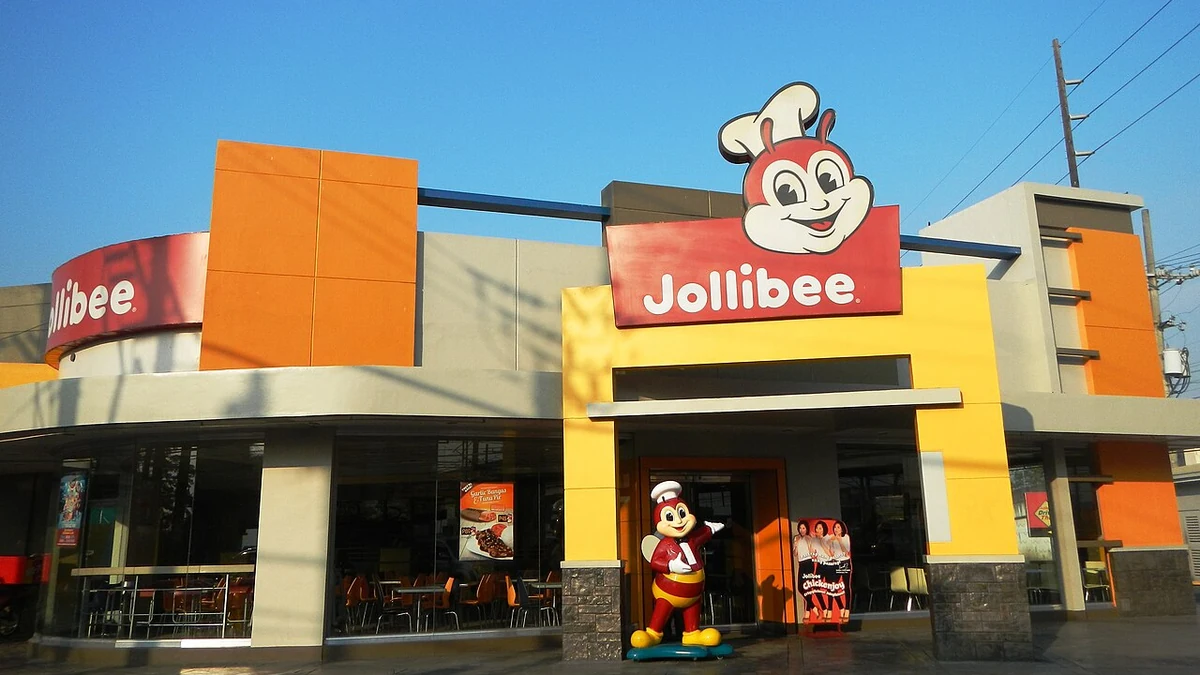
Jollibee Foods Corporation has signed two exclusive franchise agreements to bring its flagship fast-food chain to Australia, with local partners targeting 35 restaurants across Victoria and New South Wales over five years. The proposed rollout represents an estimated A$60 million in investment and around 900 jobs, according to the company’s chief executive.
Ernesto Tanmantiong announced the agreements on Sunday, November 15, during an event with Australian Prime Minister Anthony Albanese at a Jollibee restaurant in Manila. Happy Food Group will lead the Victorian expansion, while Lucky Bee Australia will introduce the brand to New South Wales. Neither the 35-store target nor the investment estimate represents completed openings or spending.
In the official transcript of the announcement, Tanmantiong said the partners had signed their agreements that morning at Jollibee Biopolis. The event established the two partners and the intended scale of the launch, but the publicly released remarks did not give opening dates for individual restaurants or explain how the total store count would be divided between the states.
Two franchise partners will lead the rollout
The arrangements give Jollibee a defined route into two of Australia’s largest consumer markets rather than relying on a single launch location. Victoria and New South Wales have different property markets, distribution requirements and customer catchments, making the selection of local partners relevant to how the proposed network develops.
Happy Food Group is the named partner for Victoria, and Lucky Bee Australia is responsible for New South Wales under the announced agreements. Their respective store commitments, opening schedules and site selection criteria have not been detailed publicly. The 35 stores are a combined ambition across the two territories, not a separate promise of 35 outlets in each state.
The announcement also leaves important financial details open. It does not specify what portion of the A$60 million will be supplied by each partner, whether the parent company will provide capital directly, or what spending will be counted toward the total. A franchise agreement provides a framework for expansion; it does not by itself establish that all planned locations have been financed or secured.
For now, the clearest measure of progress is the signing of the agreements and the identification of the operators. Subsequent restaurant announcements, lease commitments and openings will show how quickly the five-year plan becomes a functioning Australian business. No precise sequence of store openings was included in the government material released on Sunday.
A$60 million investment estimate and 900 projected jobs
The proposed A$60 million investment gives the rollout a monetary scale, but it remains an estimate attached to a multiyear expansion plan. Neither Jollibee nor the Australian government provided a year-by-year spending timetable in the announcement. The figure should therefore not be read as revenue to Jollibee or as capital already committed to completed restaurants.
The employment figure is forward-looking too. Tanmantiong said the expansion could create approximately 900 Australian jobs, while the prime minister described the direct employment benefit as 900 positions. The government’s accompanying announcement referred to work in restaurants and related logistics and product supply, but did not publish a breakdown of the roles by employer, location or timing.
Albanese also spoke about additional employment that might arise through supply chains. That wider effect is a government expectation, not a separately verified job count. Suppliers, logistics contractors and food producers could benefit if the network reaches its intended size, although the agreements do not disclose any specific sourcing contracts or their values.
This distinction between direct jobs and possible wider effects matters for assessing the announcement. The 900-position estimate has been associated with the proposed stores, whereas further supply-chain benefits depend on where Jollibee sources ingredients and services, how many outlets open, and how those stores perform. None of those operational decisions was quantified in the released remarks.
Albanese welcomed the plan as an investment in Australia and linked it to growing business connections with the Philippines. His office described Jollibee as the Philippines’ largest restaurant company and said the proposed openings would make Filipino food more accessible to residents familiar with the brand. The commercial outcome will ultimately depend on demand beyond the announcement itself.
A Filipino customer base meets Jollibee’s global growth strategy
The initial customer opportunity is supported by a substantial Filipino community in Australia. The Australian Bureau of Statistics estimated that about 412,530 Philippine-born people were living in the country at June 30, 2025, compared with roughly 241,130 a decade earlier. The government says Greater Sydney is home to Australia’s largest Filipino population, a relevant backdrop to the New South Wales franchise agreement.
Those figures describe the potential audience, not guaranteed restaurant sales. Jollibee is known to many Filipino customers through its fried chicken and other familiar menu items, but reaching customers beyond that community will also affect the performance of a 35-store network. The agreement announcement did not provide Australian revenue forecasts, expected average store sales or plans for locally tailored menus.
The expansion comes as Jollibee Foods Corporation continues building a much larger international restaurant portfolio. In a November 10 financial release, the group reported 10,943 stores across its various brands at the end of September, including 7,413 outside the Philippines. That company-wide total is not the number of Jollibee-branded restaurants; the Australian prime minister’s office separately described the Jollibee chain as operating in 17 countries.
Recent results also provide context for the choice of a franchise-led approach. Jollibee Group said 506 of its 745 gross new store openings in the first nine months of 2026 were franchised, showing that outside operators already account for much of its network expansion. The Australian agreements fit that established approach, although the company has not disclosed the economics of these particular partnerships.
At the group level, third-quarter systemwide sales rose 15.6% from a year earlier to about 133 billion Philippine pesos, with international systemwide sales increasing 19.1%. Those figures cover the company’s portfolio rather than projected sales from the new Australian restaurants. They indicate the scale of Jollibee’s existing operations, not how profitable its Australian entry will be.
Jollibee’s next Australian milestones are more concrete: announcing the first locations, establishing opening dates and setting out the pace of development in each state. Until then, the agreements establish the intended footprint, estimated investment and employment ambitions, while the actual delivery of 35 restaurants remains a five-year target.
More News

Latest News
View all news- Hapag-Lloyd Sets $1,000 Container Rate Increase on Three Americas Services From November 15
- CVS Health Study Finds GLP-1 Medical Savings Do Not Fully Offset Drug Costs at Current Prices
- Bitcoin Falls Near $62,000 as Crypto Selloff Deepens Following U.S. ETF Outflows
- Singapore Central Bank Details SME Financing and Digital-Money Agenda for FinTech Festival
- Novo Nordisk Releases New CagriSema Analysis Showing 25.4% Weight Loss Among Early Responders
