Federal Emergency Order Keeping Michigan Coal Plant Available Takes Effect
The U.S. Energy Department is keeping Consumers Energy’s J.H. Campbell plant available through February 12, 2027, amid continuing legal and cost-recovery disputes.
Our editorial standards
MarketReview publishes clear, independently produced financial information using reliable sources and transparent editorial standards.
Read our Editorial Policy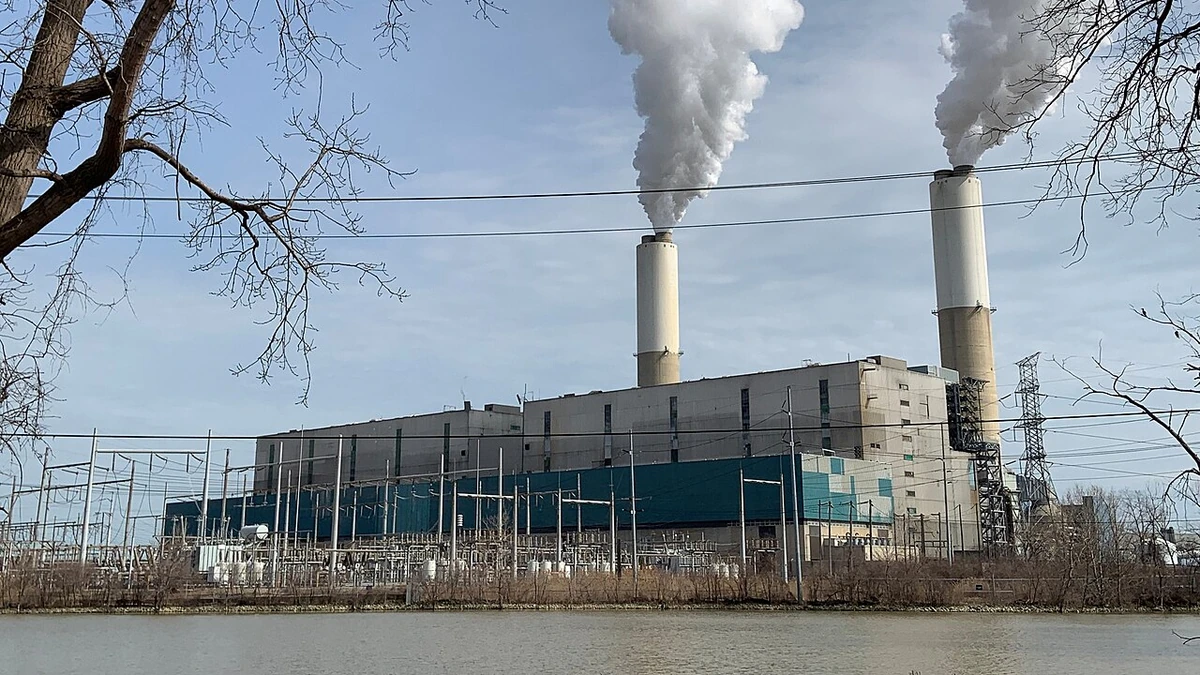
A federal emergency order requiring Michigan’s J.H. Campbell coal-fired power plant to remain available for electricity generation took effect Sunday, November 15, extending the facility’s availability through February 12, 2027. The directive continues a series of federal interventions that have kept the plant from retiring as Consumers Energy had planned.
The U.S. Department of Energy issued Order No. 202-26-51 on November 13 under Section 202(c) of the Federal Power Act. It directs the Midcontinent Independent System Operator, known as MISO, and Consumers Energy to preserve access to the 1,420-megawatt facility in West Olive. The federal order follows an earlier directive that ran through November 14.
Keeping Campbell available is not the same as ordering it to generate electricity around the clock. MISO is instructed to use the plant only during the hours needed to address the emergency identified by the Energy Department and to seek the lowest reasonable cost for ratepayers. That distinction matters because the financial and operational consequences depend partly on when the plant is called upon, not simply on how long the order remains in place.
What the winter directive requires
Energy Secretary Chris Wright determined that the MISO region faces a risk of electricity shortages amid rising demand and the loss of generation facilities. The department cited concerns about reserve margins, delays in bringing new resources online and the grid’s ability to withstand periods of severe weather or unexpectedly low output from other power sources. Those are the government’s stated grounds for invoking its emergency authority, rather than a finding that a blackout has already occurred.
The order assigns the dispatch decision to MISO, which coordinates electricity across much of the Midwest. Consumers must comply with MISO instructions concerning Campbell’s availability and operation. MISO must also send the department daily notifications about whether the plant operated in accordance with the directive, giving federal officials a record of how the emergency authority is being used.
Environmental requirements remain part of that arrangement. The directive says Campbell must meet applicable monitoring, reporting and recordkeeping obligations to the maximum extent feasible under emergency conditions. It does not excuse emissions fees or requirements to obtain offsets or allowances. The department also directs MISO to limit operations to the periods and parameters it determines are necessary, with the stated aim of reducing adverse environmental effects.
DOE pointed to the region’s experience during a prolonged cold-weather event early in 2026 as evidence that dispatchable generation can be important when demand rises sharply. Citing Environmental Protection Agency data, the order says Campbell produced 201,962 megawatt-hours from January 23 through February 1. That figure describes output during a particular winter episode; it does not establish how frequently the plant will be needed under the new order.
The department also referred to longer-term reliability assessments that raise concerns about electricity demand from large industrial loads and data centers. Those assessments address the broader MISO system, not a finding that Campbell by itself would resolve every regional supply constraint. For Consumers, the practical requirement remains narrower: keep the generating units available while the grid operator decides whether and when to use them.
The retirement plan and a dispute over emergency powers
Campbell was scheduled to retire on May 31, 2025, following a plan approved by Michigan regulators. Consumers had arranged replacement resources, including a 1,200-megawatt natural-gas plant in Covert that it acquired in 2023. Federal orders beginning in May 2025 prevented the planned shutdown. Six directives preceded the one taking effect this Sunday, making the November order the seventh in the sequence.
The continued operation has become a legal dispute over the limits of federal emergency power. Michigan Attorney General Dana Nessel has opposed the orders, arguing that the retirement followed a long-running planning process and that keeping the plant available imposes unnecessary costs. The Energy Department maintains that the changing regional supply outlook justifies intervention even though the retirement had already been approved.
On September 11, 2026, the U.S. Court of Appeals for the District of Columbia Circuit vacated the first order, issued in May 2025, after finding that the department had exceeded its authority. The ruling concerned that initial directive. It did not automatically invalidate the subsequent orders, a distinction Consumers also noted in its securities disclosures.
The federal government has sought further review. In the November directive, DOE acknowledges the appeals court ruling, says it disagrees with the decision and states that it has petitioned for rehearing by the full court. The department argues that its latest order is consistent with the court’s opinion. That is DOE’s legal position; the new directive does not settle the underlying dispute about when Section 202(c) may be used to keep a plant operating past its approved retirement date.
There is an important difference between the two sides’ assessments of the electricity system. Federal officials emphasize the possible consequences of an inadequate supply of generation during stressed conditions. State officials have challenged the premise that those risks amount to the kind of emergency contemplated by the statute, particularly after years of resource planning. The disagreement leaves the order in force for its stated period while litigation over earlier directives continues.
Cost recovery remains unsettled
The dispute has a financial dimension because keeping a plant available can generate expenses even when the units are not continuously producing electricity. Consumers has continued to operate within the MISO market under the federal orders and has pursued a mechanism to recover compliance costs across the grid operator’s North and Central regions.
In its September 30 regulatory filing, CMS Energy and Consumers reported that Consumers expected to seek recovery of $303 million associated with the emergency orders through that date, including amounts already requested. The figure was calculated after applying $344 million of revenue received through the MISO market. It is an amount the utility expects to pursue, not a statement that regulators have approved every dollar or that customers have already been billed that amount.
Consumers previously filed requests seeking recovery of $42 million tied to the first order and another $97 million associated with two later orders, each amount reflecting offsets from MISO revenue. As described in the filing, federal regulatory approvals for those requests and a revised MISO tariff filing were still pending. Consumers cautioned that the ultimate financial effect would depend on Federal Energy Regulatory Commission proceedings and further interpretations of the applicable rules.
The utility has also put employee-retention measures in place to keep Campbell staffed during the extensions. It estimated that those measures could cost up to $4 million for each 90-day order period and said it would seek recovery of the related expenses. The new federal directive permits pursuit of rate recovery but does not itself decide which customers will ultimately bear the costs or how much will be allowed.
The next specific compliance milestone is November 28, when MISO must give DOE information about steps already taken and planned to keep Campbell available. The directive runs through February 12, 2027, subject to its stated compliance obligations and any subsequent legal or regulatory developments. It also allows time for an orderly ramp-down after the order ends, rather than requiring an immediate shutdown at the expiration of the 90-day period.
More News
Latest News
View all news- CVS Health Study Finds GLP-1 Medical Savings Do Not Fully Offset Drug Costs at Current Prices
- Bitcoin Falls Near $62,000 as Crypto Selloff Deepens Following U.S. ETF Outflows
- Singapore Central Bank Details SME Financing and Digital-Money Agenda for FinTech Festival
- Novo Nordisk Releases New CagriSema Analysis Showing 25.4% Weight Loss Among Early Responders
- Jollibee Franchise Agreements Target 35 Australian Stores and A$60 Million in Investment