French Business Activity Contracts Further as November Flash PMI Falls to 46.2
A sharper manufacturing slump drove France’s private-sector activity to a six-month low, as services remained weak and businesses continued cutting jobs.
Our editorial standards
MarketReview publishes clear, independently produced financial information using reliable sources and transparent editorial standards.
Read our Editorial Policy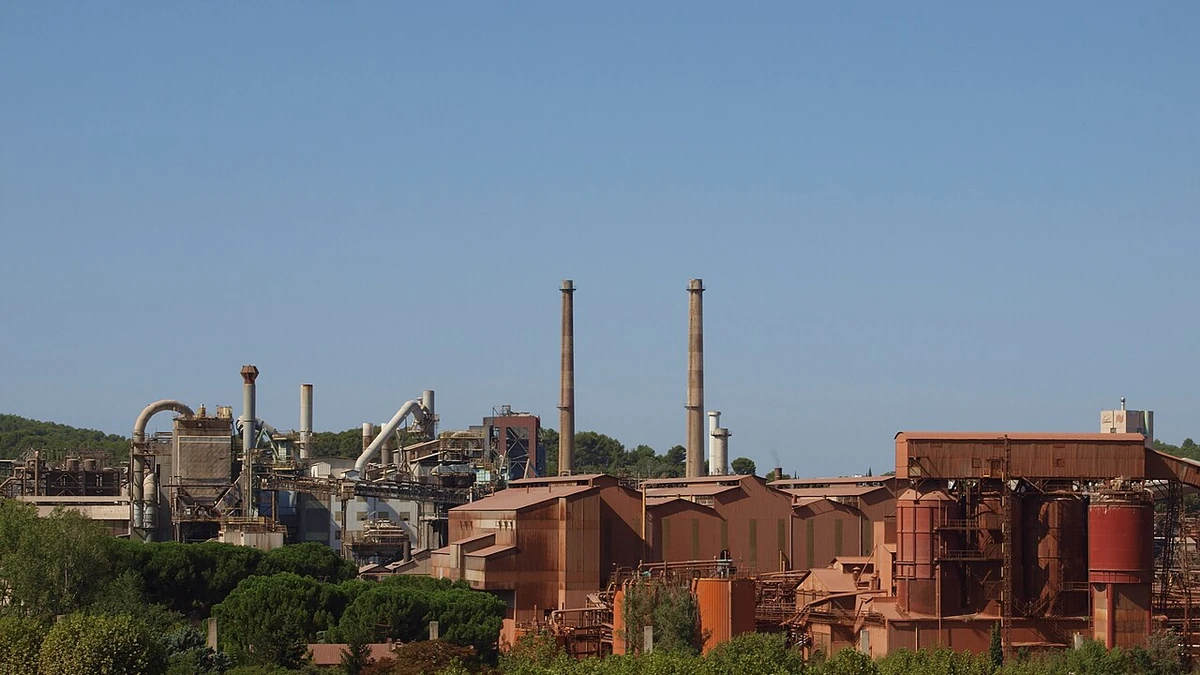
French business activity contracted at a faster pace in November, with a sharper manufacturing downturn pulling the country’s private sector further below the threshold that separates expansion from contraction.
The S&P Global Flash France Composite PMI Output Index fell to 46.2 from 46.6 in October, its weakest reading in six months, according to preliminary survey results released Monday, November 23. A figure below 50 indicates that output is falling compared with the previous month. The latest reading signals a faster decline, not that economic output fell by 3.8%.
Factories accounted for much of the deterioration. Manufacturing output weakened substantially, while activity in services continued to decline despite a modest improvement in that sector’s survey reading. The broader message was one of subdued demand across both parts of the French economy, with companies reducing staffing and expressing increasing concern about the year ahead.
The numbers matter beyond the monthly survey because France entered the final quarter of the year with little momentum. The November results cannot establish whether the economy has entered a recession, but they add to evidence that a recovery is proving difficult to sustain.
Factory output falls at the steepest pace since February 2025
France’s flash manufacturing PMI dropped to 47.9 in November from 49.5 in October, reaching a 12-month low. The separate manufacturing output index, which directly tracks changes in production, declined more sharply to 44.5 from 48.5. That was the weakest factory output reading since February 2025.
The distinction between the two measures is important. The manufacturing PMI combines several indicators of factory conditions, whereas the output index focuses on production itself. A fall in the output measure points more directly to a reduction in the volume of work passing through factories. The November figures therefore show more than a deterioration in general business conditions: they indicate a pronounced slowdown in actual manufacturing activity.
Demand provided little relief. Survey respondents reported another decline in incoming work as firms dealt with a weak domestic market, uncertainty over future projects and pressure from competitors. For manufacturers, a shortage of new orders can become a constraint on production even before it appears in broader official output figures. Businesses may use outstanding work to maintain activity for a time, but that buffer diminishes when orders remain scarce.
November’s factory weakness also helps explain why the composite reading fell even as the services measure improved slightly. The survey combines output trends in manufacturing and services, so a larger decline in one sector can outweigh a less severe deterioration in the other. Both sectors remained below the 50-point line.
Services remain weak as hiring and confidence deteriorate
The flash services business activity index rose to 46.6 from 46.2 in October. Although that marked a two-month high, the index still showed falling activity. The improvement was in the pace of decline, not a return to growth, and was insufficient to reverse the weakness in manufacturing.
New business across the private sector continued to contract, and companies reported a further reduction in unfinished work. The pace at which backlogs declined was the fastest since August. With fewer orders to process, employers cut staffing for a seventh successive survey period. That pattern suggests businesses are adjusting capacity to weaker demand rather than treating the slowdown as a brief interruption.
Sentiment has worsened as well. French firms gave their most pessimistic assessment of activity over the coming 12 months since October 2012, excluding the pandemic-affected months of March and April 2020. Such expectations do not determine future output, but they can influence decisions about recruitment, equipment spending and the timing of new projects.
Political and fiscal uncertainty is part of the context. S&P Global economist Joe Hayes identified hesitant customers and concerns surrounding France’s approaching election period as factors affecting demand and confidence. Those concerns are consistent with the survey’s weak orders and sentiment readings, although the PMI does not quantify how much of the decline is attributable to any single cause.
Price developments offered a different signal. Input cost inflation eased to a three-month low, and the rate at which businesses raised their selling prices slowed to an eight-month low. Slower price increases may eventually reduce some pressure on customers, but in the survey they also pointed to limited pricing power. Firms facing weak demand can find it harder to pass higher costs through to clients without losing business.
France moves further from Germany as GDP risks rise
France’s November reading contrasted with the wider eurozone, where the flash composite PMI held at 51.7, indicating continued growth. In its November assessment of eurozone business conditions, S&P Global said Germany’s manufacturing-led expansion was gathering pace as France’s downturn deepened. Germany’s composite PMI reached 55.0, up from 53.4 in October.
That left an 8.8-point difference between the French and German composite readings. S&P Global described the divergence as the widest in six years. The contrast matters because a stable headline figure for the eurozone can conceal sharply different conditions among its largest economies. Stronger production and business services in Germany do not necessarily mean that French factories or households are seeing a comparable recovery.
S&P Global’s survey-based assessment suggested that the eurozone was on course for quarterly growth of roughly 0.3% in the final three months of the year, while France was closer to stagnation. These are indications derived from business survey patterns, not official GDP estimates. The difference between a PMI reading and measured economic output is especially relevant when activity is close to the point separating a flat quarter from a small contraction.
Official figures show why that distinction matters. In its first estimate of third-quarter GDP, published October 30, France’s national statistics institute, INSEE, reported a 0.1% contraction following no growth in the second quarter. Household spending rose in the third quarter, but falling investment and a negative contribution from foreign trade weighed on the overall result. The November PMI does not measure any of those GDP contributions directly; it instead provides a more timely reading of business conditions.
A further decline in GDP during the fourth quarter would mean two consecutive quarters of falling output, although the outcome cannot be established from the PMI alone. The more cautious conclusion from the latest release is that manufacturing has deteriorated, services remain in contraction and companies have limited confidence in a near-term rebound.
The next official fourth-quarter GDP first estimate is scheduled by INSEE for January 29, 2027. Until then, the remaining business surveys and monthly activity indicators will offer interim evidence of whether France’s late-year slowdown has continued or begun to ease.
More News


Latest News
View all news- U.S. Treasury Schedules $82 Billion in One-Year Bills and Floating-Rate Notes for Issuance
- Weight Watchers Retires $16.3 Million in Debt Using $10 Million in Cash
- SEBI Opens Physically Settled Non-Agricultural Commodity Derivatives to Foreign Portfolio Investors
- Spanish Inflation Drops to 4.1% in November as Core Inflation Eases to 2.6%
- Skydance Registers Up to 4.62 Billion Shares for Resale Following Warner Bros. Discovery Acquisition