Singapore and Australia Sign Agreement to Enable Cross-Border Carbon Storage
The bilateral pact establishes rules for shipping captured carbon dioxide from Singapore to Australian offshore storage sites, subject to domestic procedures and project permits.
Our editorial standards
MarketReview publishes clear, independently produced financial information using reliable sources and transparent editorial standards.
Read our Editorial Policy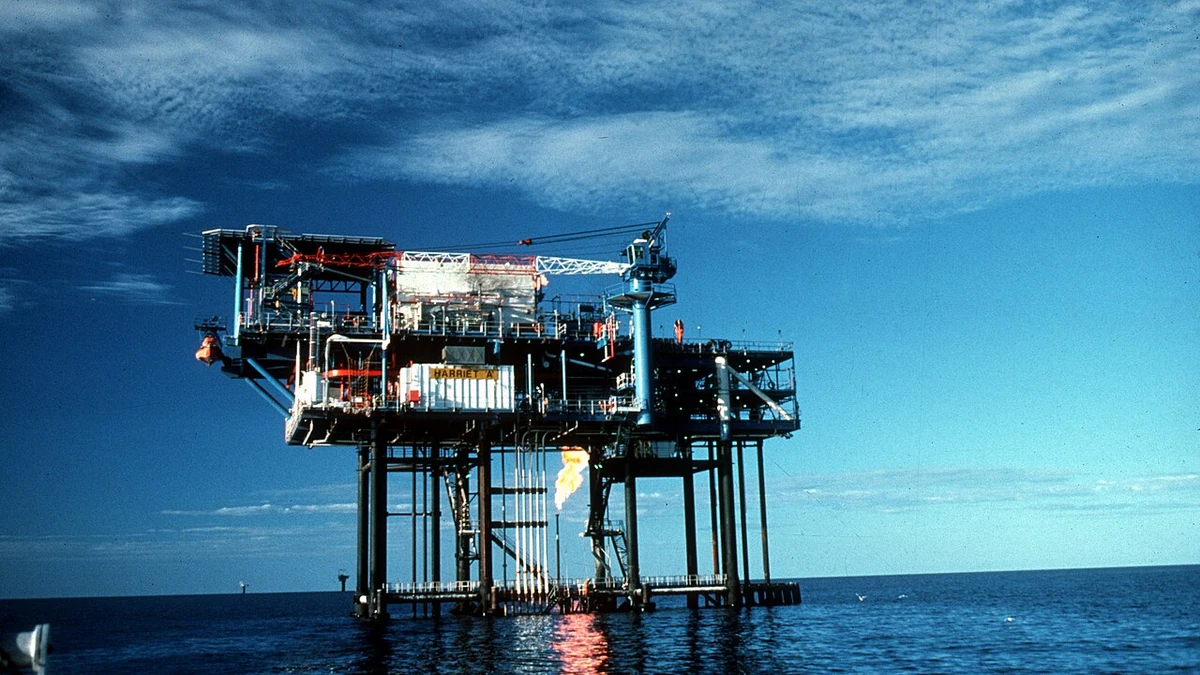
Singapore and Australia signed an agreement on Tuesday to establish a legal framework for transporting carbon dioxide captured in Singapore to Australia for permanent storage in rock formations beneath the seabed. The pact was signed in Canberra during the 11th annual meeting between the leaders of the two countries.
For Singapore, the agreement offers a possible route to cutting emissions from industrial facilities that cannot readily switch to lower-carbon production methods. Australia, meanwhile, could develop a market for geological storage services supplied to overseas industrial customers. Neither government announced a commercial storage contract or the start of shipments as part of the signing.
The agreement was one of several developments at the meeting between Singapore Prime Minister Lawrence Wong and Australian Prime Minister Anthony Albanese. The countries also signed a memorandum covering the supply of essential goods and discussed further cooperation on low-emission technologies under their broader economic partnership.
How the countries will account for captured carbon
Under the agreement published by Australia’s Department of Foreign Affairs and Trade, Singapore is responsible for accounting for emissions until the carbon dioxide is unloaded from a ship at an agreed location under Australian jurisdiction. Australia assumes responsibility at that point, including for subsequent leakage. Both countries retain authority over the permits they issue.
Singapore must measure cargo quantity and composition before export and send the results to Australia before shipment. Measurements taken when the cargo is handed over determine how much abatement Singapore can report under international climate reporting rules. The treaty also excludes cargoes that do not meet its definition of a qualifying carbon dioxide stream, including material containing waste deliberately added for disposal.
The accounting boundary matters commercially because the emitter, shipping operator and storage provider may be separate businesses. A company paying to have its emissions stored needs a reliable record of how much carbon dioxide actually reaches the storage operator, rather than relying solely on the quantity that leaves its factory. National emissions reporting, however, is distinct from the contractual allocation of costs or liability among those businesses.
The agreement calls for a joint government committee to address implementation, including the location of handover facilities and common measurement and verification procedures. Resolving these questions before construction could help developers specify the monitoring equipment needed at export and receiving terminals.
Singapore’s rising carbon price shapes the economics
Singapore’s interest in overseas storage stems in part from its geography. The Ministry of Energy, Trade and Industry has identified a lack of suitable domestic geological resources as a constraint and is exploring storage options in Australia, Indonesia and Malaysia. Carbon capture could be particularly relevant to the country’s chemicals industry, where some emissions arise from industrial processes rather than electricity consumption alone.
The rising cost of carbon emissions adds an incentive to invest in capture technology. According to the National Climate Change Secretariat, Singapore raised its carbon tax from S$25 to S$45 per metric ton of carbon dioxide equivalent in January 2026. The S$45 rate applies in 2026 and 2027, and the government has indicated a longer-term aim of S$50 to S$80 by 2030.
At the current headline rate, a facility with one million metric tons of fully taxable annual emissions would face a gross carbon tax bill of S$45 million before any applicable relief. That illustrative calculation is not an estimate of any particular company’s liability. Actual savings from capture and overseas storage would depend on how the emissions reductions are recognized under Singapore’s domestic rules and the costs incurred to achieve them.
Singapore has already begun examining the commercial feasibility of cross-border storage. In 2024, the government announced it would work with S Hub, a consortium of ExxonMobil and Shell, to assess the feasibility of collecting emissions from industrial sources and identifying regional storage options. Tuesday’s agreement does not establish that the consortium has selected an Australian site or made a final investment decision.
The cost of capturing and conditioning the gas at an industrial plant is only one part of the business case. Shipping capacity, intermediate storage and fees for underground injection would also have to be financed. A storage service could become more economical if several industrial customers share infrastructure, but a facility’s fixed costs would still need to be recovered even if actual cargo volumes fell short of forecasts.
Australia’s storage industry faces further permitting and investment decisions
International marine pollution rules have gradually evolved to accommodate cross-border carbon storage. The International Maritime Organization’s London Protocol was amended in 2009 to accommodate such exports. In 2019, its contracting parties agreed on a mechanism allowing countries to apply that amendment provisionally, pending its formal entry into force. Australia is among the countries that have made a declaration of provisional application.
Australia already has experience with geological carbon storage. Its Department of Climate Change, Energy, the Environment and Water identifies the Moomba project in South Australia as operational and the Gorgon facility as another completed development. Those projects demonstrate existing domestic activity, but their existence does not establish that either will accept carbon dioxide shipped from Singapore.
Offshore developments operate under Australian legislation covering petroleum and greenhouse gas storage, marine disposal and environmental protection. Australia’s national greenhouse reporting system also requires industry data on captured and stored emissions, leaks and cross-border movements. Companies considering a new storage site would need to address the regulatory requirements applicable to that particular development.
For prospective Australian storage operators, access to overseas industrial customers could help underpin investment in large-scale facilities. Potential revenue depends on contracted volumes, the cost of developing suitable reservoirs and how long customers are prepared to pay for storage capacity. Shipping emissions and the energy required for capture would also affect the net climate benefits of a project.
The treaty does not take effect simply because it was signed on Tuesday. Article 11 sets its commencement for 30 calendar days after the final diplomatic notification that domestic procedures have been completed. No fixed commencement date or first shipment date was specified in the signing announcement.
More News

Latest News
View all news- Philadelphia Fed Survey Shows Business Cost Pressures at Highest Since February 2023
- Freeport-McMoRan Subsidiary Completes $750 Million Bond Sale to Refinance Debt
- Home Prices Rise 2.5% Annually but Stall in September, FHFA Reports
- Case-Shiller Home Price Growth Holds at 2.1% as Regional Markets Diverge
- Best Buy Raises Annual Earnings Outlook as Quarterly Sales Grow 5.8%