

What cryptocurrency is
Cryptocurrency is a broad label for digital assets whose ownership and transfers are recorded on a blockchain or a similar distributed ledger. The category includes assets designed mainly to transfer value, assets that help secure networks, tokens used to pay for computation or applications, stable-value tokens, governance tokens and digital representations of other rights. Those differences matter because a cryptocurrency is not automatically a substitute for cash, a share of a business or a claim on future income. The rights and economics depend on the particular asset.
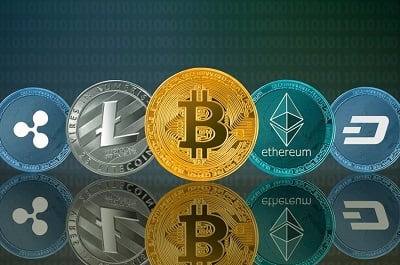
It is useful to separate the idea of cryptocurrency from ordinary digital money. Most money in checking and savings accounts is already digital in the sense that balances are recorded electronically. Those balances are denominated in sovereign currencies and maintained inside regulated financial institutions. A crypto asset can instead be native to a software network that keeps its own ledger and applies its own rules for issuing units and validating transfers.
That distinction also explains why cryptocurrencies cannot all be described as having a fixed supply or being free from outside influence. Some networks cap total issuance, while others create new units over time. Some rules are difficult to change, while others can be amended through governance processes. A project can have a decentralized ledger but still depend on a concentrated developer group, foundation, validator set, exchange, custodian or application operator. The design must be examined rather than inferred from the word crypto.
Cryptocurrency is sometimes compared with a commodity, a currency, a technology platform or an investment. Each comparison captures part of the picture. A scarce digital asset can trade as a speculative store of value, a token can be needed to use a network, and a stablecoin can be designed for payments. None of those descriptions applies to the entire category.
How blockchains and consensus work
A blockchain is a shared record that participants update according to a set of software rules. Instead of one institution maintaining the only authoritative database, many computers can hold copies or representations of the ledger. Cryptography helps identify valid transactions, while a consensus mechanism determines how the network agrees on the next valid state of the record.
The details vary widely. Bitcoin uses proof of work, in which miners commit computing resources to compete for the right to add blocks and receive protocol-defined rewards. Many other networks use proof of stake, where validators commit assets to the protocol and can earn rewards for participating in network security. Some systems use additional governance, delegation or permission structures. These choices affect security assumptions, participation costs, energy use, transaction capacity and the concentration of control.
Consensus is not the same thing as investment return. A validator may receive additional tokens while the dollar value of those tokens falls. A network can process transactions reliably without its native token appreciating. Conversely, a token price can rise rapidly even when network use changes very little. Investors need to separate the technical function of a protocol from the economic case for owning its asset.
Transactions usually depend on cryptographic keys. A public address can be shared so someone can send assets to it. A private key authorizes transfers from that address or account. The blockchain records the asset and transaction history, while wallet software helps a user manage the credentials required to interact with the network. This architecture allows direct control, but it also makes errors and key security unusually important.
Why crypto assets differ from one another
The largest cryptocurrency networks were not all designed to solve the same problem. Bitcoin grew from a peer-to-peer electronic cash design with a scarce native asset and no central issuer. Ethereum made general-purpose smart contracts central to the network, allowing software applications to execute rules and transfer assets onchain. Other projects have emphasized lower transaction costs, faster confirmation, privacy, payments, interoperability, governance or different approaches to scaling.
Older networks illustrate how much variation can exist inside one category. Litecoin adapted parts of Bitcoin's model with different technical parameters. Ripple and XRP developed around a different architecture and a payments-oriented use case. Dash added its own transaction and governance features. These assets can all trade against dollars, but their supply schedules, validator arrangements, intended functions and market structures are not interchangeable.
Tokens issued on top of an existing network create another distinction. A token can represent access to an application, governance rights, a stable-value claim, a collectible, a claim on another asset or a unit with no enforceable claim at all. Smart contracts can automate transfers and other functions, but automation does not guarantee good economics. A technically functional token can still have weak demand, poor governance or an unfavorable supply schedule.
The practical question is what ownership actually provides. Does the token pay network fees? Is it required for staking? Does it entitle holders to governance participation? Can it be redeemed for an underlying asset? Does network activity create durable demand for the token, or can users obtain the same service without holding it for long? A useful network and a useful token are related ideas, but they are not necessarily the same investment thesis.
Supply, demand and cryptocurrency prices
Crypto prices are formed by buyers and sellers trading across exchanges, brokers and other venues. Markets can operate continuously, so the quoted price reflects the most recent transactions or bids and offers on a particular venue rather than a centrally administered value. For large assets, arbitrage can keep prices reasonably close across platforms when transfers and trading are functioning normally. Differences still appear because venues have different customers, liquidity, currencies, fees, access rules and settlement arrangements.
Supply is important, but scarcity alone does not create value. Bitcoin has a protocol-defined maximum supply, while many other crypto assets use different issuance models. Some continue to issue new units, some reduce supply through token burns, some change parameters through governance, and stablecoins can expand or contract when units are issued or redeemed. Investors should distinguish current circulating supply from maximum or expected future supply because large future unlocks can materially change the market.
Demand can be influenced by network use, expectations about future adoption, market liquidity, regulation, security events, technology changes, macroeconomic conditions, leverage and investor sentiment. That makes valuation difficult. A stock can be studied partly through earnings, cash flows and assets. A bond has contractual payment terms. Many crypto assets do not provide comparable cash flows or legal claims, so analysis often depends more heavily on token economics, network activity, security, governance and the relationship between usage and demand for the token itself.
Market capitalization should also be treated carefully. Multiplying the latest price by circulating units gives a useful size measure, but it does not mean every holder could sell at that price. Thin order books, concentrated ownership and limited venue access can cause realized prices to move sharply when large orders reach the market. A high quoted market value can coexist with relatively shallow liquidity.
Crypto is sometimes compared with the foreign-exchange market because both involve globally traded currency or currency-like instruments. The similarity is limited. Traditional foreign exchange is tied to sovereign monetary systems, banking networks and institutional liquidity, while crypto markets can involve different custody models, trading venues, settlement methods and volatility. A central bank can influence the monetary conditions of a national currency, but most crypto issuance follows protocol rules and network governance instead of day-to-day monetary policy.
Custody, wallets and control of crypto assets
Custody is a central part of owning cryptocurrency because control can depend directly on cryptographic credentials. A wallet normally does not store the crypto asset itself. It manages the private keys or other credentials that allow the user to authorize transactions on the network. Investor.gov explains that private keys control access, that losing a key can permanently prevent access to assets, and that both self-custody and third-party custody carry distinct security and operational risks.[1]
With self-custody, the user controls the private keys. This reduces dependence on an exchange or custodian, but it transfers more responsibility to the user. Seed phrases and backups must be protected, addresses and networks must be checked carefully, wallet software must be obtained from reliable sources, and malicious approvals or phishing attempts must be avoided. A mistaken transfer may have no practical reversal mechanism.
Third-party custody can be simpler because the provider manages account access, keys and much of the technical infrastructure. The trade-off is counterparty risk. A customer depends on the provider's security, solvency, legal structure, withdrawal policies and treatment of customer assets. If a platform fails, becomes insolvent or restricts withdrawals, the customer's legal rights may matter more than what an account balance displayed immediately before the problem.
Hot wallets remain connected to the internet and are convenient for frequent transactions. Cold-storage arrangements keep key material offline for longer periods and can reduce exposure to some online attacks. Neither method eliminates risk. Hardware can be lost or damaged, backups can be mishandled, and a user can still authorize a malicious transaction. The appropriate custody method depends on the amount involved, how often the assets need to move and the user's ability to manage security.
This is one reason a crypto balance should not automatically be treated like a conventional banking deposit. The legal protections, custody structure, insurance arrangements and recovery processes can be very different. The identity and legal status of the entity holding the asset are part of the investment decision.
Buying, selling and using cryptocurrency
Retail users commonly acquire cryptocurrency through exchanges, brokers or applications that accept conventional currency and provide access to crypto markets. The interface can look similar to a brokerage account, but the product may differ. Some services let customers withdraw the actual crypto asset to an external wallet. Others provide only price exposure or restrict transfers. A buyer who expects to use the asset onchain should know whether withdrawal is allowed before purchasing it.
Trading costs also extend beyond a displayed commission. Platforms can earn from bid-ask spreads, custody fees, account charges or withdrawal fees. Moving assets onchain can require network fees that change with congestion and transaction design. A small fixed fee can represent a meaningful percentage of a small transfer, while a large order can experience slippage if the available liquidity is thin.
Using cryptocurrency for payments creates additional operational questions. The sender must choose the correct network and destination address. The recipient may wait for a certain number of confirmations before treating a transfer as final. Confirmation times and fees can vary. A payment-focused user may care more about stability, speed and merchant acceptance than about the long-run investment case.
Crypto markets also trade around the clock. Continuous access can be convenient, but it does not guarantee continuous liquidity or reliable platform availability. Prices can move sharply overnight or during weekends, and trading services can still suffer outages, maintenance periods or restrictions on deposits and withdrawals. Investors using leverage face additional risk because forced liquidations can occur at any time.
Cryptocurrency as an investment
Cryptocurrency can generate large gains, but the possibility of a large gain is inseparable from the possibility of a large loss. Major assets have experienced deep drawdowns, while many smaller projects have lost liquidity or relevance entirely. An investor should separate a belief that blockchain technology will remain useful from a belief that a particular token is attractively valued today.
Position size is often more important than enthusiasm for the underlying technology. A volatile position can become a large part of a portfolio after a rapid rise, increasing concentration risk. A large decline can be more damaging when the money was needed for near-term spending, emergency savings or debt repayment. The appropriate allocation can be small or zero depending on risk capacity, time horizon and the role the asset is expected to play.
Diversification inside crypto can also be overstated. Owning several tokens does not necessarily create independent sources of risk and return. Different assets can depend on the same liquidity conditions, exchanges, stablecoins, custodians or investor sentiment, and they can fall together during market stress. The number of tokens in an account is not the same thing as diversification across an investor's full financial position.
Yield features need separate analysis. Staking rewards, lending yields and liquidity incentives may increase the number of tokens a holder receives, but the quoted percentage is not equivalent to a guaranteed return. Token prices can fall, validators can be penalized, smart contracts can fail, counterparties can default and withdrawals can be restricted. Any advertised yield should be connected to a clear explanation of where the return comes from and which risks are being accepted to earn it.
Stablecoins and tokenized assets
Stablecoins are designed to maintain a reference value, often one U.S. dollar, but the mechanism matters. A reserve-backed stablecoin depends on the quality and availability of its reserves, the issuer's legal obligations, redemption procedures, operational controls and market confidence. Other designs rely more heavily on collateral, incentives or algorithms. A stable target therefore reduces one type of price volatility without eliminating credit, liquidity, legal or operational risk.
Tokenized assets are a separate idea. A conventional financial instrument can be represented on a blockchain without losing its underlying legal character. A token might represent a security, a claim on a real-world asset or another contractual right. The relevant analysis begins with what the holder is legally entitled to receive and who is responsible for honoring that claim, not with the fact that the record is maintained using blockchain technology.
This distinction is important because the same technical infrastructure can support very different economic products. A native cryptocurrency may have no issuer and no redemption promise. A stablecoin can depend on an issuer and reserve assets. A tokenized security can represent a traditional financial claim. Grouping them together because they use distributed-ledger technology can hide the risks that matter most.
U.S. tax treatment and recordkeeping
For U.S. federal tax purposes, the IRS treats digital assets as property rather than currency. The IRS states that income from digital assets is taxable and that relevant sales, exchanges and other dispositions must be reported. It also requires brokers within the scope of the digital-asset reporting rules to report certain transactions on Form 1099-DA beginning with transactions on or after January 1, 2025.[2]
The tax result depends on what happened. Selling a digital asset for dollars, exchanging one digital asset for another, receiving crypto as compensation, earning assets through mining or staking, and using crypto to pay for goods or services can have different consequences. Merely moving assets between wallets owned and controlled by the same taxpayer is generally different from a sale or exchange, although transaction fees paid in digital assets can create separate recordkeeping issues.
Accurate records matter because users can transact across multiple wallets and platforms. Acquisition dates, units, cost basis, sale proceeds and the fair market value of assets received can all affect reporting. Broker statements may make some records easier to assemble, but they do not eliminate the taxpayer's responsibility to report transactions correctly. Complex activity can justify advice from a qualified tax professional familiar with digital assets.
Regulation and investor protections
The claim that cryptocurrency is simply unregulated is too broad. Depending on the asset, transaction and business involved, crypto activity can intersect with securities, commodities, banking, money-transmission, tax, sanctions, consumer-protection and anti-money-laundering rules. The legal treatment can also differ across jurisdictions.
In March 2026, the SEC issued an interpretive release on how federal securities laws apply to certain crypto assets and transactions, with the CFTC providing related guidance. The release distinguishes among types of crypto assets and addresses circumstances in which a non-security crypto asset can be associated with an investment contract. It also shows why legal analysis may depend on both the characteristics of the asset and the way it is offered, sold or used.[3]
Regulatory status matters because investor protections are not uniform. A registered securities account, an insured bank deposit, a crypto exchange account and a self-hosted wallet can operate under different disclosure, custody, bankruptcy and insurance frameworks. A familiar app interface does not make those protections equivalent.
Decentralization does not remove every legal obligation either. A protocol may operate through open-source software while exchanges, brokers, custodians and payment providers around it remain subject to regulation. Investors should be skeptical of claims that a product is automatically outside government oversight because transactions occur on a blockchain.
Major risks in cryptocurrency
Market risk is the most visible. Crypto prices can move sharply when expectations change, liquidity thins or leveraged positions unwind. Smaller assets can lose most of their value or become difficult to trade. FINRA warns that crypto assets can be extremely volatile, may be less liquid than traditional investments, can involve entities with more limited regulatory oversight, and may not receive the same customer protections that investors associate with conventional securities markets.[4]
Technology risk is separate from market risk. A blockchain can suffer software bugs, governance disputes or attacks. Applications built on top of a network can contain smart-contract vulnerabilities. Bridges that move assets between networks add another layer of code and custody assumptions. A user can lose money because an application fails even when the underlying blockchain continues to function.
Custody and counterparty risk arise when another entity controls the assets or the keys. A platform can be hacked, become insolvent, freeze withdrawals or face legal restrictions. Self-custody removes some counterparty exposure but increases the user's responsibility for security. There is no custody choice with zero risk, only a different allocation of risk.
Fraud remains a major concern because crypto transfers can move quickly and may be difficult to reverse. Scams can involve fake exchanges, fraudulent tokens, impersonation, phishing, malicious wallet software, relationship schemes and promises of guaranteed returns. Pressure to act immediately, guaranteed profits and instructions to send assets to an unfamiliar wallet are serious warning signs.
Operational mistakes can also cause permanent losses. Sending assets to the wrong address, choosing the wrong blockchain, approving a malicious contract interaction or exposing a seed phrase can be enough. Direct control can reduce reliance on intermediaries, but it can also reduce the number of intermediaries able to correct a mistake.
How to evaluate a cryptocurrency
Evaluation should begin with the network's purpose and the token's role. A useful test is to ask whether the system would still attract users if the token's price stopped rising. If the network solves a real problem, the next question is whether that usage creates durable demand for the token. Some networks require the native asset for transaction fees or security. Others can support successful applications without necessarily transferring much economic value to every associated token.
Supply and distribution deserve close attention. Investors should distinguish circulating supply from maximum or future supply, identify scheduled token unlocks and understand how concentrated ownership is. A low current float can create an appearance of scarcity even when substantial new supply is scheduled to enter the market. Concentrated ownership can increase governance risk and make the market more vulnerable to large sales.
Security and governance are equally important. An investor should understand how transactions are validated, how software upgrades are adopted, how disputes are resolved and whether the network depends heavily on a small number of validators, administrators or infrastructure providers. Claims of decentralization are more meaningful when they can be tested against the actual distribution of control.
Liquidity determines whether an investment thesis can be acted on. A token listed on one small venue has different exit risk from an asset traded across several deep markets. Spreads, order-book depth, withdrawal conditions and reliable custody matter more than a headline trading-volume figure that cannot be verified. The ability to buy an asset easily is not proof that it can always be sold at a reasonable price.
Finally, a serious investment case should include the conditions that would make it wrong. A competing network can take users, a security failure can damage trust, developer activity can decline, token economics can weaken, regulation can change or the purchase price can already assume aggressive future adoption. The objective is not to predict with certainty which project will succeed. It is to understand what is being owned, how value could be created or lost, and whether the risk fits the investor's broader financial position.