

What platinum is and why it matters
Platinum is a dense, corrosion-resistant precious metal that also functions as an important industrial input. That combination is central to understanding the market. Gold is widely held for monetary, reserve and investment reasons, while silver has a large industrial footprint alongside a deep retail-investment market. Platinum sits somewhere between those worlds. It is scarce, tradeable as bullion and used in financial products, but a substantial part of demand comes from industries that value its chemical stability, catalytic performance and ability to withstand demanding conditions.
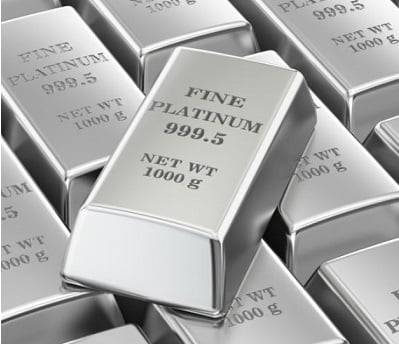
That makes platinum more than a collectible precious metal. The U.S. Geological Survey describes platinum-group metals as important catalysts in automotive emissions systems, petroleum refining and chemical processes, while also noting uses in jewelry, high-temperature equipment and electrical applications.[1] The range of end uses helps explain why platinum can respond to manufacturing trends and technology changes even when investors are focused mainly on inflation, interest rates or financial-market stress.
Platinum belongs within the broader market for commodities, yet its investment characteristics differ from many energy or agricultural contracts because investors can own the physical metal in standardized bullion form. It also differs from silver, which has its own industrial-demand profile and a much larger volume of metal available to the market. These distinctions matter because the same label, precious metal, can hide very different supply chains, sources of demand and price behavior.
Rarity is part of platinum's appeal, but rarity alone does not determine value. A scarce metal can trade below a more abundant one if the more abundant metal has a larger, more persistent pool of buyers. The relevant question is not simply how much platinum exists in the earth's crust. Investors need to consider how much is mined and recycled, how much is available in inventories, how much users require, how willing existing holders are to sell, and what price is needed to balance all of those forces.
That is why a broad platinum analysis starts with the physical market rather than a claim that the metal is automatically cheap or expensive. The investment case can strengthen when supply is constrained or demand improves, but even a favorable long-term balance can coexist with weak prices for a time. Financial flows, expectations, currencies and the opportunity cost of holding a non-yielding asset can all affect price before changes in physical consumption are fully visible.
How platinum supply reaches the market
Platinum supply comes from two broad channels: newly mined metal and recycling. Mine production begins with ore that often contains several platinum-group metals together, so the economics of a mine are not always determined by the platinum price alone. Palladium, rhodium, nickel, copper and other co-products can influence whether a deposit is profitable, how quickly a producer expands output and whether marginal operations remain open.
Geography adds another layer of risk. Platinum mine production is concentrated in a relatively small number of regions, particularly southern Africa, which means operating disruptions in a major producing area can have global consequences. Labor conditions, electricity availability, mine depth, capital spending, ore grades, processing capacity and local policy can all affect output. A concentrated supply base can make the market sensitive to interruptions, but it does not create a one-way price floor. Producers can release inventory, recycling can rise and demand can weaken at the same time that mine supply is under pressure.
Recycling is therefore an essential part of the market balance. Spent automotive catalysts are an important source of secondary metal, while jewelry and some industrial materials can also return platinum to the market. Recycling tends to respond differently from mining because it does not require development of a new ore body. Higher prices can make collection and processing more attractive, although the amount of recoverable scrap depends on what was manufactured and sold years earlier as well as on collection economics in the present.
The latest published World Platinum Investment Council quarterly report available as of this rewrite, Q1 2026, forecasts total 2026 platinum supply of 7.377 million ounces and total demand of 7.674 million ounces, implying a 297,000-ounce market deficit; the same forecast expects mine supply to remain broadly flat while recycling grows.[2] Those are forecasts rather than guarantees, and the report itself notes that estimates can be revised as new information arrives. For an investor, the more durable lesson is that the balance is built from several moving components rather than from mine production alone.
A reported annual deficit also needs interpretation. It means estimated demand exceeds estimated supply during the period, not that every buyer will be unable to obtain metal or that price must rise immediately. Inventories accumulated in earlier years can absorb part of the shortfall, holders can sell into the market, and high prices can encourage substitution or recycling. Conversely, a surplus does not automatically mean falling prices if metal is moving into inventories that investors are eager to hold.
Physical-market standards help make wholesale platinum fungible enough to trade efficiently. The London Platinum and Palladium Market maintains Good Delivery standards and lists of acceptable platinum refiners for plates and ingots in the London market, supporting the technical acceptability and distribution of standardized metal.[3] Retail investors do not usually transact in the same wholesale format, but these institutional standards sit behind parts of the global bullion market and help explain how refined metal can move between producers, dealers, vaults and financial products.
Where platinum demand comes from
Platinum demand is unusually diverse for a precious metal. Automotive uses, industrial applications, jewelry and investment can all matter in the same year, and they do not necessarily move together. One category can weaken while another strengthens. That mix is one reason the market can surprise investors who reduce the entire thesis to a single story such as vehicle production, hydrogen technology or scarcity.
Automotive and emissions-control demand
Automotive demand has long been important because platinum can be used in catalytic systems that reduce harmful exhaust emissions. The amount of platinum required depends on vehicle production, the mix of engine technologies, emissions standards, catalyst design and substitution among platinum-group metals. When relative prices change, manufacturers may have an incentive to use more of one metal and less of another where engineering requirements allow.
The transition toward battery-electric vehicles is therefore relevant, but it is not the only automotive variable. Battery-electric vehicles do not use conventional exhaust-treatment catalysts, while hybrids retain combustion engines and still require emissions-control systems. Changes in emissions regulation can affect catalyst loadings, and the pace of fleet turnover matters because recycling supply arrives after vehicles reach the end of their useful lives. A headline about electric-vehicle sales is useful context, but it is not a complete model of platinum demand.
This is also where timing matters. A long-term structural change can be widely anticipated years before it appears fully in annual demand data. Prices may react to expectations well in advance, then move differently when actual adoption, regulation or substitution diverges from those expectations. Timing with platinum matters because being correct about a long-run industry trend does not guarantee that a trade entered today will be profitable on the investor's preferred schedule.
Industrial, jewelry and investment demand
Outside automobiles, platinum is used in chemical processing, petroleum refining, glassmaking, electrical applications and other specialized industrial settings. Some of this demand can be cyclical, while some can be project-driven and uneven from year to year. A large capacity expansion can create a burst of demand that does not repeat annually, so investors should distinguish recurring consumption from one-time installation demand.
Jewelry adds another consumer-facing source of demand. Its importance can vary by country, fashion, income conditions and relative prices. When platinum becomes more expensive, consumers can shift toward other metals or buy lighter pieces. When it becomes relatively attractive, jewelry demand can strengthen. This price sensitivity means demand is not independent of the market price that investors are trying to forecast.
Investment demand can move fastest of all. Bars and coins, exchange-traded products and exchange inventories can attract or release substantial quantities of metal as sentiment changes. The reasons to invest in platinum therefore need to be treated as possible drivers, not as a promise that investment flows will remain positive. Investor demand can reinforce a tight physical market, but it can also reverse quickly when prices, interest-rate expectations or risk appetite change.
What moves the platinum price
Platinum's price is the point at which buyers and sellers reconcile the physical balance with expectations about the future. Current mine output and consumption matter, but markets are forward-looking. If participants expect a future shortage, they can bid up metal before the shortage appears in annual statistics. If a widely expected deficit is already reflected in price, confirmation of that deficit may have little immediate effect.
The U.S. dollar can matter because platinum is commonly quoted in dollars internationally. A stronger dollar can make a dollar-priced commodity more expensive for some non-U.S. buyers, although the relationship is not mechanical. Interest rates and real yields can matter because physical platinum does not pay interest or dividends. When returns on cash and high-quality bonds rise, the opportunity cost of holding a non-yielding metal can increase. At other times, supply concerns or strong industrial demand can dominate those macroeconomic influences.
Investor positioning is another variable. Futures markets allow hedgers and speculators to take large exposures without moving physical bars between vaults for every transaction. Exchange-traded products can absorb or release metal or derivatives exposure depending on their structure. When many investors are positioned the same way, a change in expectations can produce a fast reversal as positions are reduced.
Volatility should not be confused with opportunity that is easy to capture. A market that moves sharply can create large gains for an accurately timed position and equally large losses for a poorly timed one. Platinum's smaller market, concentrated supply and mixed industrial-investment demand can all contribute to abrupt repricing. Anyone interested in trading platinum in both directions still has to get direction, position size and exit discipline right.
Relative-value comparisons can be useful if they are connected to economics. Investors sometimes compare platinum with gold by looking at the ratio of their prices. A historically wide gap can prompt a valuation question, but history does not require the ratio to return to an old average. The demand mix for both metals can change, and technology can alter platinum's industrial role. A relative-price signal is more meaningful when there is a reason to expect supply, demand or investor preference to converge.
The same caution applies to claims that platinum should rise simply because it is rare. Scarcity can support value only when buyers want the available metal strongly enough to compete for it. If a major end use contracts, a rare commodity can remain weak. If demand expands faster than supply can respond, even modest changes in available inventories can become important. Price is the result of that interaction, not a direct translation of geological rarity.
Ways to invest in platinum
There is no single way to own platinum, and the vehicle can materially change the investment outcome. Physical bullion gives direct ownership but comes with transaction and custody frictions. Futures can provide efficient exposure and hedging but add leverage and contract mechanics. Exchange-traded products simplify access through brokerage accounts but introduce product structure, fees and tracking considerations. Mining shares add business and equity-market risks that are distinct from the metal itself.
Physical platinum bars and coins
Physical ownership appeals to investors who want direct possession of the metal or allocated exposure held with a custodian. The practical details matter. Dealer premiums, bid-ask spreads, shipping, storage, insurance, authentication and resale arrangements can all reduce the return relative to a spot-price chart. An investor comparing dealers should focus on the full round-trip economics, not only on the advertised purchase price.
The market for platinum bars and coins includes products in different weights and from different refiners or mints. Standardization helps resale, but retail products are not identical in liquidity or premium. A popular sovereign-mint coin can trade differently from a small bar produced by a lesser-known refiner even when both contain similar amounts of fine platinum.
Owning physical bullion also means deciding who will hold it. Home storage provides direct access but introduces theft and insurance issues. Professional vaulting can reduce some physical-security concerns but adds fees and requires confidence in the custody arrangement. Unallocated metal, pooled accounts and fully allocated bars can create different legal claims, so the account terms matter as much as the marketing label.
Platinum futures, options and other derivatives
Platinum futures allow participants to agree today on a price for a transaction tied to a future date. Commercial users can use them to hedge price exposure, while traders can use them to speculate on price changes. Because futures are margined instruments, the cash committed to the position can be much smaller than the notional value of the metal exposure. That efficiency is also the source of leverage risk.
Futures expire, so a trader who wants continuous exposure may need to close one contract and open another. The relationship between contract months can affect realized results, and a futures return does not always match the change in a quoted spot price over the same period. Delivery rules, margin requirements and daily mark-to-market mechanics also make futures very different from keeping a bar in a vault.
Options can be used to express a view on platinum with a different payoff structure. Buyers typically risk the premium paid for the option, while sellers can face very different and sometimes substantial obligations. More broadly, derivatives can be useful for hedging or tactical exposure, but their behavior depends on contract terms rather than on a general idea that they simply track the metal.
In markets where they are available, platinum contracts for difference can also provide long or short exposure without owning physical platinum. These products can involve leverage, financing charges and counterparty exposure, and legal availability differs by jurisdiction. They should not be treated as interchangeable with exchange-traded futures or with unleveraged physical ownership.
The Commodity Futures Trading Commission warns that physical precious metals, commodity futures, options and commodity-backed exchange-traded products have different market structures and risks; it also notes that futures contracts are time-limited and that bullion spreads and other transaction costs can materially affect outcomes.[4] That distinction is especially important for investors who begin with a view on platinum's price but have not yet decided how they want to express it.
Platinum exchange-traded products
Platinum ETFs and other exchange-traded products can provide access through a brokerage account without requiring the investor to store metal personally. The label alone does not explain what the product owns. Some vehicles may hold physical platinum, while others can obtain exposure through futures or other instruments. Expenses, custody arrangements, creation and redemption mechanics, tax treatment and liquidity can therefore vary.
The wider market for ETFs makes buying and selling shares convenient for many investors, but convenience does not eliminate tracking differences. A physically backed product can lag the metal because of expenses, while a futures-based structure can be affected by the cost or benefit of rolling contracts. Share prices can also trade at small premiums or discounts to underlying value, particularly when market conditions are stressed or liquidity is thin.
Mining companies are another indirect route, but they should be analyzed as businesses rather than as ounces of platinum in corporate form. Labor costs, energy costs, ore grades, debt, management decisions, political exposure and the prices of co-produced metals can all influence returns. A miner can underperform when platinum rises, and a well-run company can sometimes outperform the metal for reasons that have little to do with the spot price.
Platinum as a diversifier and hedge
Platinum can add a return driver that differs from traditional stocks and bonds, but diversification and hedging are not the same thing. Diversification means spreading exposure across assets whose risks are not identical. A hedge is expected to offset a particular risk when that risk appears. Platinum may contribute to diversification because mine supply, industrial demand and precious-metal sentiment differ from corporate earnings, yet that does not guarantee it will rise when equities fall.
This distinction is important because platinum's industrial side can become a weakness during an economic slowdown. If manufacturing activity and vehicle demand fall during the same period that stock prices are declining, platinum can face pressure from some of the same growth concerns affecting equities. Mine disruptions or investment flows can push in the opposite direction, but there is no structural rule requiring the metal to move against stocks.
Treating platinum as a hedge therefore requires a clear definition of the risk the position is expected to offset. A position can still be useful even if it is not reliable crisis insurance. The question is what job the allocation is meant to perform. An investor seeking exposure to a constrained industrial precious metal is making a different decision from someone who expects a guaranteed offset to equity losses.
Position size matters as much as the label applied to the asset. A modest holding can broaden a portfolio without determining its overall outcome, while a concentrated platinum position can become one of the portfolio's largest sources of risk. Because the metal does not generate cash flow, long-term returns depend heavily on the eventual sale price after costs. That makes valuation, entry discipline and the investor's ability to tolerate drawdowns especially relevant.
Platinum compared with gold and silver
Comparing platinum with other precious metals is useful when the comparison focuses on return drivers rather than status. Gold has a much deeper monetary and reserve role. Silver combines investment demand with extensive industrial uses but trades in a much larger physical volume. Platinum has a smaller and more concentrated supply chain, significant automotive and industrial exposure, and a narrower investment market.
A platinum versus gold decision follows from those differences. Gold may be a more natural choice for an investor primarily seeking exposure to a globally recognized monetary metal and a deep bullion market. Platinum may appeal more to an investor who deliberately wants exposure to industrial demand, supply concentration and substitution among platinum-group metals. Neither is inherently the better investment at every price.
Silver creates another contrast. Its lower price per ounce can make small physical purchases easier, and its market has broad retail participation. Platinum is scarcer and typically has a different mix of industrial uses. The fact that two metals can both be fashioned into jewelry or bought as bars does not mean their economic cycles will match. A portfolio holding several precious metals should therefore be treated as a collection of related but distinct exposures rather than as one homogeneous asset.
Investors should also resist the temptation to rank metals solely by which recently performed best. Strong past performance can reflect a fundamental improvement, a change in positioning or simply a move that has already discounted much of the favorable news. A metal that has lagged is not automatically cheap, and a metal that has risen is not automatically overvalued. The important issue is what expectations are embedded in the current price and what evidence could cause those expectations to change.
Building a platinum investment thesis
A useful platinum thesis should explain why the investor expects supply, demand or valuation to develop differently from what the market already appears to expect. It should also identify what would disprove that view. "Platinum is rare" is too incomplete because rarity does not specify future demand. "The market is in deficit" is better evidence, but still incomplete unless the investor understands inventories, recycling, substitution and the time period over which the deficit might matter.
The time horizon should match the evidence. A multi-year view based on mine underinvestment or gradual changes in industrial demand can take a long time to play out. A short-term trade based on momentum or positioning needs faster confirmation. Mixing the two can turn a failed trade into an accidental long-term investment. The better process is to decide in advance whether the position is strategic, tactical or a hedge against a defined exposure.
Implementation should then match that purpose. Physical bullion can make sense for direct long-term ownership when the investor accepts storage and transaction costs. An exchange-traded product can be easier to rebalance. Futures and other leveraged instruments can be efficient for experienced traders or hedgers but can magnify mistakes and demand more active risk management. The instrument should solve the investor's problem rather than create a second, larger problem through leverage, illiquidity or misunderstood structure.
Finally, the thesis should be reviewed rather than defended indefinitely. Mine output can recover, recycling can respond to price, vehicle technology can change, jewelry demand can soften and investors can move money elsewhere. A strong platinum case today can become weaker later without anyone having made an error in the original analysis. Markets evolve. The discipline is to keep comparing the reasons for owning platinum with the evidence that actually develops, while recognizing that even a well-researched view can produce a loss.