

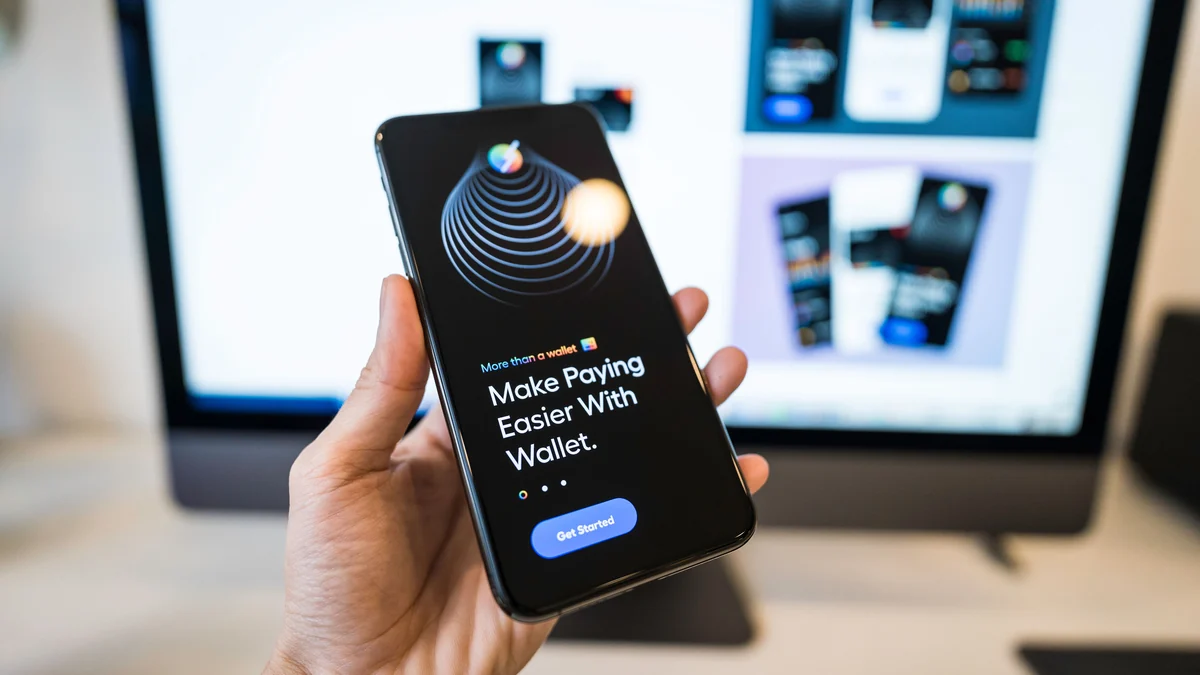
Banking is already digital in ways that would have seemed radical a generation ago, but the next phase is not simply about moving more activity from branches to phones. The deeper change is that payments, advice, data access, fraud controls and even the representation of money itself are becoming more programmable, more immediate and more dependent on software. Banks are likely to remain central to the financial system, but the services customers associate with a bank will increasingly be delivered through a mix of bank-owned technology, specialist providers and shared financial infrastructure.
That makes the future of banking less about predicting whether branches or cash disappear and more about understanding which functions are becoming easier to automate, which relationships are being opened to competition and which responsibilities cannot simply be handed to technology. Deposit taking, credit creation, payments, compliance and safeguarding customer money still require trust and risk management. Technology changes how those functions are performed and who participates in them, but it does not remove the underlying financial obligations.
Banking will be more digital, but not purely digital
Digital banking has moved well beyond checking balances on a website. Customers can now open accounts, transfer money, deposit checks, apply for credit, freeze cards and receive fraud alerts without visiting a branch. The direction of travel is clear, yet that does not imply that every customer or every financial decision will move to a self-service channel. Banking includes routine transactions that are easy to digitize and irregular, high-stakes situations where a customer may still want a person to explain choices or resolve a problem.
The branch network is therefore more likely to change function than simply vanish. Many everyday transactions no longer require a teller, which reduces the economic need for dense physical networks, but Retail branches still provide access to cash, identity verification, business services, complex lending discussions and support for customers who are less comfortable with digital tools. Some banks will continue shrinking or redesigning branches, while others may use physical locations as advisory and relationship centers rather than transaction counters.
Cash is a useful example of why technological substitution rarely happens all at once. Federal Reserve research using recent U.S. payment data shows that cards dominate retail payments and cash use has declined substantially, but cash still accounted for about 16 percent of payments in the 2024 Diary of Consumer Payment Choice. The same research notes meaningful differences in payment behavior across age, income and transaction type.[1] A future with more digital payments is therefore easier to support than a confident prediction that physical cash will soon disappear.
Payments are moving toward instant and account-to-account
The speed of money movement is changing one of banking’s oldest customer expectations. Traditional payment systems were built around processing windows, settlement cycles and business days, whereas newer instant-payment infrastructure is designed to move funds within seconds and operate around the clock. In the United States, FedNow already allows participating banks and credit unions to support instant payments, and other countries have developed their own faster-payment systems.
Faster settlement is more than a convenience. Immediate access to funds can improve cash-flow management for households and businesses, reduce uncertainty around whether money has arrived and support new services such as rapid payroll, insurance payouts or account-to-account transfers. It also compresses the time available to detect mistakes and fraud, so banks must improve authentication, transaction monitoring and customer warnings as payment speed increases.
Account-to-account payments could also alter the economics of card-dominated commerce. Pay-by-bank arrangements can let a customer authorize a payment directly from a bank account, often using application programming interfaces and increasingly using instant-payment rails. The Federal Reserve has described open-banking infrastructure and third-party providers as important parts of this model, because they can connect customers, banks and merchants while handling functions such as consent, authentication and payment initiation.
For consumers, the practical result may be a larger choice of payment methods rather than one technology replacing all others. Cards remain deeply embedded in commerce because they combine acceptance, convenience, fraud protections and credit features. Bank-based payments can compete where merchants or customers value lower processing costs, direct settlement or real-time access, but adoption will depend on usability and protection against unauthorized transactions as much as on technical capability.
AI will change bank work before it replaces bankers
Artificial intelligence is likely to have its largest near-term effect inside banks rather than through a fully autonomous financial adviser on a customer’s phone. Banks already use machine learning and other automated systems in fraud detection, anti-money-laundering work, customer service, document processing, credit analysis and operational monitoring. Generative and agentic AI expand the range of tasks software can assist with, including coding, summarizing internal information, supporting employees and identifying patterns across large datasets.
The Federal Reserve has said that financial institutions are developing their own AI applications and adopting vendor-assisted tools, while also emphasizing that the risks depend on the particular use case, especially when systems affect consumers or material banking decisions. The supervisory challenge is not simply whether AI is permitted, but how banks govern models, third-party tools, cybersecurity exposure and decisions that could affect credit or customer treatment.[2]
That distinction matters because automation is not the same as judgment. A system can analyze transactions continuously or flag suspicious activity faster than a human team, yet a bank still needs accountability for the outcome. A chatbot that gives a customer the wrong opening hours is one problem; a system that denies credit, mishandles personal information or misses a security vulnerability creates a different level of risk.
AI is also likely to make banking advice more personalized, although the old idea that software will simply become a better version of every human banker is too broad. A digital system can use transaction history, savings behavior and account information to identify cash-flow problems or suggest relevant products, but good financial advice also depends on the quality of data, the customer’s goals and the incentives behind the recommendation. The more personalized the system becomes, the more important consent, privacy, explainability and conflict management become.
Banks and fintechs will compete and depend on each other
Technology has lowered the cost of building customer-facing financial services, which allows specialized firms to compete for parts of the banking relationship without becoming full-service banks. A customer can use one provider for payments, another for investing and another for credit, even if regulated banks remain behind some of those services. That makes the customer relationship more contestable and reduces the assumption that one institution will automatically provide every financial product throughout a person’s life.
The competitive story is only half of the picture because many fintech products rely on banks for accounts, settlement, access to payment networks or the legal ability to hold insured deposits. Banks, in turn, use outside technology providers to launch services faster or obtain capabilities that would be costly to build internally. The future is therefore likely to contain more partnerships as well as more competition, with customers often interacting with a technology brand while regulated banking functions sit behind the interface.
Those arrangements create operational and governance risk that does not disappear because a task is outsourced. Regulators have repeatedly emphasized third-party risk management when banks use external firms for deposit, technology or other services. A bank still needs to understand how a partner handles customer funds, data, compliance, resilience and subcontractors, because a failure at the technology layer can quickly become a banking problem.
Greater provider choice can make comparison easier, particularly when products are designed around standardized data and APIs. A customer who can securely share account information with another provider has more ability to compare offers or move services, which puts pressure on institutions that rely heavily on inertia. At the same time, switching financial providers involves more than comparing price because security, service quality, deposit protection, credit terms and the ability to solve problems still matter.
The future of money may change bank infrastructure
Tokenization is another area where the most important changes may happen behind the customer interface. A tokenized deposit is still a claim on a commercial bank, but it can be represented on programmable infrastructure that allows assets and money to move under shared rules. The potential attraction is not that every bank account becomes a speculative crypto product, but that settlement, reconciliation and certain wholesale financial processes could become faster and more automated.
The Bank for International Settlements has argued that tokenization can support programmable transfers, simultaneous settlement and round-the-clock operation, while also warning that interoperability, governance and financial integrity remain difficult problems. Its 2026 work distinguishes between the technological possibilities of tokenization and the weaknesses of current stablecoin arrangements, and it points toward systems in which tokenized commercial bank money remains connected to central bank money and regulated financial institutions.[3]
For banks, that creates both an opportunity and a competitive threat. If new forms of money become useful for payments or settlement, banks can participate by issuing tokenized deposits, providing custody, compliance and conversion services, or connecting customers to new networks. If activity moves outside the banking system, some traditional payment and deposit relationships could weaken, which is why the long-term issue is not whether banks will use blockchain terminology but whether they remain central to trusted money movement.
Stablecoins make that question more visible because they can combine digital transferability with a claim to stable value, but they are not equivalent to insured bank deposits. Their structure, reserves, redemption arrangements and legal protections differ, and those differences matter when confidence is tested. The likely future is a period of coexistence and experimentation rather than a clean replacement of bank deposits by one new form of private digital money.
Security, identity and trust become more important as banking speeds up
Every improvement in digital convenience gives criminals another surface to attack. Mobile banking, instant payments, data sharing and AI can reduce friction for legitimate users, but fraudsters also gain faster tools for impersonation, social engineering and automated attacks. Banks therefore have to treat cybersecurity and identity verification as part of the product rather than as a technical layer customers never see.
AI makes the security contest more complicated because the same technology can help both defenders and attackers. Banks can use advanced systems to detect suspicious behavior and identify vulnerabilities, while criminals can use AI to produce convincing phishing messages, synthetic identities or more scalable fraud attempts. Authentication will increasingly depend on combining multiple signals such as device information, behavioral patterns and transaction context instead of relying on passwords alone.
Data protection becomes equally important as services become more personalized. A bank cannot offer highly tailored recommendations without using information about the customer, and an ecosystem of connected providers expands the number of places where that information may travel. The industry’s challenge is to make useful data portable enough to support competition while limiting unnecessary collection, unauthorized access and unclear reuse.
Regulation will shape how quickly innovation reaches customers
Banking innovation cannot be separated from regulation because deposits, lending and payments create risks that extend beyond an individual company. The regulatory framework governs capital, liquidity, consumer protection, anti-money-laundering controls and operational resilience, and emerging technology has to fit within those responsibilities even when the rules were written before a particular technology existed.
That can slow adoption, but the constraint has a purpose. A social-media application can release an imperfect feature and fix it later with limited systemic consequences, whereas a bank error can block access to money, misprice credit or expose sensitive financial data. Regulators therefore face a genuine trade-off between allowing experimentation and ensuring that the organizations trusted with deposits and payment access understand the risks they are taking.
Regulatory differences across countries will also shape which technologies scale globally. Payments and digital assets cross borders more easily than banking licenses or consumer-protection rules, so a service that works in one jurisdiction may require a different structure elsewhere. This is especially important for tokenized finance and cross-border payments, where interoperability depends on technical standards as well as legal recognition, settlement rules and compliance requirements.
Customer control will grow, but so will the need to choose carefully
One of the strongest ideas in the older banking model was relationship concentration: a household might keep its checking account, savings, credit card and mortgage with the same institution for decades. Digital comparison and remote onboarding make that less necessary. A customer can now get a mortgage without building a long branch relationship first, and similar changes are occurring across deposits, payments and consumer credit.
More choice can improve pricing pressure and product fit, yet a fragmented financial life can also become harder to manage. Using several providers means tracking more credentials, privacy policies, fees and support channels, and it can become less obvious which company is responsible when something goes wrong. Aggregation tools may solve part of that problem by giving customers a consolidated view, but the quality of those tools depends on reliable data connections and clear permissions.
The most durable competitive advantage for banks may therefore be trust combined with useful technology rather than physical presence alone. Customers have little reason to tolerate poor digital service simply because an institution has been around for a century, but they also have little reason to move their financial life to an elegant app if they are uncertain about who holds their money or how problems will be handled. Banks that can combine safe infrastructure with fast, understandable and reasonably priced services are better positioned than institutions that treat digital channels as an add-on.
What the future is most likely to look like
The future of banking is unlikely to be a clean break between traditional banks and technology companies. Banks are adopting the same technologies that once looked like threats to them, fintech firms increasingly operate through partnerships with regulated institutions, and public infrastructure is making faster payments available to institutions of many sizes. The boundary between a bank’s own service and a service assembled from outside technology will become less visible to customers.
Physical banking will continue to shrink in importance for routine activity, but human support will remain valuable in complex or stressful situations. AI will automate more analysis and customer service, yet institutions will still need people who are accountable for risk, compliance and exceptions. Payments will become faster and more programmable, but customers will continue using a mixture of cards, bank transfers, digital wallets and cash rather than switching simultaneously to one universal method.
The largest change may be structural rather than visual. Banking is moving from a model in which a customer primarily interacts with one institution to an ecosystem in which deposits, payments, lending, advice and data can be connected across several providers. Banks are not necessarily becoming niche players, but they are losing the ability to assume that every part of the customer relationship belongs to them by default.
For customers, that should create more choice and potentially better services, provided security and consumer protections keep pace. For banks, the challenge is to preserve what makes them valuable, including trusted deposits, credit expertise and regulated access to the financial system, while rebuilding the delivery layer around faster payments, better data and more capable software. The institutions that adapt successfully will look different from the banks of the past, even when their core economic role remains familiar.
FAQs
- Will physical bank branches disappear?
They are more likely to become less important for routine transactions than to disappear completely. Branches can still serve customers who need cash access, identity verification, business services, complex lending support or in-person help with unusual problems.
- Will AI replace bank employees?
AI will automate more analysis, service and operational work, but banks still need people who are accountable for risk, compliance, exceptions and complex customer decisions. The balance will vary by job and by how reliable the technology becomes.
- Will cash disappear as banking becomes more digital?
Cash use has declined, but current U.S. payment research still shows meaningful use, especially among some age and income groups and for certain transactions. A continued shift toward digital payments is more likely than an immediate move to a completely cashless economy.
- Are fintech companies replacing banks?
Fintech firms compete with banks in many customer-facing services, but they also frequently depend on regulated banks for deposits, settlement, payment access or lending infrastructure. The industry is developing through partnerships as well as direct competition.
Sources
- Board of Governors of the Federal Reserve System: Pay-by-Bank and the Merchant Payments Use Case: Benefits, risks and potential impacts on consumer payment behaviors in the U.S.
- Board of Governors of the Federal Reserve System: Artificial Intelligence in the Financial System
- Bank for International Settlements: Anchoring trust in money: innovation beyond stablecoins