India Launches ₹5,610 Crore Development Initiatives in Arunachal Pradesh
The package includes major power and rural-road programmes, an education initiative and 199 border-village projects, alongside a new cooperative-sector roadmap.
Our editorial standards
MarketReview publishes clear, independently produced financial information using reliable sources and transparent editorial standards.
Read our Editorial Policy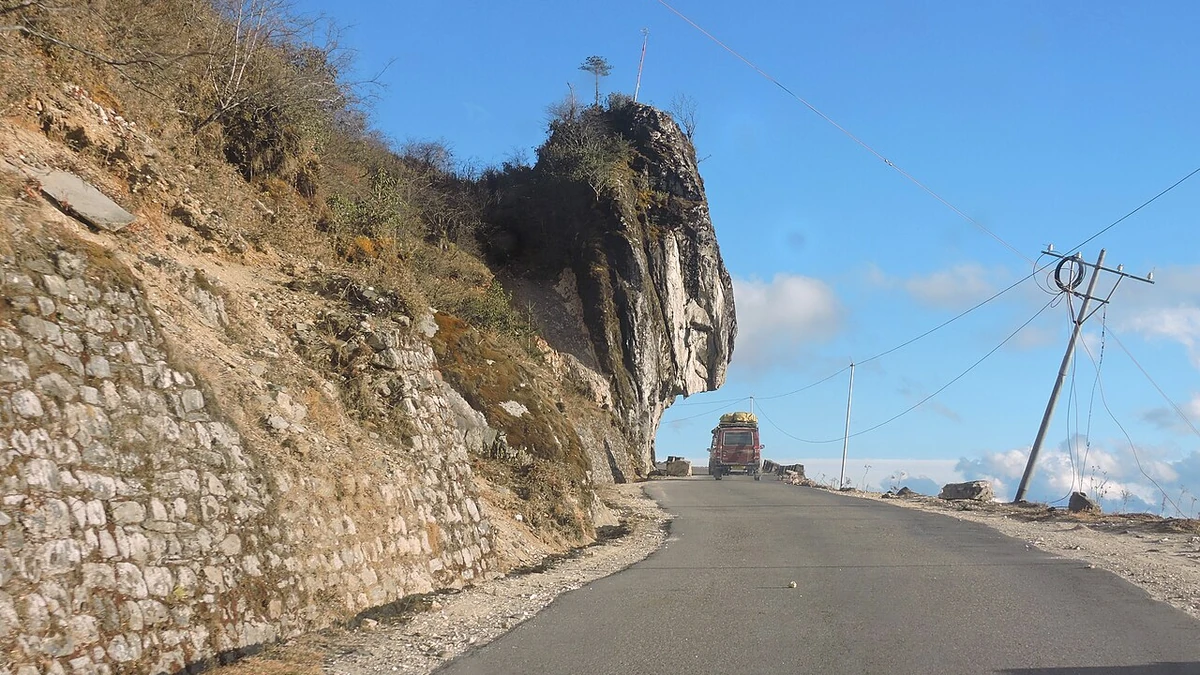
India launched development initiatives with a combined announced outlay of ₹5,610.95 crore in Arunachal Pradesh on Sunday, November 22, covering electricity infrastructure, rural roads, education and villages near the international border. Union Home and Cooperation Minister Amit Shah unveiled the programmes at an event in Itanagar alongside a longer-term plan for the state’s cooperative sector.
The largest allocations are for power and road development, at ₹2,000 crore each. Mission Shikshit Arunachal, Phase II, accounts for ₹1,500 crore, while 199 projects under the Vibrant Villages Programme carry an outlay of ₹110.95 crore. Together, the four components make up the government’s stated total; the rounded ₹5,610 crore figure in the headline is not a separate budget.
In its November 22 announcement, the Ministry of Cooperation described the measures as programme launches, not as a report that the associated infrastructure had already been built. The release did not provide a project-by-project spending timetable or say how much of the total had been disbursed. Those distinctions matter when assessing the likely pace of construction and the effect on local services.
Roads and power account for most of the outlay
The Chief Minister’s Comprehensive State Power Development Programme and the Chief Minister’s Comprehensive State Rural Road Development Programme together represent ₹4,000 crore, or roughly 71% of the four-part package. Both target basic infrastructure, but the announcement offered no breakdown of planned power installations, road lengths or specific locations covered by those two programmes.
Electricity provision and road access are especially relevant to a mountainous state with widely dispersed settlements. Better links can reduce the practical distance between villages and public services, while more reliable power can support homes and small businesses. These are potential benefits of the announced spending priorities, rather than results the government has demonstrated from the newly launched programmes.
The two ₹2,000 crore figures are programme outlays. They should not be read as contracts already awarded, payments made to contractors or completed assets. The official statement also did not identify separate completion dates for the power and road components, leaving the timing and geographic distribution of the work to be established in subsequent implementation details.
For residents and businesses, that execution detail will be important. A road programme’s practical value depends on which communities it connects and whether works can be delivered, while a power programme’s effect depends on the infrastructure actually installed and brought into service. The launch establishes the government’s priorities and stated scale, but not yet those operating outcomes.
Education and 199 border-village projects
The education component, Mission Shikshit Arunachal, Phase II, has an announced outlay of ₹1,500 crore. The government placed it alongside the infrastructure programmes as part of a wider push to improve services across the state. The event release did not specify how the education allocation would be divided among schools, facilities or other activities, so the amount is best understood as a programme-level commitment at this stage.
A smaller, more geographically defined element is the ₹110.95 crore assigned to 199 Vibrant Villages Programme projects across 11 border districts. Unlike the large road and power programmes, this part of the package identifies both a project count and the number of districts. It does not, however, give a detailed list of the individual works announced on Sunday.
The border-village effort predates this event. In a July 2026 update, the Ministry of Home Affairs said 455 villages in Arunachal Pradesh were among 662 priority settlements identified nationally under the first phase of the Vibrant Villages Programme. It also reported 832 projects sanctioned for Arunachal Pradesh under that phase at the time. Those earlier figures provide scale, but the ministry did not say whether Sunday’s 199 projects were already included in the previously reported tally; simply adding them would risk double counting.
The national programme is designed to support living conditions and livelihoods in selected border settlements, with possible interventions extending from roads and utilities to health, education and local economic activity. It is therefore related to, but not interchangeable with, the state’s separate ₹2,000 crore rural-road programme. The November announcement does not give enough detail to determine how the individual project lists intersect.
Mission SURAKSHA was also launched at the Itanagar event. The government did not publish a separate rupee figure for that initiative in the four-part ₹5,610.95 crore breakdown, so its cost should not be added to or assumed to be included within any specific component without further documentation.
Cooperative measures focus on local finance and market access
Alongside the costed development programmes, Shah unveiled the Arunachal Pradesh Cooperative Vision 2047, a roadmap for expanding the state’s cooperative movement. The event brought together state officials and representatives of cooperative organisations, with attention on how rural producers could gain access to finance, storage and buyers.
One practical measure was the virtual inauguration of a foodgrain storage warehouse at Raga LAMPS under a grain-storage scheme. A separate e-commerce webpage was launched for products associated with the Arunachal State Rural Livelihoods Mission, offering a digital sales route for local products and women’s self-help groups. Neither measure was given its own amount within the four-programme spending total.
Financial-inclusion measures included a loan sanction certificate from the National Cooperative Development Corporation to Lagun Multipurpose Cooperative Society, a micro-ATM supplied by NABARD to Poma Jute Dairy and Livestock Cooperative Society, and a loan certificate from the Arunachal Pradesh State Cooperative Apex Bank to Wakro LAMPS. A women’s self-help-group federation also received a certificate for a newly formed multipurpose cooperative society.
Shah urged the state to strengthen dairy, fisheries and other local food production through cooperatives. The government linked that approach to opportunities for households and to reducing reliance on food brought in from outside Arunachal Pradesh. The remarks describe a proposed direction for the rural economy, not evidence that domestic production or cooperative earnings have already increased.
The government also recognised cooperative groups active in dairy, fisheries, weaving and primary agricultural credit. The broader point of the cooperative announcements is distinct from the roads-and-power budget: they concern the institutions through which rural producers may obtain financing, store goods and reach markets, rather than one additional block of infrastructure spending.
For now, the clearest measurable commitments are the four published outlays and the count of border-village projects. Details still needed for a spending assessment include the funding and execution schedule of the larger programmes, the works covered by each allocation and the eventual completion of projects. The government’s release did not set out those milestones.
More News

Latest News
View all news- BILL Agrees to $6 Billion Take-Private Acquisition Led by TPG, With Corpay Taking Minority Stake
- South Korea Readies Stock Market Stabilization Fund After Emergency Meeting
- U.S. Rail Exemption Takes Effect for Nearly 60 Miles of Pennsylvania Rail Lines
- Qatar’s Inward Foreign Investment Stock Rises 5.2% to QAR 180.6 Billion
- Taiwan Expands Insurance Manager Eligibility as 12-Field Rule Takes Effect