China’s Industrial Profits Jump 20.1% in October, Fastest Growth in Five Months
Electronics manufacturers accounted for roughly three-fifths of industrial profit growth through October, even as earnings in the automotive sector fell sharply.
Our editorial standards
MarketReview publishes clear, independently produced financial information using reliable sources and transparent editorial standards.
Read our Editorial Policy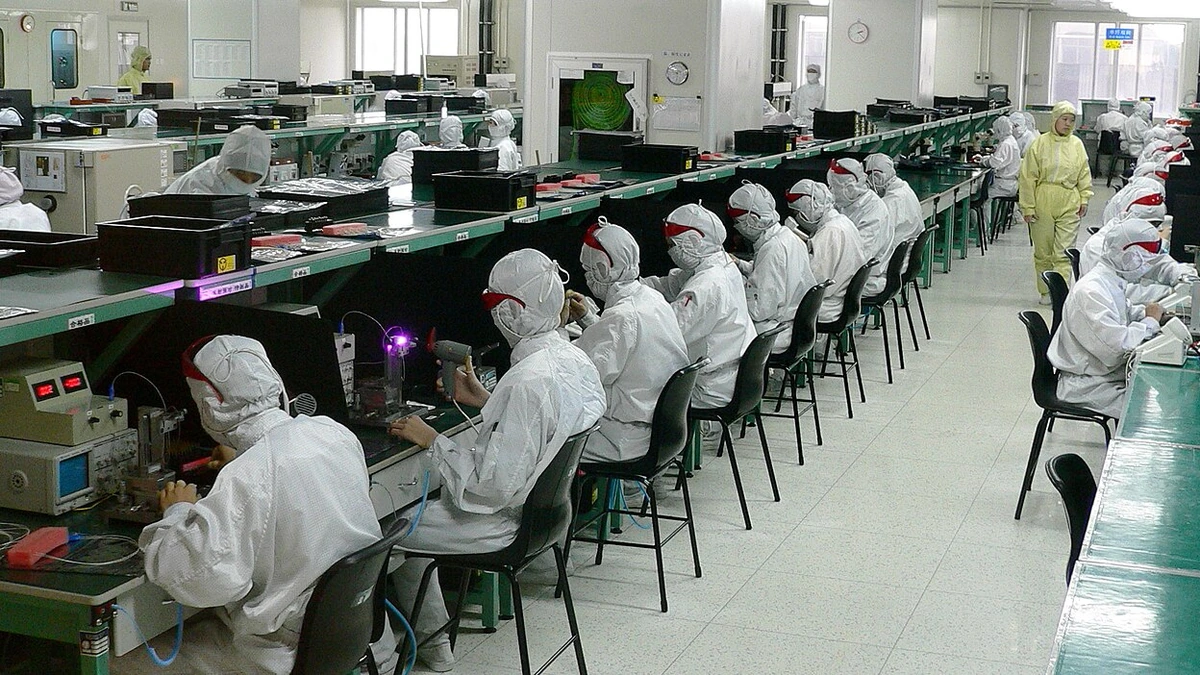
China’s industrial profits grew 20.1% in October from a year earlier, the fastest pace in five months, as strong earnings among technology manufacturers continued to support industrial profitability this year. The increase followed a 14.4% gain in September and brought cumulative profits for the first 10 months of 2026 to nearly 6.74 trillion yuan.
Friday’s figures from the National Bureau of Statistics (NBS) put January-October profit growth at 16%, up from 15.5% through September. Although the monthly reading was the strongest since May, when profits rose 21.1%, the year-to-date rate remains below the 18.8% recorded in the first five months of the year.
The recovery has been markedly uneven. Businesses supplying computing hardware and industrial materials have recorded some of the biggest gains. Carmakers and manufacturers of construction-related products, by contrast, are earning less than they did a year ago. October’s acceleration does not necessarily signal a comparable improvement in demand across the entire manufacturing economy.
Electronics account for most of the profit increase
Manufacturers of computers, communications equipment and other electronics doubled their profits between January and October. According to Yu Weining, chief statistician in the NBS industrial department, the sector contributed 9.7 percentage points to nationwide industrial profit growth. That represents roughly three-fifths of the overall increase, illustrating how much the aggregate result depends on a single industry group.
Yu attributed part of the improvement to demand for computing capacity for artificial intelligence, which has supported earnings at memory chip producers and related manufacturers. The benefits extend beyond semiconductors. Computer manufacturers recorded a more than fivefold increase in profits from the corresponding period of 2025, and producers of peripheral equipment earned three times as much.
Investment in computing infrastructure is also creating demand for the physical networks that connect servers and data centers. The NBS identified optical fiber and cable manufacturers among the beneficiaries of this spending. Across high-tech manufacturing more broadly, profits increased 50.9% in the first 10 months, more than three times the growth rate for industry as a whole.
These figures describe cumulative earnings, not the distribution of October’s additional profits alone. They establish the importance of technology to China’s industrial recovery this year, but they do not establish that AI-related demand was solely responsible for the latest monthly acceleration.
Mining gains contrast with pressure on carmakers
The NBS industrial earnings report showed that mining profits increased 38.8% through October, considerably faster than the 17.5% recorded in manufacturing. Utilities went in the opposite direction: earnings across electricity, heat, gas and water suppliers fell 14.8%.
Demand for materials used in energy infrastructure and AI hardware has helped lift prices for metals such as copper and aluminum, according to Yu. Nonferrous metal mining and processing together added 4.6 percentage points to overall industrial profit growth. Petroleum processing also returned to profitability after recording a loss a year earlier.
Conditions were less favorable elsewhere in the industrial supply chain. Automobile manufacturers reported a 26% drop in earnings for January through October, a steeper decline than the 22.8% reported for the first nine months. Producers of nonmetallic mineral products, a group that includes cement and glass manufacturers, saw profits fall 46.7%.
The divergence extends to ownership categories. Earnings at privately owned industrial businesses were 11.4% higher than a year earlier, compared with a gain of 8.7% through September. Profits at enterprises with foreign investment or investment from Hong Kong, Macao and Taiwan, barely grew, rising 0.2% over the 10-month period. These categories can overlap and should not be added together as if they were separate components of the national total.
Higher margins have not eased all financial pressures
Part of the improvement in profitability reflects the relationship between sales and expenses. Industrial businesses generated 118.41 trillion yuan in operating revenue during the first 10 months, 6.7% more than a year earlier. Operating costs rose at a slower rate of 6.2%, helping lift the ratio of total profits to revenue to 5.69% from 5.24% a year ago.
On a revenue base of that size, even a modest improvement in margins can translate into a large increase in earnings. The gap between profit and revenue growth is important when interpreting October’s results: rising earnings need not imply a similarly large increase in sales.
Working capital remains an area of concern. At the end of October, outstanding receivables were 10.5% higher than a year earlier, and inventories of finished products were up 12%. Businesses were taking an average of 72.2 days to collect receivables, an increase of 1.4 days from the previous year. Slower collections can leave manufacturers with less readily available cash even as reported earnings increase.
October’s purchasing managers’ survey offers another perspective on the recovery. The official manufacturing index slipped from 50.1 in September to 49.3, below the threshold separating expansion from contraction. New orders also weakened. There is no contradiction between that survey and the profit figures: the former measures changes in business conditions from the preceding month, whereas the latter compares earnings with the same period last year.
For businesses outside the industries benefiting most from technology investment, sustained improvements in orders and cash collection would provide a stronger indication of recovery than an increase in national profits alone. The November manufacturing survey is due to provide the next monthly reading on factory demand ahead of the industrial earnings report for the same period.
More News



Latest News
View all news- U.S. Treasury Schedules $82 Billion in One-Year Bills and Floating-Rate Notes for Issuance
- Weight Watchers Retires $16.3 Million in Debt Using $10 Million in Cash
- SEBI Opens Physically Settled Non-Agricultural Commodity Derivatives to Foreign Portfolio Investors
- Spanish Inflation Drops to 4.1% in November as Core Inflation Eases to 2.6%
- Skydance Registers Up to 4.62 Billion Shares for Resale Following Warner Bros. Discovery Acquisition